Graham Twigg – The Brown Rat (2)

This is one of the standards of rat lore and science, a concise overview of whats known about this pervasive rodent. Among the more surprising things I learned are the fact that the brown, or Norway rat, wasn’t present in most of the world until very late in the game, arriving in America in the 18th century, and in Europe barely earlier, and that the black, or tree rat, only predates that by a few centuries. It makes perfect sense of course, for the success of both species (and the devastating side effects) is closely linked to human civilization, but is startling nonetheless. Aside from that, the most surprising fact is how little was known about animals as ubiquitous and important as rats even in the 1970s, and I suspect not much has changed since then.


 Not much happens in this cute little comic, a bird investigates a human walking and napping in the woods, another bird gets eaten, and a snake behaves out of character of species, but the reduced, calm way its drawn makes this a little gem. The bird exploring the sleeping human is particularly endearing.

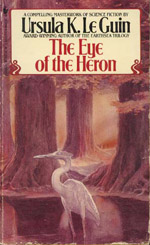 I like LeGuin’s work in general, but this tale of freedom and repression is not her best work. Two groups of exiles coexist on a wild, uncharted planet, one composed of the descendants of prisoners, the other of political exiles, sent away for their disturbing pacifism. When some people in the city try to increase their power and wealth by exploiting the pacifists, whom they perceive as weak, a struggle ensues, that ends in a murky compromise and further exile for a subgroup of the pacifists, who realise that they can only live their dream in complete isolation.
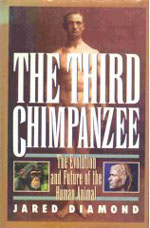 I have a weakness for the crop of evolutionary psychology and anthropology that has sprung up in recent years, and this one on the evolution of the human chimpanzee and the specific problematic baggage he brings from this evolutionary history is no exception. Of particular interest, both for content, as well as for the insight into the genesis of such book it provides, is the chapter on differential development of human societeties, that later bloomed into a full grown book of its own: Guns, Germs and Steel. Diamond writes delightfully entertaining, and his examples are fascinating. The only drawback is the bleak picture he paints for the future of this planet and our species, sounding just as correct today as it did 15 years ago, when he wrote it. The only difference being that the monster of major climate change caused by us monkeys no longer is something to be feared decades in the future, but seems to wait just around the corner. Maybe we can gang up on it, kill it and eat it. That strategy served us well in the past.