Nihon für Ao

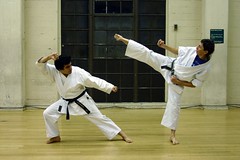
Der Ellbogen des Schiedsrichters, vor dem Unterleib angewinkelt, verrät schon das Kommende, dann eine ausholende Bewegung des linken Arms, die in der Waagerechten endet: Nihon für Ao. Die Plastikkarte ist griffig, aber die rückseitig darauf gedruckte blaue Drei, die mir den Stand auf der anderen Seite anzeigt, ist völlig glatt, und es dauert etliche Sekundenbruchteile, bis ich die beiden Karten greifen und umlegen kann. Die Aufmerksamkeit, die das Greifen des Glatten erforderte, zerstreut sich, und ich bemerke allgemeine Aufregung: im Moment des Umlegens hat auch der Schiedsrichter sich umgelegt, die zwei Punkte wurden der anderen Seite zugesprochen, und während ich mit der rechten Hand auf das gebellte Hajime mit dem Drücken der Stoppuhr reagiere, suchen die Finger der Linken die beiden Karten auf der Vorderseite, und holen sie zurück ins Nest, sie rotieren noch auf den Spiraldrähten, da – Yame! – stoppt die Uhr wieder. Erneut Nihon für Ao, diese abermalige Umkehrung kommt meinen Fingern unplausibel vor, und sie sträuben sich einen Moment, ehe sie sich fügen. Need to add two points, insistiert der japanische Turnierleiter, he did, antwortet die Russin. Two points for blue, drängt der Japaner hartnäckig, he already did insistiert die Russin nicht weniger. Ich, Yame, Uhrstopp, Handzeichen, habe keine Zeit, eine Meinung dazu zu haben.

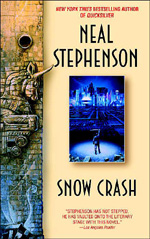 A very inventive story and cool story, with the same weakness Stephenson’s other books have in my opinion, a forced ending. Creating complexity, just to then shoehorn it into some resolution so readers can feel better is not something I approve of. Otherwise it’s quite flawless, though. It’s also quite interesting to see how Stephenson obviously churned on the themes he scratched upon in this novel for the later Diamond Age, and then took them into more realistic contemporary fiction with the Cryptonomicon.
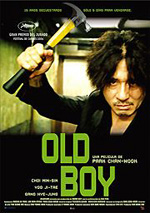 I enjoy watching movies with advertised surprise endings, not attempting to guess the twist beforehand so that it can have maximum impact. Here, I vaguely suspected the ending about halfway through, enough to take away the bottomless feeling I distinctly remember from having in The Sixth Sense, which is too bad. That doesn’t say anything bad about the movie, and I just mention it to justify my not talking at all about the plot of Oldboy. I cherish surprises, and so should you. Besides, if you want to be spoiled, there are plenty of places online for that.
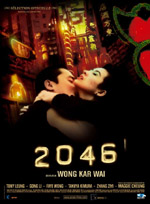 Oh boy, where do I start? It was sombering to see that the concept that so beautifully worked in In the Mood for Love could fall so flat. While this loose sequel explores similar themes, none of the characters got me the least bit interested, the plot was see-through-thin both in terms of what happened and the emotional content, and the pretentiousness of it all just unbearable. Had I seen this in a theater, it would have been one of the rare occasions for me to walk out (though the cinematography, admittedly lost on a TV, might possibly have kept me). At home I sat through it, and I’m glad I did, for the last half hour picked up a bit. But not remotely enough to make this worthwhile. Stay clear.