Anfang und Ende

Am Ende, wenn es von den Stühlen klatscht und aus den Gängen fragt, stehen immer ein paar auf und gehen, schnell, und ohne zurück zu blicken, woandershin, wo es interessanter ist. Manchmal kommt auch jemand, setzt sich einen Vortrag lang, steht auf, geht wieder. Der Laserpointer wird warm und feucht, der Punkt möchte ein Diagramm entlangwandern auf der Leinwand oder auf der Stirn der Moderatorin funkeln einen anarchischen Moment lang, aber ich lass ihn nicht. Jetzt hat jemand Gesichtern den Mund übermalt, durch einen verwaschenen hautfarbenen Fleck, und gleichzeitig noch die Stimmen verrauscht. Wenn man sich das ansieht, sagt er, als Film, dann guckt man den Gesichtern mit dem Mundfleck und den verrauschten Stimmen direkt unter die Nasenspitze – und wirklich wachsen da abwechselnd blaue Bällchen in den Nasenlöchern – weil man die Lippenbewegungen noch ein bisschen sehen kann zwischen Nase und Mundfleck. Ich höre aber kaum hin, gleich bin ich selber dran, es klatscht, es fragt, ich gehe die drei Treppen nach oben und überblicke meine Untertanen. Zwanzig sind noch da, nein, achtzehn, grade gehen noch zwei. Ich drücke auf das Slideshowsymbol und hebe den Pointer, der jetzt kühl ist und trocken. „This”, sage ich, “is what we wanted to tell you about today.” And so it begins.


 Every time I read one of Vonnegut’s books, I feel like hugging the whole world, or the members of my karass, at the very least, or do something powerfully meaningless, yet poetic, to make someone else happier than they have been. Which, of course, seems to be a pretty accurate description of what Vonnegut did with any and all of his books.
 This book was a magnificent ride. Starting out with a depressing description of the industrial food system, and the great river of corn flowing across the American continent, he proceeds to look at what he calls the industrial organic food system, the coopting of sustainability values by unsustainable big agriculture, and finally homes in on local growing and foraging. The section on Polyface farm in Virginia, with its insight into the biology of grazing, is truly inspiring, especially when contrasted with the nightmarish images of factory farming and CAFOs. The section on foraging and hunting touched me, too, but probably more for it’s Northern California flavor than for its content. As Pollan himself points out, foraging and hunting aren’t viable strategies for feeding a population any more, but reading about mushrooms in Berkeley, pig hunts in Sonoma and morels in the Sierra made me profoundly homesick.
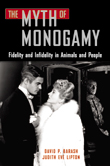 To the reader interested in love, sex and animal and human happiness, though rare a beast such a reader might be, this book holds a treasure trove of observations, deliberations and insights. Always keeping in mind the obvious question – how does all this relate to us? – the authors lead us on a walk through animal species, to look for evolutionary reasons and pressure for or against monogamy, and revealing it to be quite uncommon even among species long thought to be faithful mates for life. As it turns out, the fact that affairs need to be concealed from the adulterer’s mate implies automatic and almost perfect concealment from the researcher ape hiding in a camouflaged tent, who after all is much less adept that the animals involved in detecting suspicious behaviour.
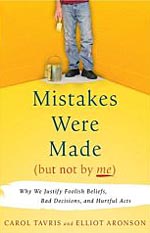 This book about cognitive dissonance is a good read, and an interesting account of both the theory of why our decisions and opinions can be so much at odds with reality sometimes and a number of examples from history and daily life, where the principle can be observed in action. Yet through much of it, it felt like being a bit lost in someones attempt to make sense of the subject, and as though going to Festinger’s original work might be more illuminating. This in spite of the fact that I don’t think he ever wrote something comprehensive like this on top of his individual studies.