Search
Monday, March 6th, 2006

Hasenohren

8

Der dicke Mann mit dem Ziegenbart nickt missmutig, als ich ihn frage, ob ich das Austellungsstück kaufen kann. Jetzt muss er auf eine Leiter steigen und mir den Hasenohrenkarton herunterholen, und das mag der dicke Mann nicht so gerne. Er holt ihn natürlich trotzdem und bringt ihn schnaufend an die Kasse, wo ich die Hasenohren selbst verpacken muss, denn der dicke Mann unterhält sich mit dem drahtigen Teenager über seinen Computer zuhause und Installationsprobleme. “Do you need a bag”, fragt der dicke Mann, während ich die Pappteile in die Verpackung puzzle. Weil ich mit dem Fahrrad und ohne Rucksack da bin, will ich tatsächlich eine Tüte. Erst nimmt der dicke Mann ein Telefonat an. “Thank you for calling Radio Shack” sagt er, es klingt aber ganz anders. Das Gespräch hindurch sagt er mehrfach ungeduldig “yes” und verdreht die Augen, ich stehe unterdessen mit dem Pappkarton. Der dicke Mann umschreibt ein Rechteck mit den Händen und pantomimt einen Henkel oben dran, ich nicke, er nickt. “Yes, we do”, sagt der dicke Mann genervt, dann sagt er “bye” und legt auf. “I hope he doesn’t come in here today” sagt er zum Kollegen, “he is trouble”. Er gibt mir eine schwarze Radioshack-Plastiktüte, im Hinausgehen versenke ich die Hasenohren darin und höre den dicken Mann “He is one of the guys who” sagen, dann fällt mit einem Klingeln die Tür hinter mir zu. Ich stehe wieder im Regen, eine halbe Stunde von den Oscars entfernt, frage mich, ob ich den dicken Mann doof finden oder bemitleiden soll, und entscheide mich für Vergessen.

Monday, March 6th, 2006

Takeshi Kitano – Kikujiro (2)

Not before I looked the movie up on IMDB did I realize that the reason the main character looked familiar was that I had just seen him in Zatoichi, playing the title blind swordsman. As with Zatoichi, Kitano wrote the script, directed and played the lead in Kikujiro, the odd tale of a summer vacation a young kid spends with Kikujiro, a smalltime crook and loudmouth with a good heart. The movie felt a bit too long, but that might in part have been due to the strangeness of it all. Most of what the main character did didn’t make much sense to me emotionally, but not in the sense of it being written badly. Rather, all the relationships and communications here were partially opaque to me – in other words, adhering to strange conventions. Not knowing whether these are Kitano’s conventions, or those of Japanese culture in general, I can but try and unravel the mysteries of a character who is very abusive and mean, yet respected and humoured by everybody except the tough criminals he runs into at a fair. Cultural mysteries aside, there are wonderful images and ideas here, and lots of little surprises.

Come Oscar time, I usually display a reasonable level of excitement, and like to watch the ceremony if possible. This year, however, like all his other urban slacker fans – to paraphrase O’Reilly – I absolutely had to, because Jon Stewart hosted, promising more than the usual detached entertainment narrative for a show that is, after all, the biggest self-reflective event for today’s dominant art form. And Stewart, while maybe not as hilariously funny as his fans are used to seeing him, did a terrific job of bringing relevance to the self-congratulation. Edgy comments abounded, yet he never got sharp enough to allow easy dismissal. The awards themselves were less exciting, with the winning of Best Picture by Crash and, of course, the Oscar for Best Original Song going to Three 6 Mafia – which you can view either as the victory of black underground culture, or the completion of its sellout, depending – and the endless stream of masturbatory montages being outright painful to watch.

The most interesting thing I learned, however, wasn’t directly related to the Oscars at all. We do not have cable, and to see the ceremony I had to cycle through the rain and buy some rabbit ears at RadioShack. And after a full night of ABC, with its utterly stupid society journalists and a barrage of advertising cutting everything into debilitating chunks of fast paced cutting, I fully recall why it is I don’t watch TV any more. It’s because that shit makes me agressive, bitch. I guess it’s finally all right to write stuff like that on a family oriented blog. Big thanks to Three 6 Mafia for that.

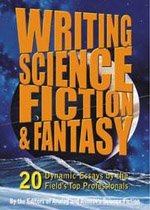
An interesting anecdote which maybe doesn’t sum up this volume of writing advice, but certainly illuminates it, has Mozart being asked for hints on symphony composition by a young, aspiring composer. He advises to start with small pieces and work up, and when the composer is confused by this and points out that Mozart himself wrote symphonies at quite an early age, Mozart replies “Yes, but I never asked for hints”. That doesn’t necessarily mean that the advice in this volume only applies to writers of mediocre talent, or that it isn’t useful for experts. While the individual essays in this volume vary greatly in quality, with Asimov providing the largest number of essays, and has the least substance to his superficial und uncultered boasts, there are a few pieces that delve deeply into the problems of building entire worlds from scratch. This problem is arguably one of the most important reasons for the gap in literary quality between science fiction and the rest of it – where ordinary narrative can rely on the reader’s ability to fill in gaps in background, characterization and psychology, science fiction must often close them, using original material for it. The seams of implausibility that result whenever this goes wrong wreak havoc with characters, plot and world plausibility, requiring the aspiring writer to pay much more attention to minute details and work it all out. Incidentally and as an aside, the other big reason for the quality gap would be the fact that writers genuinely interested in general themes of human existence rather than scientific what-if-narrative will naturally shy away from setting their plots against an artificial background, leaving a large faction of people like Asimov, who openly admit that they care not one bit about subtelties of storytelling and characterization, and that ideas are all that matters. It’s too bad, really.

The high points of this collection are the essays by Poul Anderson on world building, Norman Spinrad’s somewhat dated sounding advice on how to project current trends using simple cyclical models – it’s a funny moment when he reports in awe that the spreadsheet he uses is a file of gargantuan 600 kilobytes. Good old days -, Hal Clements advice on how to create believable psychologies in an unknown world, and Connie Willis treatise on humourour writing – though technically that last one doesn’t belong here, since she herself points out that there is nothing peculiar to writing funny SF opposed to funny anything else. Also entertaining is Stanley Schmids list of cliches editors will not ever want the read, though I have to say that if you indeed want to write an Adam and Eve story because you think the idea is highly original, another line of work might be better suited.

Friday, March 3rd, 2006

Stephen Chow – Kung-Fu Hustle (1)

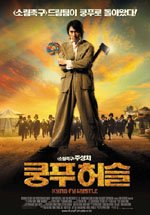
The best martial arts movies combine poetry and action into something unique, and boy, does this one ever succeed at it. At once a parody of the genre, and a masterful example of it, humor and inventiveness make this an exhilarating masterpiece. The feeling of sheer delight was heightened considerably by the fact that for some reason I expected a Jackie Chan type comedy, with conventional humorous dialogue and moderately original fighting. I was completely unprepared for the cigarette smoking landlady, the dancing axe gang, the lion’s roar megaphone or the toad fighting technique or the numerous other elements of mayhem, and so was entirely without defences. Which is just as well.

Friday, March 3rd, 2006

John Junkerman – Power and Terror (4)

Chomsky doesn’t deserve the movies made about him. Manufacturing Consent was an adequate representation in both content and style of the man who often appears to be the only sane person in a large room full of fanatics, but Distorted Morality and Power and Terror, both done by Jon Junkerman, are little more than badly edited recordings of public lectures, with no thread or narrative at all. What quality there is, is in Chomsky’s arguments, with the few ideas of moviemaking that went into it actually detracting from that. Junkerman opens chapters with a blank screen and a sentence or phrase taken from the lecture or interview segment that is to follow. The the original segment follows without a noticeable gap, making for a logical jump between the two things we hear Chomsky say, and the confusion is intensified when seconds later he repeats word for word what we just heard him say. It’s meant to structure the movie, but it’s entirely superficial and doesn’t work anyway. In the final scene, we see Chomsky on a stage far away, asking us whether we can hear him, clumsily alluding to the fact that he’s not very widely listened to and a lone caller in the darkness. It’s too bad that bad movies like this one contribute to that.

Friday, March 3rd, 2006

Zusammenstoss

an echo of things to come

Als ich um die Ecke biege, sitzt er da, vielleicht zwei Meter entfernt, und inspiziert einen halbzerkrümelten Keks. Das bindet seine Aufmerksamkeit so sehr, dass ich die Entfernung halbiert habe, ehe er mich bemerkt. “Tenki-wa atsui desu”, murmle ich im abwesenden Zwiegespräch mit dem Ipod, dann “Iie, tenki-wa samui desu”. Sprachlehrganghohlheiten sind keine Kekse, aber auch ich bin abgelenkt, und erwache erst zum vollen Bewusstsein, als ein erklecklicher Rumms meinen rechten Fuss erschüttert. Augen begegnen sich für eine Sekunde, dann schüttelt er sich und verschwindet in der Hecke. “Kanada-no Tenki-wa warui desu” rufe ich erstaunt aus, und “You fool”. Kurz erwäge ich, den Keks zu stehlen, lasse es aber dann doch sein.

Wednesday, March 1st, 2006

Robert Altman – The Player (2)

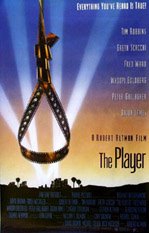
I knew I had seen and loved it, but as with Shortcuts, I couldn’t remember a thing. Now, memory is an odd fellow, and often you’ll immediately recognize what you couldn’t actively remember – but not me, in this case. Every part of it was just as fresh and new as it was when I first saw it, and that is just as well, for it is a terrific and clever script, and surprises in general work much better when you don’t know they’re coming. Tom Hanks is wonderful as the lead character, an asshole producer in trouble, there are numerous celebrity cameos, and the opening scene rivals the one in Bertolucci’s 1900. In fact, just seeing this long continuous setup made me want to rewatch 1900, and to my dismay I found that it is available neither at Netflix nor Amazon, and the studio doesn’t currently offer DVDs of it for sale. A remark oddly fitting for the end a minireview of a satire about the movie business.

Monday, February 27th, 2006

Marslachattacke

Zwei Knoten Wolle, oder wie heißt das, Ball, Bündel, Knäuel. Genau, Knäuel. Zwei wollknäuelgrosse Wollknäuel, was für ein bescheuertes Wort, Knäuel, als würde man auf blind gewordenem Klarplastik rumkauen, zwei Wollknäuel also, eins rot, eins schwarz, trage ich an die riesige Kassentheke. Riesig ist die Theke, weil auf ihr Stoffe aus aller Herren Materialien in Fetzen geschnitten werden können müssen, und nicht, weil meine Wollknäuel findlingsgroß wären. Sie sind eher klein. Trotzdem kommen sie mir vor wie kosmische Leuchtfeuer, genau wie die Stricknadeln in der anderen Hand, ein intensives Signal geht von mir aus, und auf dem Mars hebt ein Ding mit Tentakeln den hässlichen Kopf, zeigt lachend in den Himmel und sagt: “Haha, Kai kauft Strickzeug!”. Verloren liegen nun die Knäuel und die Nadeln auf der Riesentheke. Die Handarbeitsverkaufsfrau trägt die Andeutung eines Spottgesichts, glaube ich, es ist schwer zu erkennen, sie ist so weit weg hinter der Riesentheke. “Is there a plan?” fragt sie nach einigen Sekunden Spottgesicht. Irgendwo lacht ein Marsianer.

Monday, February 27th, 2006

XGen Studios – Stick Arena (2)

I’ve spent so much time on this thing in recent weeks, I should at least pretend that there is something meaningful that can be said about this timekiller. The concept is ingeniously simple: have a multiplayer shoot’em’up with low level technology, Flash in this case, so you can just play it in your browser. As usually, less fancy technology means purer gameplay. In the fights in Stick Arena, there is a lot of strategic movement, feinting, anticipation of opponents’ moves, and trying to be fresh and surprising on one’s own, and it all moves so fast, that it makes for quite pleasurable fights. Maybe it can even teach you a thing or two about fighting, but I fear I’m stretching my credibility a bit. And besides, I need to go back now, and sledge a few stick men.