I’ll try and sum up yesterdays insane rant on the counter-materialism arguments from philosophy of mind a bit more neatly and readably.
There are other things wrong with the individual arguments, and I’ve pointed out a few of the fallacies in that post, but the main thread linking them all, is the technique of using a though experiment to prove a point on the mind. This, of course, is in a long philosophical tradition, and presumes that introspection is the best way to investigate the mind. Not so.
The arguments all run thusly: “Assume the mind is only X. Now imagine Y. See how in your imagination, the mind cannot be X? Case closed.” I believe all the arguments follow this scheme.
Imagine you know all about colour, now imagine seeing it for the first time, see how you didn’t imagine having that experience? Imagine knowing all about bats. See how that doesn’t make you imagine feeling like one?
Imagine working through an algorithm creating behaviour that seems to indicate understanding. See how you don’t imagine understanding what you’re doing?
Imagine the mind is physics. Now imagine the universe as it is, but without mind. See how that’s possible, showing that the mind is more than physical?
And on and on. These arguments can indeed show us the structure of our intuitions about the mind, which indeed is dualistic. But this intuition is but a small part of our actual minds, and not close to the most interesting. Moreover, to generalise the arguments to apply to all of the mind implies the assumption that our intiuitions about our own minds are always correct. Not only is there no logical reason to assume that, neuropsychology tells us that it is actually false. We are wrong about our minds all the time. Independent of their other shortcomings, none of the logical arguments against materialism works for this reason alone.
English, Geekstuffs, Neuroscience, Philosophy, Science | No Comments »
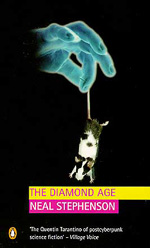 With the Cryptonomicon in mind, I expected a story similarly overfraught with meandering detail, but found myself pleasantly surprised. A well worked out future world, centered on changes in politics brought about by the development of nanotechnology, provides a nonintrusive background for a neo-victorian play on education and the value of the individuum that is as much fun as it is solid. While the psychology and character development, as is so unfortunately common in Science Fiction, take second stage after the geeky technostuff and the equally geeky ramifications of the technostuffs effects, the result is a delightful study. While the end is maybe a bit forced, this still makes me want to read Snowcrash now, Stephensons debut.
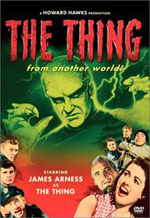 I had heard that his movie was good, but I was surprised to find just how well this 1951 SciFi-Horror crossover has withstood the test of time. An intelligent script and believable characters, a stroy relying on try suspense instead of cheap effects, a truly frightening creature and well acted and filmed scenes all make this a gem worth remembering. While Carpenter’s remake, especially its intense atmosphere of paranoia, is superior in some ways, I would find it hard to compare the two overall. Which means that for its sheer age, Nyby’s version wins. Yay Nyby!
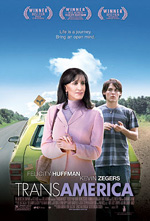 This could have been another movie using a feel-good story to enahnce understanding an accepance for a minority by depicting some of its members as struggling, but good humans-like-us. That is an approach that is both commendable for its beneficial impact on society mores and slightly suspicious for its tendency to avoid the more troubling aspects or consequences of the problem under study. On an abstract level this movie falls into this category, as the storyline feels improbably constructed from the standard ingredients of such fare, but the detail, and the performance of its leads, catapult it onto a different level. It’s too bad Huffman was up against Witherspoon’s more broadly appealing performance in Walk the Line at the Academy Awards.
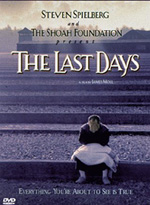 Watching movies about the holocaust, even – or especially – ones that are as well made as this one, is exhausting and disturbing, and I’m not entirely sure why I keep doing it again and again. Partly it’s the general feeling that an evil forgotten is one likely to be repeated, but there also is the irrational, yet very compelling obligation to understand the monstrosity which seems to stem from my being a member of the culture that committed this singular crime. These matters aside, this particular documentary, drawn from material collected for Spielberg’s Visual History Foundation, is masterfully composed and edited, and should be seen by many, including you.

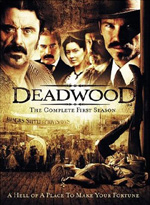 Everyone’s favorite drama of swear and cuss is entering its third season, and judging from the opening episode, it’s going to be great. I have a hard time nailing down just exactly how they do it, but every moment of Deadwood’s reenacted history seems to be a goddam fucking delight. Partly, I think, this is due to the subtlety of plot and dialogue, that often lets you understand something said or done only much later, without making a fuss about such a resolution, as minor scripts might. And to a large part it’s the miraculous cast, Ian McShane’s Al Swearengen above all that lift this onto a plane all its own. Too bad the cokesnorting cocksuckers over at HBO cancelled the concluding fourth season and replaced it with a compromise. It’s a fucking disgrace. But for the time being, let’s enjoy season three, shall we?
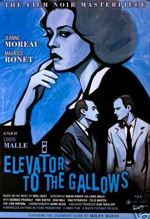 Jeanne Moreau’s sulking femme-fatale act is annoying to watch, and parts of the story don’t seem to make sense – why did Tavernier not escape through the floor after the elevator had gone almost all the way down to the ground floor? Why would a Jury let the murderer off easily, while being harsh on Moreau’s scheming wife? But these minor quibbles aside, it’s a very original story, and a very entertaining movie. As a window into history, I found the German characters, with their obvious postwar Wirtschaftswunder wealth and ruthless joviality particularly fascinating.
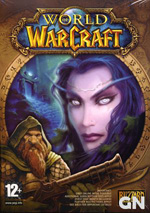 I like the idea of multiplayer games, but this incarnation of it, with a rigid world full of unchanging story elements and a large number of people running around in it, doesn’t quite fulfill the promise. I’d like to see more interaction possibilities beyond the mere killing of monsters in a group, and some plasticity in the world makeup. As it is, the game is just a combination of chat and RPG. Nothing wrong with that, but nothing interesting about it, either.