 There is mythological evidence from the middle ages, suggesting the Swabians were a jolly, lively people then, full of vigour and joy. You wouldn’t think it today, and the introductory section of this book, meant to show Swabians in the best possible light and endowed with a preface by Cleverle Späth, is a case in point. The most salient features of the Swabian mind, his thriftyness, his shrewdness, his xenophobia, take some stretching to be made into qualities, and with some, most notably the Kehrwoche, even Larson’s well meaning prose fails to create any appeal or sense. The anecdote of Larson interacting with Willy Reichert, Arnulf Klett and the likes are positively painful, but admittedly that might be just to me, and just because they hit too close to home.
Much more interesting and entertaining are his broad sweeps through Swabian history, overloaded in places with genealogical details of the Dukes, or obscure military history of possible interest to his American military audience, but quite boring to me. The book is valuable for its benevolent outsider’s view on my home, that contrasts interestingly with my malevolent insider’s perspective.
Most interesting, however, was this response to the infamous Lied der Schwaben, which, though reviled by true Swabians for its unflattering depiction of local customs, I remember being hung on a plate in our home when I was a kid. I never thought the Lied der Schwaben problematic, in fact considered it quite accurate and liked it for its candidness, if not literary quality. The response, on the other hand, in its attempt to restore Swabian honor is quite utterly horrible. So here you go:
Das “Lied der Schwaben”? –
Der dies ausgebrütet,
aus welchem and`ren deutschen Stamm er sei.
Wo Roheit in der Gossensprache wütet,
sind Art und Herkunft weltweit einerlei!
Humor? –
Der Schwabe liebt ihn tiefer, leiser;
als Geistesfunke stillvergnügter Welt.
Die Leute leben hierzulande weiser
als grobe Torheit grölend dargestellt.
Das Lied der Schwaben:
Uhland hat`s gesungen!
Es schwingt im Fleiß, in Daseinsheiterkeit!
In Schiller, Mörike ist`s aufgeklungen –
und in Motoren dröhnt es erdenweit!
Das Kraftzitat des Götz von Berlichingen
ist menschheitsalter Allgemeinbesitz, –
drum hört man`s auch im Schwabenland erklingen:
zum Beispiel für “Poeten” ohne Witz!
All Right, Books, Deutsch, Deutschland, English, History, Politics | No Comments »
 This should by rights have been an awesome movie, with awesome music and an intriguing story, and it didn’t quite fail at achieving it, but it didn’t quite make it, either. Phoenix and Witherspoon were doing an amazing job, especially with the music, but several aspects of the script left me wanting more. We don’t really understand why any of the people do what they do, especially so for the negative influences, his father and his first wife. We get hardly a glimpse of why they act the way they do, and I didn’t really connect to Cash’s reactions to them, either. And the predictable story arc of success – gutter – redemption and it’s edifying connotations may have been unavoidable in a Cash biopic, but still disappointed me in its simplicity. The music made up for much of that, though, and the cinematography and design helped a lot, too.
 I’m not sure whether entering a field of knowledge through a basic introduction, or from the middle of an ongoing controversial debate is preferable. Bix’s book represents both aspects, being aimed at those familiar with Japanese history, arguing the case for a change in the perception of wartime emperor Hirohito, from benevolent onlooker and powerless figurehead to bearing full responsibility for Japanese war atroctities and aggression both before and during the second world war. At the same time, it adresses the general reader, using the Sh?wa emperor’s biography as the focal point for depicting the making of modern Japan. The balance between these two different books is worked out fairly well, with some passages dragging on a bit too long, due partly to an overabundance of detail and a flurry of Japanese names and concepts that are sometimes not introduced well enough to properly keep track of for the non-initiated reader.
 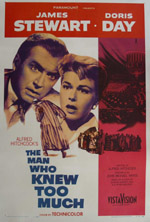 It’s fun watching the two stabs Hitchcock took at this story almost back to back, seeing the development of his style and technical proficiency, as well as the parts of storytelling that work in neither story. There is an interesting remark on the DVD of the producer of the remake being told by Hitchcock to watch the original Lorre vehicle, to see if that could be remade. The producer made some remarks about Hitchcocks development since then, which apparently hurt the man’s pride – odd, since the earlier work is so obviously flawed. When interviewed by Truffaut much later, he himself made the talented amateur / professional comparison between the two version’s directors, but in the early fifties he obviously still didn’t have the necessary distance from his earlier work. Maybe that’s why he only went half the distance in fixing the flaws, leaving the quite unconvincing spy splot of assassinating a politician in a public auditorium, and the cartoonish police.
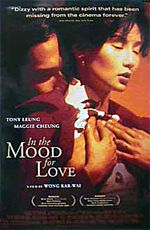 The romantic mood and intimate, at times claustrophobic, cinematography, of this compelling masterpiece pull you in closely, and make you experience the melancholy mood and longing of the main characters first hand, for an almost dizzyingly intense experience. The end left me scratching my head a bit, with especially the disconnected footage of De Gaulle suggesting that I maybe missed a whole level of allegory to the plot, but then again, maybe not. It matters little either way.
 Let me start by saying that we didn’t actually deliberately rent this. Rather, we inherited a box with four VHS tapes of Hitchcock classics, three of which I had never heard of. The fourth was indeed a classic, so we watched that. I should have been suspicious at the distinct snapping sound I heard when the movie was out of its box – the marketing trap had sprung.
 If you liked the quirky humour of the lyrics of Sparks last album, Lil’ Beethoven, and the bombast of their musical arrangements, you’ll probably also love their newest bundle, though you might not find enough songs markedly distinct from the previous work for comfort, that the spirit behind something like “As I sit Down to Play the Organ at the Notre Dame Cathedral” is indistinguishable from that coming up with “How Do You Get to Carnegie Hall”, and might even claim that this is but an exercise in preparing something according to tried recipe, and thus not as delighful as Lil’ Beethoven was. And maybe I’d agree, but it’s still a damn good album. And that Cathedral song rocks. Or pipes, or whatever. Halleluja, I got faith.
 Sometimes one opens a book, or reads a first line, and immediately it’s clear that the thoughts and concepts that went into the work were sorely missing from the world, yet nobody had realized it before. Such is the case with this gem of philosophical reasoning. An essay on the essence of bullshit, and an attempt to explain its apparently increasing dominance of today’s communication, this work should be the basis for a much more thorough study of the phenomenon. The exhilarating delight and sheer fun of reading a serious deliberation on the issue must not distract from the fact that this is not satire, nor is it humorous, except insofar as it is a surprising and complex study of a phenomenon commonly thought to be not worthy of such study. To be sure, this combination of surprise and incongruency of means and perceived complexity of the subject are what makes the first reading such a pleasure, and look superficially like a satire of moral philosophy. But to stop at that level would be to mistake the work for its subject, and to miss the chance to develop the tools to attack the toxic prevalence of bullshit in all the public spheres of communication.
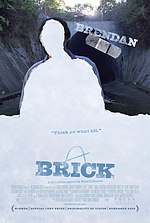 There isn’t much I’m going to say about this magnificent genre marriage of film noir thriller with highschool drama, except: go, see it. A remarkable script, pitch perfect performances, a multitude of lovely details and references: Just go, already.
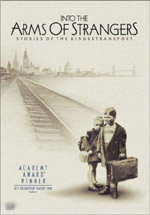 If anyone were following the reviews on this blog, a pattern of Nazi movie obsession in recent weeks would become apparent. This is partly due to an unchecked adding frenzy to our Netflix queue quite a while ago, and I’m growing a bit tired of it. So this probably explains in part why this documentary of the Kindertransporte, humanitarian efforts in the late 1930s saving tens of thousands of German Jewish children from certain death by sending them to host families in England, didn’t quite manage to grip my attention. It’s a heartwarming story, even if the host families were often struggling with the stressed out children they were receiving, but somehow the movie doesn’t manage to make it stick together. Maybe its the lack of historical commentary and an overarching message of the movie, maybe its just uninspired editing, and dragging interviews. Or maybe it’s just me – the Oscar this movie won in 2001 would suggest that, if I believed awards like the Oscars to be a genuine mark of quality.