Chan-wook Park – Oldboy (1)
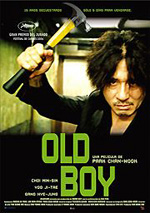 I enjoy watching movies with advertised surprise endings, not attempting to guess the twist beforehand so that it can have maximum impact. Here, I vaguely suspected the ending about halfway through, enough to take away the bottomless feeling I distinctly remember from having in The Sixth Sense, which is too bad. That doesn’t say anything bad about the movie, and I just mention it to justify my not talking at all about the plot of Oldboy. I cherish surprises, and so should you. Besides, if you want to be spoiled, there are plenty of places online for that.
Oldboy captured me both by the shocking intensity and realism of its violence, both physical and emotional, and it’s toying with the balance between the cool aspect of the martial arts tradition, and the dark and disturbing reality of violence. Contrary to what I’ve read elsewhere, though Oldboys perfect aesthetic design and it’s fragmented storytelling might suggest it, this is not a postmodern play on popculture themes in manner seemingly defined by Tarantino’s early works (as I’ve found said in multiple places), but rather a monumental tragedy, masterfully told.
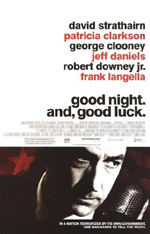 While Clooney did seem a bit too proud of the things he’s been doing lately at the Oscar’s, the things he does are indeed pretty great, and he wasn’t quite deserving of the scorn heaped upon him by pop reactionaries Parker and Stone in a recent South Park episode (that puts him in a league with recently mocked Al Gore. Apparently poop jokes aren’t controversial enough any more. But I digress). This movie depicts, in rather beautiful black and white cinematography, the courageous act of a few TV journalists at CBS defying overpowering senator Joe McCarthy, and contributing significantly to his eventual downfall. An inspiring and encouraging story at any time, the present context makes this indispensable.
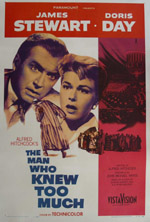 It’s fun watching the two stabs Hitchcock took at this story almost back to back, seeing the development of his style and technical proficiency, as well as the parts of storytelling that work in neither story. There is an interesting remark on the DVD of the producer of the remake being told by Hitchcock to watch the original Lorre vehicle, to see if that could be remade. The producer made some remarks about Hitchcocks development since then, which apparently hurt the man’s pride – odd, since the earlier work is so obviously flawed. When interviewed by Truffaut much later, he himself made the talented amateur / professional comparison between the two version’s directors, but in the early fifties he obviously still didn’t have the necessary distance from his earlier work. Maybe that’s why he only went half the distance in fixing the flaws, leaving the quite unconvincing spy splot of assassinating a politician in a public auditorium, and the cartoonish police.
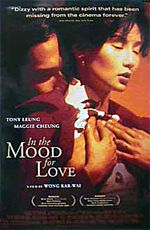 The romantic mood and intimate, at times claustrophobic, cinematography, of this compelling masterpiece pull you in closely, and make you experience the melancholy mood and longing of the main characters first hand, for an almost dizzyingly intense experience. The end left me scratching my head a bit, with especially the disconnected footage of De Gaulle suggesting that I maybe missed a whole level of allegory to the plot, but then again, maybe not. It matters little either way.
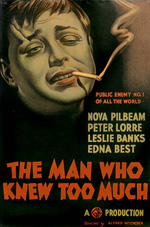 Let me start by saying that we didn’t actually deliberately rent this. Rather, we inherited a box with four VHS tapes of Hitchcock classics, three of which I had never heard of. The fourth was indeed a classic, so we watched that. I should have been suspicious at the distinct snapping sound I heard when the movie was out of its box – the marketing trap had sprung.
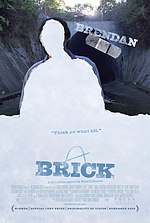 There isn’t much I’m going to say about this magnificent genre marriage of film noir thriller with highschool drama, except: go, see it. A remarkable script, pitch perfect performances, a multitude of lovely details and references: Just go, already.
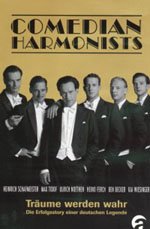 With a subject as intriguing as the history of the beloved vocalist combo, and their struggle with the rising Third Reich, and a freebie soundtrack treasurechest, it is hard to see how a movie could fail even as much as this one does. A stale and wooden script, endless repetitions of one single song (Veronica, der Lenz ist da) instead of a representative collection of the Harmonists’ work, and a simplistic notion both of human character and historic processes make this a less than splendid experience – especially when compared to Aimee and Jaguar, which is a entirely different league on a fairly similar subject.