Search

History


Friday, December 30th, 2005

Jeffrey Eugenides – Middlesex (2)

A fiction so convincing that I needed to remind myself several times that I was not reading an autobiographical account. The story of a hermaphrodite growing up in Detroit, and his/her family’s history stretching back into Turkey are told in epic breadth, and with a lot of fascinating historic detail. The narrative holding it all together, that of the girl Callie turning into the man Cal, seems to dissolve to little significance against that background, making me wonder if more focus on the story and main character itself wouldn’t have served the overall experience better.

Monday, December 26th, 2005

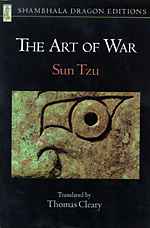
Sun Tzu – The Art of War (3)

When a dog pees on a mountain, does the mountain care? Depends on the size of the dog, you might answer, but in general it won’t. General – what better segway than that to lead into my two cents on Sun Tzu’s Art of War, commonly hailed as the essential read for business strategists, soldiers, garbage collectors, and, really, everybody, for war is a metaphor for life, and we all have one of these, after all. In spite of that Master Sun’s strategic nuggets of wisdom were a bit lost on me. I don’t object to anything said, and the style of the translation, and, I presume, the original, is very concise and poetic in it’s condension, but what in this book I find applicable is obvious, and what isn’t obvious doesn’t seem applicable. On top of that this edition has been translated an edited by Thomas Cleary. Cleary follow every few sentences of Sun’s text with serveral different commentaries, and the sequence of Sun’s dense, poetic writing, and the commentators clumsy, wordy rephrasing makes this an odd comedic experience.

Thursday, December 22nd, 2005

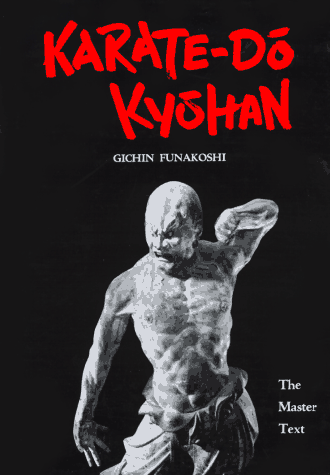
Gichin Funakoshi – Karate-do Kyohan (1)

This is a wonderful and concise introduction to all mayor aspects of karate, from the basics and kata to free sparring. What I found most fascinating – besides the insightfully detailed kata descriptions – was how meaningful those detailed notes become when you don’t read them as descriptions or recipes, but as commentaries on something you already know – or, even more interesting, know in a similar shape. Since I’ve been studying all the Kata’s in their Wado form, Funakoshi’s reasoning is most intriguing where he describes the rationale for doing something different from how we do it. The dialectics of form become apparent, the fact that one needs to be restricted, to see the unfoundedness of that restriction, and thus overcome it. Which makes me realize that Hegel was a very eastern kind of Swabe.

Monday, December 19th, 2005

Munching pills in darkened rooms

Cognitive Daily ? Video games: Are the myths true?

It’s a contentious issue – do computer games add to behavioral problems or are they a mere symptom. Every time I hear someone claim that violence is caused by games, I just want to whip out the rocket launcher and splash their brains on the pixelated wall; luckily I always remember the number one lesson playing the Doom series games taught me: don’t use a rocket launcher in a tight space. So I have to resort to reasoned arguments, like those presented by Dave Munger over at Cognitive Daily (link above). Doesn’t that prove somethingor other?

Worth mentioning in that context is the fabulous quote/joke “Computer games don’t affect kids; I mean if Pac-Man affected us as kids, we’d all be running around in darkened rooms, munching magic pills and listening to repetitive electronic music.” That quote is usually misattributed by non-factchecking geeks to some Nintendo CEO named Kristian Wilson. In fact, it’s been written by comedian Marcus Briggs, who is rightly proud of it.

Friday, December 9th, 2005
Sapir, Whorf and History

food

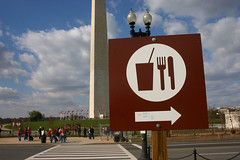
When we toured all the big monuments on our recent visit to DC, I got gut feelings about them, I was left cold by the World War II memorial, touched by the Vietnam Memorial’s somber simplicity, avoided what looked like a bad kitschy joke, but was in fact the Korean War Memorial, looked up with a sarcastic smile at Lincoln’s face covered in scaffolding for renovation, and stood with an even more sarcastic smile in the midst of the great words of Jefferson and, again, rubble and scaffolding. Jefferson’s statue, a park ranger had explained, looked north toward the White House, because Jefferson was highly suspicious of authority. This statue, apparently, keeps the administration honest.

It is an interesting experience to then revisit this only a short while later when Slate’s Witold Rybczynski walks the same walk. The substance of his article is interesting, but I’m most intrigued by my reception: some of the things he says I have the impression of having felt while visiting – like the inappropriateness of the fountains and the cold oddness of the columns in the WW2 memorial, but I could never have said them. Now the fact that I can think that this man says what I think, while at the same time I would not have been able to say it myself, pretty much refutes the Sapir-Whorf hypothesis. If you’ll accept that jump.

On a related note, I bought Roth’s The Plot Against America for the flight back, and was delighted by it’s thoroughly constructed plot and the clever way it turned it’s counterfactual premise back into the real flow of events at the end. I felt pretty stupid when I read what feels now like pretty obvious criticism on Salon, saying that a book that talks about how close American society was to prosecution of minorities while hardly mentioning the situation of the black, seems counterfactual indeed. Sadly, I didn’t notice that at all, explicitly or implicitly, but don’t think that’s an argument for Sapir-Whorf. Least I don’t feel it is.

Edit: It’s a bit misleading to talk about Sapir-Whorf in this context, since the thesis has a hard and a softer formulation. While the hard formulation says that there is no thinking but what is mediated by language, hardly anybody adheres to that any more. The softer variant is that language influences what we can think, and there some cool evidence to that end has just come out. I’ve added an entry on that further up.

Thursday, December 8th, 2005

Warmgefönt

don't do that

Nature berichtet in seiner aktuellen Ausgabe, dass man einen britischen Tierversuchs-Lobbyisten für eine Fernsehsendung den Alltag eines Versuchsnagetiers nacherleben liess. Unter anderem musste er dabei teuflisch warme Fussböden und brutal trockengefönte Haare erdulden. Wir Nagerfreunde begrüssen dergleichen Kaspereien natürlich, nicht nur als soliden Beitrag zu einer komplexen Diskussion, sondern auch als ersten Schritt in eine bessere Welt; denn erst wenn alle Menschen leben wie die Ratten ist unser Auftrag erfüllt. Oder Karnickel. Oder eben Vizcachas, wir sind da flexibel.

Vielleicht darf man sogar hoffen, bei der Ausstrahlung der Sendung am 14. Dezember auch eins der berüchtigtsten Rattenexperimente am Lobbyisten nachgestellt zu sehen; das nämlich, bei dem ermittelt wurde, um wieviel länger Ratten sich durch Strampeln vorm Ertrinken retten, wenn man ihnen zuvor den Eindruck verschafft hat, man würde sie schon beizeiten da rausholen. Zugegeben, das Originalexperiment ist recht alt, wurde schon in den 50er Jahren durchgeführt und würde heutzutage von keiner Ethikkomission mehr genehmigt. Aber ein kleines bisschen Unsachlichkeit ist ein geringer Preis für eine unterhaltsame Sendung, und zudem sind Lobbyisten ja in der Regel auch nicht mehr die Jüngsten.

(Dieser Beitrag erscheint parallel bei der Riesenmaschine).

Monday, November 28th, 2005

Der heilige Andreas

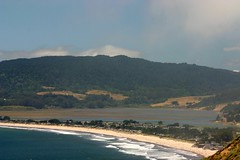
bolinas lagoon

Der Andreasgraben kreuzt die Berge von Santa Cruz in nordwestlicher Richtung, schneidet die Halbinsel, an deren Spitze San Francisco liegt, und verläuft dann etliche Dutzend Meilen im Pazifik. Von den Flanken von Mount Tamalpais aus kann man das abrupte Ende der nordatlantischen Platte und den Beginn der pazifischen am scharf verlaufenden Kontrast der Wasserfarben erkennen, dunkelblau glimmt die Tiefsee.

Das Erdbeben von 1906, in dessen Folge die Stadt abbrannte, hatte sein Epizentrum ein weiteres Stück nördlich, wo der Graben wieder über Land verläuft und Point Reyes von Festland trennt. Das Beben von 1989, bei dem die Bay Bridge einstürzte, hatte sein Epizentrum in den Bergen von Santa Cruz.

Das nächste grosse Beben wird aber nicht im Andreasgraben sondern im Haywardgraben stattfinden, der hier in Berkeley am Ostende des Campus verläuft. Letzte Nacht um neun wackelte unser Haus, Stufe 2,4 meldete die Erdbebenwacht. Mein viertes Beben hier.

Friday, October 28th, 2005

Education, 1986

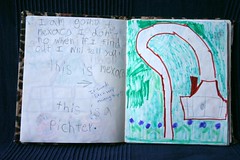
a pichter of mexaco

A few weeks ago I found a child’s diary in a cardboard box at the side of the road. The diary is from early 1986, starting in the middle of January and ending probably some time in February. A teacher named Karen encouraged 7 year old Miranda to keep a diary, and added questions and comments to it.

The diary is very sweet, and Miranda’s private spelling quite endearing. A strange “pichter” of Miranda’s life in 1986 emerges from its pages. She describes a visit to her grandparents in New York, which she was very excited about, her problems and friends at her new school, writes about her parents, her brother and her imaginary, double initialed friends. Very touching.

See the whole set.

Saturday, March 25th, 2000

Herr Tod

Herr Tod startet um neun, Herr Todgucker leider erst um zehn vor. Damit sich beide trotzdem treffen können, das hat Herr Todgucker berechnet, muß er sich eilen. Schnell also läuft er. Wo, fragt er einen Passanten, wird Herr Tod sich zeigen? Die Antwort fällt beunruhigend aus, die Entfernung ist größer als gedacht. Schneller läuft also Herr Todgucker. Der Atem wird ihm knapp, als endlich das Kino am Horizont auftaucht. Er erreicht es um 2 Minuten nach neun, schnappt nach Luft, kauft die Karte und sieht, aus dem Augenwinkel, daß Herr Tod, der armselige Verrückte, erst um viertel nach Neun mit seinem Film beginnt.

Saturday, February 19th, 2000

Gesunder als

Das Essen in den frühen Morgenstunden schmeckt, das Restaurant ist beinahe leer. Ein Fischgericht auf einem Teller und die leckeren Schneeerbsenblätter, allesamt sind sie schon restlos verputzt. Da hören Douglas und ich eine Stimme von links, “Are you guys from germany?” Rasch entspinnt sich eine Unterhaltung mit dem seltsamen Mann mit der Mütze, der am Nebentisch auf sein Essenspaket wartet. Während er aus seiner Forschung über einen niederländischen Drucker des sechzehnten Jahrhunderts ungefragt Anekdoten ausbreitet, wird sein Mahl, in mehrere Lagen Plastik verpackt, gebracht. Zugleich uns, den einzigen anderen Kunden, ein Teller mit Orangen und Glückskeksen.
Ich breche meinen Keks auseinander, der Nebentischgast erzählt einen Schwank über den einzigen deutschen Satz, den er noch kann (“Frisches Luft ist gesunder als altes Luft”) und geht. “A thrilling time is in your immediate future”, lese ich gelangweilt, aber Douglas hat mit “You will attend a party where strange customs prevail” eine echte Weisheit erkekst. Ich beuge mich über den Tisch, um besser lesen zu können. Ein halber Keks entfällt mir. Ich suche links vom Stuhl, rechts, vor dem Stuhl. Nichts. Meine Füße, vom Beugen noch in der Luft, muß ich nun absetzen, um den Stuhl bewegen zu können. Mein schöner Keks! Langsam setze ich den linken Schuh ab, und mit dem leise knirschendem Geräusch, das der aufmerksame Leser vorhersah, endet diese nahrhafte Geschichte.