Search

Animals


Wednesday, June 7th, 2006

Anti-Insel

Ausserhalb des Wassers stehen Black Skimmer aufgereiht, dutzende von langen roten Schnäbeln parallelgerichtet, Elementarfischmagnete auf Jagdpause. Im Wasser ein paar Meter entfernt scheint nichts zu leben, keine Fische, keine Krebse, nur vereinzelte Watvögel und ein paar federlose Hühner stehen in den Fluten. Hier aber, begrenzt vom Ufer einerseits und einer momentanen Sandbank andererseits verläuft eine Schucht, vielleicht einen Meter tief an der tiefsten Stelle, über die ich in der Strömung hinwegschwebe, die Schnorchelbrille an die Nase gesaugt, und den Sand Dollars und den kleinen Fische mit den Flossenflügeln beim Dasein zusehe. Vom anderen Ende der Schlucht her kommt jetzt eine Kleinfamilie, die Kinder, aufgeregt, haben einen Fisch erspäht und klettern die Böschung auf und ab, die in Sandwolken und Lawinen in neue Formen ausweicht.

Friday, May 19th, 2006

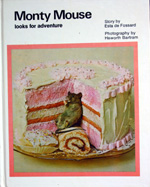
Esta de Fossard – Monty Mouse (4)

montymouse.jpg This is the story of Monty Mouse, his adventures in the world, and his eventual return to his mother and his home. No need to leaf through the thing, for the cover shows all that’s wrong with this book in a nutshell. To wits: Monty “Mouse” is not a mouse, he’s a stuffed, dead rat, or, more likely, a collection of similar looking, stuffed dead rats. Upon realizing this, the adventurous and quirky photographs instantly turn very tasteless and cruel, not to mention the fact that I feel fooled by the author selling me one mammal for another. Some learning experience. But the worst fault lies with the story itself, for young Monty’s ingenious adventures invariably turn sour, and in the end send him running home for mom with nothing to show for all his inventiveness but a dirty coat. What a rotten message. Look at Monty’s stuffed carcass hanging miserably in what should be the world’s sweetest spot. No doubt he just spoiled his appetite for a nice Brussel sprout dinner, because he is sick from all the cake. That’ll teach him – and it teaches me, too: to run.

Thursday, March 30th, 2006
do itashimashite

considering

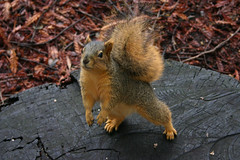
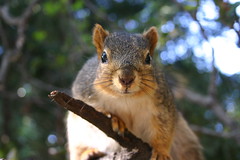
So wie ferne Stürme über dem Pazifik im Beringmeer komplexe Wellenfronten erzeugen, die beim Strandspaziergang mitunter rasche Sprints erforderlich machen, um den plötzlich auflaufenden Riesenwellen trockenen, und vor allem warmen, Fusses zu entgehen, so steigt und fällt unerklärlich der Eichhornpegel rund um den gefallenen Eukalyptusstamm, um den wir füttern. In einem Moment tummeln sich zwölf der Tiere und balgen lautstark um die besten Futterplätze, dann wieder verschwinden sie unerklärlich allesamt minutenlang. Vermutlich machen sie anderswo ihr Hornding, füttern die Brut oder arbeiten an der Übernahme der Weltherrschaft qua Niedlichkeit.

Im Augenblick ist grade wieder Hörnchenebbe, nur noch eins sitzt auf dem Baum und nagt an einer halben Walnuss. Eine mittelalte Japanerin, eine Mutter, die ihre studierende Tochter besucht, nähert sich uns, während die Tochter die Szene aus sicherer Entfernung beobachtet, nestelt an der Digitalkamera und spricht das verbliebene Tier auf Japanisch an, bittet es um ein bisschen Geduld. Das Tier versteht aber kein Japanisch, und ist im selben Moment mit der Nuss fertig und hüpft davon, als die Kamera einsatzbereit ist. Ohh, macht die Japanerin ein wenig enttäuscht, aber schon reiche ich der Fressmaschine eine neue Nuss, und das Foto kann gemacht werden. Thank You, sagt die Japanerin artig, und Do Itashimashite, erwidere ich ebenso artig, keine Ursache, das Sprachenlernen soll ja schliesslich einen Sinn gehabt haben. Die Japanerin verzieht keine Miene, dreht sofort wortlos ab, geht zurück zur Tochter, spricht ein paar Worte, die Tochter blickt in unsere Richtung, dann verschwinden beide. Die Hörnchenflut läuft unterdessen wieder auf, und der Nussausschank floriert.

Sunday, March 12th, 2006

Fisch her, das ist ein Überfall

all your base are belongs to me
(Abbildung ähnlich)

Die Waschmaschine müsste jetzt, daran erinnert mich das penetrante Pfeifen des Herdes, genauer: das penetrante Pfeifen der in den Herd eingebauten Stoppuhr, die Karate-Gis ausreichend durchgewalkt und somit fürs maschinelle Anpusten im Anpuster vorbereitet haben. Ich verlasse daher die Wohnung, die Tür lasse ich keck angelehnt, steige zwo Stockwerke bergab in die kalifornsiche Kälte – es schneite gestern tatsächlich in San Franzisko. Ein Riss quasi im Weltgefüge -, zerre dicken, weissen Baumwollstoff aus der einen Maschine, stopfe ihn in die andere, reihe noch sechs Quarterdollarmünzen in den vorgesehen Schlitzen auf dem Geldeinwurfschlitten auf, schiebe den Schlitten ein (es rastet und rasselt) und drücke den Knopf. Der Anpuster beginnt, die Wäsche im Kreis zu drehen und anzupusten. Ich gehe wieder rauf und schliesse die Tür. Und als ich nun durchs Wohnzimmer gehe, kommt mir jemand entgegen. Das ist sonderbar, weil ich doch alleine zu Hause bin, und unpraktisch, weil die Kampfrüstung jetzt im Anpuster kreist, statt meinen Bierbauch in eine tödliche Kampfmaschine zu kaschieren. Macht aber nichts, denn mir kommt wieder erwarten kein Übeltäter, Gauner oder Halunke entgegen, sondern eine Katze. Also letztlich natürlich doch ein Halunke, aber anders.
Auch das ist sonderbar, denn wir haben ja gar keine Katze, aber wie ich schnell herausfinde sieht die Katze das anders. Vor ein paar Tagen haben wir den Fehler gemacht, auf ihr exzessives Katzengejammer erst mit Reinlassen und dann mit Fisch zu reagieren; jetzt also lässt das Tier sich schon selbst rein, bald wird es dann vermutlich auch die Fischdose selber öffnen. Vorerst geht das aber nicht, denn wir haben keinen Fisch mehr im Haus. Die Katze frass ihn auf. Nach fünf Minuten maunzen und durch die Wohnung paradieren sieht das Tier das dann auch ein und trollt sich. Ist ja grade nochmal gutgegangen.

Friday, March 3rd, 2006

Zusammenstoss

an echo of things to come

Als ich um die Ecke biege, sitzt er da, vielleicht zwei Meter entfernt, und inspiziert einen halbzerkrümelten Keks. Das bindet seine Aufmerksamkeit so sehr, dass ich die Entfernung halbiert habe, ehe er mich bemerkt. “Tenki-wa atsui desu”, murmle ich im abwesenden Zwiegespräch mit dem Ipod, dann “Iie, tenki-wa samui desu”. Sprachlehrganghohlheiten sind keine Kekse, aber auch ich bin abgelenkt, und erwache erst zum vollen Bewusstsein, als ein erklecklicher Rumms meinen rechten Fuss erschüttert. Augen begegnen sich für eine Sekunde, dann schüttelt er sich und verschwindet in der Hecke. “Kanada-no Tenki-wa warui desu” rufe ich erstaunt aus, und “You fool”. Kurz erwäge ich, den Keks zu stehlen, lasse es aber dann doch sein.

Saturday, February 25th, 2006

John Muir – My First Summer in the Sierra (1)

A young man goes into the mountains to herd sheep and falls deeply in love, changing the rest of his life? Sound familiar? It took me until I was almost done with this exuberant diary to notice the funny parallels to this years Oscar winner. Since Proulx’ story and Lee’s movie are a commentary on the myth of rugged wilderness and the lone, heroic men populating it, it’s interesting to compare the two on that level. Muir in this trip and the path it set him on for his life, shaped another pervasive myth – that of unspoiled nature being more than a resource waiting to be used, but of value in itself. While the overpowering enthusiasm of his prose (written long after the trip), and his referring to plants and animals alike as “people” sound very quirky, and certainly his habit to talk to the flower people does, they are also part and parcel to his view of nature as a vast society, of which man is but a small part. His awe in the face of everything nature throws his way is a great inspiration, and Dan Simmons’ suggestion in the Hyperion novels, that with time Muir he might turn into the patron saint of his own religion seems very convincing. He certainly was crazy enough for the job.

A while ago, at an SfN meeting, I attended a ethics panel, where one of the questions discussed was the growing of human neurons in animal brain. Other than being vaguely creeped out by the concept in spite of my better knowledge, I only remember one of the researchers talking about how very, very much they discuss this in the ethics panel at Stanford. I guess he sorta knew that people would be vaguely creeped out.

Now the Frankenmice have made Yahoo News, and no doubt the religious nuts are already collecting their wits for an assault against the perversity of science! So let me be quick to point out that this mousebrained thing is a great idea, for it brings us one step closer to creating Franky and Benjy, the two mouse overlords from The Hitchhikers Guide to the Galaxy.

Read more at news.yahoo.com/s/ap/200…

I should have known. While I enjoyed the charming simplicity of the plotlines in the Narnia series, and appreciated them as the children’s books they were intended to be, none of their story elements packs the mythological punch of Tolkien’s writing, and the Christian parable feels tired once you’ve spotted it. Which is hard not to.

To start with the positive, the movie is nicely done, devoid of cringe-inducing lines or badly done characters, wich is saying something for Disney. But it is also quite boring, and at least a half hour too long. To strip a story about an oppressive regime, war and an epic battle for the survival of a whole world of all the nastyness these things should involve, and leave it with decoratively frozen puppets and the frosty looks of Tilda Swinton, is to deny the book its impact. Sure, you shouldn’t frighten your underage audience into little whimpering heaps, but surely some sense of the consequence of evil would have been appropriate.

Plus, not surprisingly, seeing the crude metaphor for the New Testament, Aslan’s sacrifice for the reinforcing of the “old magic”, rather than reading about it, makes it’s crude and unsubtle symbolism so painfully apparent, that I change my initial statement above – there is a cringy moment there, but it’s all Lewis’ fault.

Monday, December 12th, 2005

The buzz of bees

Bees can recognize human faces, study finds

More pseudo-news about animal superpowers. Like the ability of pigeons to distinguish painter’s styles, this is interesting for entirely different reasons than the general audience will think reading the article – rather than showing some uncanny humanness in bees, it shows the algorithmic generalityof some problems, and misleads one into thinking they are simple to solve computationally, because supposedly simple animals can solve them. I would be surprised, however, if these bees were doing better than face recognition software, in which case the point becomes moot.

Particularly interesting is the researcher’s quote “the bees probably don’t understand what a human face is” (my emphasis), indicating that it’s not just the journalists that are playing that angle for the publicity. Although on the other hand, maybe that does mean that killer bees can be trained to be truly deadly now. Winged assassins! Hold the presses!

Sunday, November 6th, 2005

Deceptive Imagery

The first thing I noticed when seeing this shot of Bush during his recent visit to Argentina were the rolled up sleeves, maybe because they’re so blatantly obvious, maybe because I was primed by the recently leaked email correspondence of then FEMA director Michael Brown, where he was advised to roll up his sleeves to appear more hardworking, while people in the hurrican’s wake were struggling to stay alive.

I realize, of course, that if a public person just behaves naturally, the resulting image will be anything close to honest. But doesn’t it seem odd that it is accepted, or indeed expected, of trusted public figures to be deliberately deceptive about themselves and mislead everybody?

And because I just finished it, I’ll throw in a little anecdote from de Waal’s book (see below). One day the then alpha male of the chimpanzee colony at Arnhem Zoo was challenged. He stood up very manly to the threat and showed no weakness. But after he had won, when he turned away and his face wasn’t visible to his rival any more, he immediately expressed his insecurity and fear in a wide, anxious grin. But who would compare Bush to a chimp, really?