Search

Most of what this movie reveals about the criminal mastermind Kissinger was already known to me, and while the detached way the material was presented made the movie seem much more objective and unassailable as any movie ever could be, it also produced a feeling of heavy handed redundancy. I think if my choices are polemic hilarity, as in Moore’s borderline scenes in Bowling for Columbine, and serene factuality, I’ll take the raving fat man any time. The most interesting suggestion came at the very end, when either the author of the book this movie is based on, or the films director, suggested that the reason the US hadn’t joined the international court yet was that they were very afraid of public scrutiny of Kissinger’s files. It almost makes too much sense.

Wednesday, February 8th, 2006

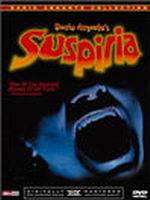
Dario Argento – Suspiria (4)

As usual with obscure stuff on our Netflix list, I forget where I came across this or why I ordered it. A quick IMDB and google search reveals that Argento, and this movie in particular, have a devoted fanbase who consider him a visual genius and Suspiria the paragon of horror movies. I beg to differ. While the design is original, and it’s always a delight to see Escher’s art, even if it’s misplaced, the plot, acting, effects and direction suck just too badly to be bearable. The attack of the rubber bat is a comic highlight, in an otherwise overly long C movie, and the tagline “the only thing more terrifying than the last 12 minutes of this film are the first 92” is awkwardly fitting.

Monday, February 6th, 2006

Michael Gazzaniga – The Social Brain (2)

I was unable to find any image of the cover of this book online – which tells you something about it’s age. The Social Brain came out in the 80s, and it proposed, based in Gazzaniga’s own groundbreaking research on split brain patients, that the brain was a combined structure of separate and somewhat independent modules, and that the unfied mental life we seem to have is a constructed illusion rather than a controlling entity. The descriptions of the experiments are as amazing today as they must have been when they were first done, the speculative general part seems to vague to be either true or false, and the final chapter, in which Gazzaniga reverently interviews himself, instead of just saying what he wants to say, for no good reason, is slightly embarrasing.

This is a profoundly silly book, about magic symbols and masonic references on the US 1$ bill. Some of them are surprising and interesting (like the etymology of Dollar, the significance of the pyramid, or the source for the $ symbol), but most of the letter and word counting and geometric analysis of what appears where seems more like an unhealthy obsession than an informative analysis. I know Gematria is very honorable quackery, but it obviously is possible to overdo it. Who would have thunk?

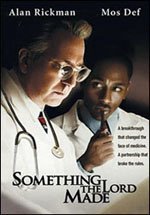
I have wanted to see this ever since I saw the trailers on HBO when it first came out, firstly because the subject seemed interesting (the invention of heart surgery combined with the story of racial discrimination in the medical establishment), and because Alan Rickman plays one of the main characters. Those were good enough reasons, but as it turns out, Mos Def almost steals the show playing the other lead. The whole way of story delivery is a smidge on the sentimental side, but not enough to spoil a touching historical tale.

Monday, February 6th, 2006

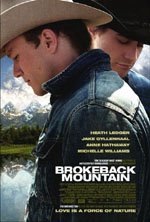
Ang Lee – Brokeback Mountain (2)

I have to admit to being reluctant to go see this, mainly because I thought it would, beyond the taboo breaking gimmick which seemed to have catapulted the two cowboys into the center of the cultural universe, be an inconsequential and boring love story. Now I feel reluctant to point out how wrong I was, because I’m sure you must’ve heard by now that this is a touchingly real story about failed lifes, magnificently filmed in a beautiful setting.

Saturday, February 4th, 2006

Dan Simmons – The Fall of Hyperion (2)

In this sequel to Hyperion, we learn a lot more about what the Shrike is, who built the Time Tombs and why, and what the enigmatic events in the first book meant. In a way, these revelations destroy the sense of mystery that surrounded the time tombs and the Shrike. The necessity to keep a plotline that goes back and forth in time from folding unto itself and creating a know makes this book hard to follow in places, and gives a feeling of contrivance to what seemed a monumentally powerful force. The explanations, on the other hand, work well enough, and the overarching theme of death, suffering and how organic life can keep its dignity in the face of them and strive to be free of them without destroying everything in the process is fascinating to follow. The combination with Keats’ romantic poetry, while adding a very unusual touch to this space opera, doesn’t work all that well for me, but that might mainly be because I’m not too smitten with romantic literature and find the hyperbole and godlyness of subject matter and language tiring.

I am sufficiently interested in Simmons vision to someday go on to read Endymion and Rise of Endymion, the next two installments in the Hyperion saga, but not very soon. I’m too afraid to find religious mayhem similar to what happened in Herbert’s progressively less accessible Dune series.

Friday, February 3rd, 2006

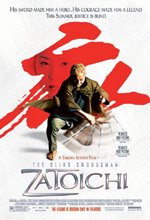
Takeshi Kitano – Zatoichi (3)

This could have been a marvelous homage to martial arts movies in general and the Zatoichi series in particular, full of references to details of Japanese culture, and funny little scenes. But unfortunately the plot, which should have been a simple story of evil oppression and the lone swordsman who breaks it, is told in such a fragmented and oblique style, that it gets into the way, rather than providing the frame upon which all the fine details are hung. It’s too bad, there is so much to love in here, but it all just doesn’t come together.

Thursday, February 2nd, 2006

Tony Scott – True Romance (2)

With a script by Tarantino, and being directed by the guy responsible for blockbuster mainstream crap like Top Gun, this could have turned out an self referential exercise in explosion and meanness. Instead, this is a gritty and funny roller coaster ride of a movie, with an awesome cast and a wonderfully reckless storyline. Funny how this one went entirely by me when it came out.

Interestingly, this script already raises the issues Tarantino’s Kill Bill got criticized for: if violence is an aesthetic component of storytelling, am abstract dance with blood as a costume, rather than a realistic deptiction of its physical and psychological consequences, does that make the movie itself an act of violence? I don’t personally think so, but it might be a hard case to make.

Sunday, January 29th, 2006
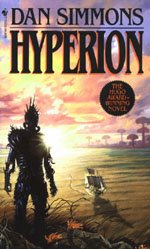
Dan Simmons – Hyperion (1)

An excellent crossover between literary history, theological treatise and captivating worldbuilding science fiction, the only shortcoming of this book is that it ends just when things start to become interesting. Not until the last few pages did I realize that the confrontation with the frightening entity called the Shrike, the opening of the Time Tombs and the outcome of the big conflict between human and AI madness would be subject of the sequel. Still, this collection of the life stories of six people, bound together by a pilgrimage (Hello, Chaucer), weaves a picture of a future, where technology and metaphysics blend into a web of awe.

It’s interesting to see Simmons trying to deal with a technical detail problem facing every attempt at Science Fiction with some cultural and historical background: either every reference has to be composed and explained in detail, or all the references come from 19th and 20th century culture, which becomes increasingly improbable the further in the future the plot is set. The fact that his plot contains people from many different epochs makes up for some of that asymmetry. That device almost justifies the pilgrims singing “We’re off to see the Wizard” when they go to face the Shrike, and the difference is made up by the creepiness of that very image. But overall, it still doesn’t quite come together, the lists of artists that are mentioned in a few places always separate nicely into the ones the reader knows and those unkonown names just plugged in to indicate the passing of time. But if the past is any indication for the future, hardly anybody from our time will still be known 600 years hence. Maybe Simmons is as close as one can get to solving that particular problem here.