Search

Neil Gaiman’s work is a bit of a paradox to me. I like his storytelling and inventiveness – if sometimes reluctantly, for excessive use of pathos -, but visually he consistently seems to be balancing on the fringes of a realm of exuberant quirkyness and fantasy running wild that gives me the creeps for all the wrong reasons. This movie is no exception, with a neat twist on good/evil dichotomies, a likable set of characters, and oodles of visual frills. But several of the ideas here are so enjoyable (the birdmonkeys, sphinx/cats and the pair of giants being just three of the more memorable), that the flaws don’t much matter. Maybe I can even bring myself to read the Sandman one of these days. Why? Because it’s there.

Saturday, April 15th, 2006

Kenna – New Sacred Cow (4)

Talk of this album constitutes almost an entire chapter of Galdwell’s Blink. Apparently, many distinguished figures in the music industry heard Kenna’s music and were deeply impressed, but when focus group testing was done, the audience was unimpressed, and radio stations were very reluctant to play Kenna’s stuff. Gladwell uses this as an illustration of the fact that focus group testings aren’t as meaningful as the judgments of experts and can be very misleading, but I beg to differ. Maybe the fact that one of those impressed experts was a member of U2, those toe curling dogooders, should have tipped me off – I am absolutely with the focus group on this one. This is lifeless, uninpsired music and doesn’t speak to me at all. Maybe an entirely different argument could be made from this – about how too much expertise can drive you into the obscurity of private passions no non-expert can understand or appreciate. Or maybe U2 is just full of shit. I like that theory.

Saturday, April 15th, 2006

Malcolm Gladwell – Blink (2)

With the Tipping Point being so entertaining to read, the momentum just carried me right into Gladwell’s newer book on the importance of subconscious snap judgments for all aspects of our lives. Of course there is quite some evidence saying that even when we make seemingly rational decisions, our brains may just be bullshitting us profoundly (in Gazzanigas famous experiments on split brain patients, for example, subjects readily report completely bogus reasons for an action, because the half of their brain speaking, having no clue why the other half did something, makes up a story – without the subject being aware that he’s being conned by the gooey stuff in his head. But I digress), so the phenomenon that the resons for our decisions and actions aren’t always available to our conscious self might just be the tip of the problem that we actually come up with explanations for our actions after the fact by default, and the only reason it tends to make sense so much is that we have been around ourselves long enough to generally know what we will be doing, and have a fairly good theory of our own minds. The most important part of this book I found to be the notion that we are able to shape how our subconscious makes its decisions, and the chapter on how requiring conscious justifications messes up and changes our judgments – unless we’re experts and already know what we’re talking about. Next time somebody asks you why you like something, think twice about thinking about it – you suddenly might not like it any more.

Thursday, April 13th, 2006

Hayao Miyazaki – Hauru no Ugoku Shiro (1)

I still remember being blown to pieces by Mononoke-hime, and it’s hard to imagine anything ever will surpass Sen to Chihiro no Kamikakushi, but Hauro ranks a close (Totoro!) third in the Miyazaki charts. While the plot becomes impenetrable in more than one place, the mysteriousness of what’s going on just adds to the dreamlike quality of the story. The fire demon is a delight, the design a visual triumph, and the characters, in their moral murkyness typical for Miyazaki, likable even when they are the closest anyone can come to evil in his universe. I could maybe have done with a little less screentime for his usual themes of the evils of war and industrialism, but since even those looked good, I won’t bicker. See it if you haven’t, see it again if you have.

Tuesday, April 11th, 2006

Malcolm Gladwell – The Tipping Point (2)

Friends tell me I’ve read this book several years ago and liked it, but try as I might, I can’t remember it. Upon (re?)reading it now, I have an explanation of why that might be. The general theme – social phenomena are subject to nonlinear mechanisms that mean minimal causes in the right place or time can have enormous effects – is of the variety that is so obvious once you get it, you immediately forget the person who told you. Something that obvious doesn’t have an author, or a form, it’s just an impresonal truth. The book is an entertaining and insightful read, but I can already feel the particulars fading in my mind. In a few years I’ll be ready to read it again.

Thursday, April 6th, 2006

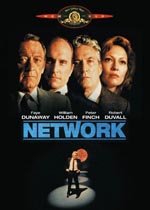
Sidney Lumet – Network (3)

A justified message hardly ever gets better, when it is preached instead of told subtly, and Network makes no difference. This drama of a unscrupulous bunch of network executives turning TV news into a quota hungry travesty akin to a televangelism sideshow would have been much stronger if there weren’t several droning monologues of the main character about the evils of television. It is somewhat ironic that a movie that accuses audiences of blindly gobbling up sensationalism and following any and every leader, if he shouts loud enough, and the executives of ruthlessly exploiting this lack of maturity, resorts to propaganda to try and get its message across, not trusting its own audience, either. Just who, one wonders, are the writers trying to talk to here, and what do they really want to say? As it stands, the message seems to be that since audiences are dumb sheep, the producers of media need to be responsible shepherds. That message is snobbery so close to the opinions held by the films villains as to make it hard to take its scathing criticism of western society seriously. Network has its nice moments – some of Peter Finch’s madman preaching is quite cute, as is the cinematography and the acting -, but overall, it disappoints.

Thursday, April 6th, 2006

Farbversprechen

promise

Der Redner steht ein wenig steif am Podium, die Arme eigenartig locker vor dem Bauch verschränkt, und blinzelt nervös ins gedämpfte Licht. Er bewegt sich kaum beim Sprechen, blickt nicht ins Publikum, hat keine Powerpoint-Präsentation vorbereitet. Er spricht frei, mit unbewegtem Gesicht, übers Skifahren, den Geschwindigkeitsweltrekord im Abfahrtslauf von 65 Meilen die Stunde, den er hält, von seiner Frau, die er beim Skifahren traf, während sie vor ihm fuhr und ihm durch Zuruf die Richtung anwies, darüber, wie aufregend es ist, gelb zu sehen. Dabei zeigt er in meine ungefähre Richtung, vor mir sitzt eine Studentin in einem gelben Sweatshirt. Michael May hatte mit drei Jahren einen Unfall, der ihn ein Auge kostete und auf dem anderen erblinden liess – die Hornhaut wurde undurchsichtig. Als er 46 war, drückten ihm die Ärzte der Uniklinik in San Diego einen Stammzellenring und eine neue Hornhaut aufs Auge. Die Operation gelang, und May trat eine Reise durch die Medien an, der wundergeheilte Blinde mit dem Abfahrtsskirekord. Es gibt eine Handvoll anderer solcher Fälle, oft gelang zwar die Operation, aber die folgende radikale Umstellung, der Schimmer Licht – May sieht hauptsächlich Bewegung und Farbe, keine Details – stürzte die meisten Patienten in Depressionen. May führt seinen Erfolg darauf zurück, dass er sich als Blinden versteht, und das zurückgegebene Augenlicht als Zusatz, nicht als etwas, das ihm zuvor gefehlt hätte. Das ausdruckslose Gesicht über die Köpfe des Publikums gewandt, die Augen geschlossen, sagt er: “Seeing is wonderful. But not seeing is also wonderful.”

The only reason this excellently designed and written killer game doesn’t get a top rating from me, is all the killing. I’m all in favor of frying Doom’s demons, hunting evil unreal aliens or shooting down robots in the Descent series, to name just a few of the blow’em’ups I’ve played over the years, but the stark realism of the environment do make a difference, I think. When you can just jog down a street, whip out the gun and shoot a few people in purple tees, just because they wear purple tees (and would soon start shooting at you, anyway, since you’re dressed in green), or jacking weapons from a National Guard depot is accomplished by shooting the protecting soldiers, it all feels a bit too much like real life for complete comfort. That said, the gameplay is terrific and the scenery breathtaking – and I’ve only seen the quarter or so of the game world that is modeled on Los Angeles so far. The only annoyance concerns saving games, which can only be done at the players home base, and only between missions. With some of the missions having tricky parts that you only get to after sometimes minutes of driving, having to repeatedly do all of one of them just to figure out the tricky bit can be a bit of a drag.

A subject certainly worthy of discussion, the discussion of how to excavate properly in the great outdoors and the health and environmental hazards connected with it, may be stretched a bit thin over the length of an, albeit short, book. A chapter in a general book on life outdoors would have been more appropriate. Even so, Meyer’s tone is refreshingly unconcerned with propriety – she explains about the difficulties getting it right in the introduction – and the stories she has collected can be entertaining. The biggest value for me was to learn about history and mechanism of the diseases – like Giardia – that make drinking unprocessed surface water such a hazard these days. The practical tips seemed nothing common sense wouldn’t have you know already, though maybe it’s a good thing to see them spelled out.

Thursday, March 30th, 2006

do itashimashite

considering

So wie ferne Stürme über dem Pazifik im Beringmeer komplexe Wellenfronten erzeugen, die beim Strandspaziergang mitunter rasche Sprints erforderlich machen, um den plötzlich auflaufenden Riesenwellen trockenen, und vor allem warmen, Fusses zu entgehen, so steigt und fällt unerklärlich der Eichhornpegel rund um den gefallenen Eukalyptusstamm, um den wir füttern. In einem Moment tummeln sich zwölf der Tiere und balgen lautstark um die besten Futterplätze, dann wieder verschwinden sie unerklärlich allesamt minutenlang. Vermutlich machen sie anderswo ihr Hornding, füttern die Brut oder arbeiten an der Übernahme der Weltherrschaft qua Niedlichkeit.

Im Augenblick ist grade wieder Hörnchenebbe, nur noch eins sitzt auf dem Baum und nagt an einer halben Walnuss. Eine mittelalte Japanerin, eine Mutter, die ihre studierende Tochter besucht, nähert sich uns, während die Tochter die Szene aus sicherer Entfernung beobachtet, nestelt an der Digitalkamera und spricht das verbliebene Tier auf Japanisch an, bittet es um ein bisschen Geduld. Das Tier versteht aber kein Japanisch, und ist im selben Moment mit der Nuss fertig und hüpft davon, als die Kamera einsatzbereit ist. Ohh, macht die Japanerin ein wenig enttäuscht, aber schon reiche ich der Fressmaschine eine neue Nuss, und das Foto kann gemacht werden. Thank You, sagt die Japanerin artig, und Do Itashimashite, erwidere ich ebenso artig, keine Ursache, das Sprachenlernen soll ja schliesslich einen Sinn gehabt haben. Die Japanerin verzieht keine Miene, dreht sofort wortlos ab, geht zurück zur Tochter, spricht ein paar Worte, die Tochter blickt in unsere Richtung, dann verschwinden beide. Die Hörnchenflut läuft unterdessen wieder auf, und der Nussausschank floriert.