Wednesday, August 16th, 2006
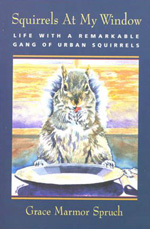 The different stances of people from varying strata and cultural backgrounds take toward animal life in general, and those animals that have become closely associated in one way or another to human life, is fascinating on one hand, and fairly predictable on the other. City dwellers, who suffer property damage and the risk of diseases from rats, abhor and vilify them, while at the same time adoring squirrels, who in many respects resemble their shady cousings. While in the countryside squirrels are hunted for food, and face extinction in many places because of habitat loss, the city dwelling species enjoy much attention and feeding by their primate hosts. And needless to say, each faction considers their way the natural state of affairs.
This particular book, to get away from stating the obvious, is both entertaining in the stories of squirrel-man interaction its author has accumulated over the years, and somewhat frustrating in its lack of reflection, and Spruch’s tendency to attribute human psychology to her charges.
Animals, Books, English, Good, Nature, Nonfiction | No Comments »
 “You have been sick, but now your well again and there is work to do.” This is one of the repetive mantras Vonnegut uses as a shield against the futility of being, and the certainty of destruction and decay. In a touching and hilarious collection of ramblings and biographical fragments, he explores the frailty of the human spirit, and it’s extraordinary strength in finding the good among the evil. “We’re here to help each other through whatever this is.” Indeed.
 From Jonathan Lethem, who recently masterfully argued the fruitfulness of apropriating someone else’s intellectual property and turning it into something original of one’s own, and Carter Scholz, whom I hadn’t heard of before, comes this set of reinventions of Kafka’s themes with the frame of American culture. Witty, dark and unexpected, these stories toy with great ideas in a very delightful way. My favorite of the bunch is easily Lethem’s and Scholz’ collaboration on the story of how Kafka and Capra collaborated to make “It’s a Wonderful Life”. Great stuff.
 I am not a fan of Gibson’s – or indeed any of the cyberpunk writers’ – plotlines. I find the constructions they come up with to throw the little guy into the arena of big corporations and social and economic powers of great thrust hard to swallow, and the conclusions shallow. On the other hand, the intricacies of the worlds created are meticulously worked out, and just for imagining the community of people dwelling on the abandoned structure of the west span of the Oakland Bay Bridge this is well worth reading. The characters are memorable, and the ideas have enough Gibson cool to make the ultimate shallowness of it all less of an issue.
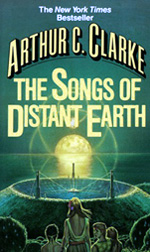 This is horrible. Not because it is just obviously bad, for it isn’t. The science is as solidly done as you’d expect of Clarke, and the outline of the story sort of makes sense, if you buy that we can predict novae from looking at neutrinos. But the details all are oh, so wrong. All the mistakes that give science fiction a bad name are here, in a thickly layered mistake cake, with an extra topping of whipped mistake cream. Things that we should understand from what we witness we are told in the abstract, dialogue stilts around just to get information to us, instead of of its own merit, characters psychology makes no sense whatsoever, the underlying wordview is deeply technocratic and single minded – he creates a utopian society of love and respect that sounds like a hippie teenager’s wet dream by having past artistic output censored and culture start from a carefully prepared blank slate. That notion alone already has so many things wrong with it, I won’t count. Bah.
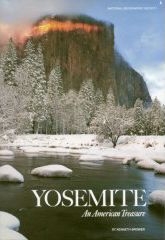 I almost didn’t buy this when I saw it at the local Salvation Army store. Who needs another book on Yosemite, sporting pretty pictures of waterfalls and sunsets? But as it turns out, Brower not only knows many of the key players of Yosemite’s recent cultural and natural history firsthand, he also writes engagingly and knowledgeably about this intriguing stretch of land. The discussion of a supposed dichotomy of artistic concepts battling over the park could have been spared, but the rest of the book is a joy, and the picture really are gorgeous. Makes me want to go up there again.
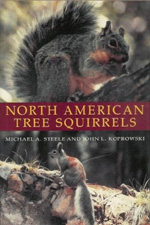 While this book has plenty of interesting information on mainly fox and gray squirrels, it could have been written more with the lay reader in mind. That’s not to say that it is too hard or complex, for it is surprising how little complexities seem worth relating, but rather that it reads in places like a badly written scientific paper. If all of this book had the wit and pace of the chapter on squirrel reproduction, it would have been a delight to read. As it stands, it’s interesting, but rather dull. Except for that chapter. Hilarious.
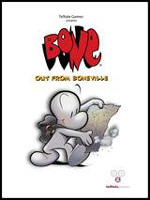 The comic series created by Jeff Smith started off as a quirky lighthearted adventure story and ventured into more complex territory, creating a comic hybrid of Tolkien and Lucas, including a creation myth, an evil archvillain and the restoration of balance to a force, here called the dreaming. While the background plotline may be derivative, the storytelling and character design wasn’t, and Bone was a delight to read. Now Telltale Games, consisting of game designers who left Lucasarts after the announced Sam and Max sequel was canned after a decade of development, has started to make the comic epic into a series of adventure games with a SCUMM like interface. Smith’s design and dialogue are completely preserved, so much so that one might object that the result is an animated comic strip rather than a true game. This is less true of the second installment (The Great Cow Race) however, and isn’t a big criticism anyway. Unfortunately, the third installment will be a while in the making, with a brand new Sam and Max game (yes) scheduled for release later this fall.
 This is a disappointing book. That’s not to say it’s not entertaining in parts, and that the rat related historic stories Sullivan has dug up aren’t worth your time. But as this book is modeled on Walden, and attempts to be a natural history of the urban rat, these are marginal issues. The problem of the book is that its author despises its subject. Sullivan freely confesses not to like rats, and he goes out of his way to go out of their way. An odd premise for any study, and not at all a good starting point for observations. Consequently, Sullivans contribution to his subject is collecting stuff from libraries, and the observations in the alley, that his study supposedly started from and centers around, are all but nonexistent. Rats keep close to walls and eat garbage, he tells us, as though anybody needed to spend a night out with a notebook to know that. Ultimately, the book celebrates the cunning and resourcefulness of New Yorkers, with the rats providing a despised tapestry against which to compare human history – adding to the myths Sullivan himself has fallen prey to. Too bad.