Wednesday, February 6th, 2008
Kurt Vonnegut – Cat’s Cradle (1)
 Every time I read one of Vonnegut’s books, I feel like hugging the whole world, or the members of my karass, at the very least, or do something powerfully meaningless, yet poetic, to make someone else happier than they have been. Which, of course, seems to be a pretty accurate description of what Vonnegut did with any and all of his books.
And if I have to fill in some words here, just so the layout of the page doesn’t clash with the size of the book cover illustration, would not Bokonon approve?
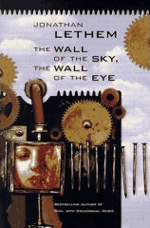 A wonderfully inventive collection of stories, and again a work of Science Fiction as it should be written, with regards not only for the abstract gimmicky idea or the strange and attractive world, but for the mundane experiences of both the characters and the readers in such a situation, and well rounded and balanced characters. Or so they should be, but somehow they fail to make me care about them. Maybe that’s my fault.
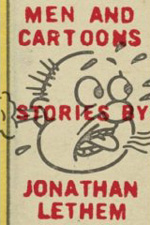 After having read much of Lethem’s work, I think I love his stuff more for the abundance of ideas than for the actual execution. There is often something oddly fragmented about his storytelling, creating a disaffected air, but many of his characters and situations are very acute and touchingly observed conundrums of human existence, cast into odd narratives. Oh god, would you listen to me. Or rather, don’t. Read Lethem instead.
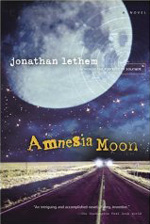 The premise is a marvelous riff on the post-apocalypse theme. Starting out as a classic, nuclear holocaust story set in the desert, complete with mutants and vigilantes in old cars. But we soon realize something isn’t quite as it seems, and as the protagonist makes his way from the desert back to San Francisco, we slowly understand that what has happened is much more apocalyptic than the mere destruction of the physical that bombs bring about: mental coherence, the very fabric of reality itself, has somehow been damaged, and dreams, paranoia and neuroses bloom freely and infest the world of the real. In keeping with the very lost feeling that pervades the story, we never learn the truth about what people call “the break”, though several alternatives of it are offered. And this, I feel, is also the shortcoming of Amnesia Moon: the exchangeability of the different narratives robs the story of some of its impact – when everything seems possible, nothing can mean much any more.
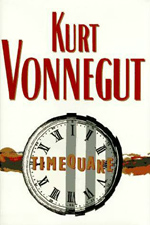 “You have been sick, but now your well again and there is work to do.” This is one of the repetive mantras Vonnegut uses as a shield against the futility of being, and the certainty of destruction and decay. In a touching and hilarious collection of ramblings and biographical fragments, he explores the frailty of the human spirit, and it’s extraordinary strength in finding the good among the evil. “We’re here to help each other through whatever this is.” Indeed.
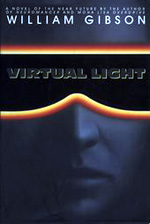 I am not a fan of Gibson’s – or indeed any of the cyberpunk writers’ – plotlines. I find the constructions they come up with to throw the little guy into the arena of big corporations and social and economic powers of great thrust hard to swallow, and the conclusions shallow. On the other hand, the intricacies of the worlds created are meticulously worked out, and just for imagining the community of people dwelling on the abandoned structure of the west span of the Oakland Bay Bridge this is well worth reading. The characters are memorable, and the ideas have enough Gibson cool to make the ultimate shallowness of it all less of an issue.
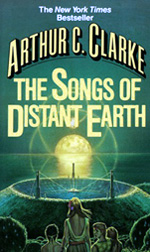 This is horrible. Not because it is just obviously bad, for it isn’t. The science is as solidly done as you’d expect of Clarke, and the outline of the story sort of makes sense, if you buy that we can predict novae from looking at neutrinos. But the details all are oh, so wrong. All the mistakes that give science fiction a bad name are here, in a thickly layered mistake cake, with an extra topping of whipped mistake cream. Things that we should understand from what we witness we are told in the abstract, dialogue stilts around just to get information to us, instead of of its own merit, characters psychology makes no sense whatsoever, the underlying wordview is deeply technocratic and single minded – he creates a utopian society of love and respect that sounds like a hippie teenager’s wet dream by having past artistic output censored and culture start from a carefully prepared blank slate. That notion alone already has so many things wrong with it, I won’t count. Bah.
 Finally, the non-sucking sequel to the Matrix. While V is still wordy and rich in pseudophilobabble, it is mostly stylish and ironic enough to get away with it. Weaving and Portman both are excellent, him being all the more impressive for doing it all from under a cheesy mask. A comic book version of political discourse still, at least this impromptu is enjoyable to watch and visually pleasing.
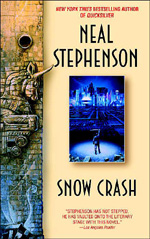 A very inventive story and cool story, with the same weakness Stephenson’s other books have in my opinion, a forced ending. Creating complexity, just to then shoehorn it into some resolution so readers can feel better is not something I approve of. Otherwise it’s quite flawless, though. It’s also quite interesting to see how Stephenson obviously churned on the themes he scratched upon in this novel for the later Diamond Age, and then took them into more realistic contemporary fiction with the Cryptonomicon.
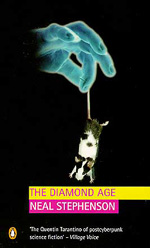 With the Cryptonomicon in mind, I expected a story similarly overfraught with meandering detail, but found myself pleasantly surprised. A well worked out future world, centered on changes in politics brought about by the development of nanotechnology, provides a nonintrusive background for a neo-victorian play on education and the value of the individuum that is as much fun as it is solid. While the psychology and character development, as is so unfortunately common in Science Fiction, take second stage after the geeky technostuff and the equally geeky ramifications of the technostuffs effects, the result is a delightful study. While the end is maybe a bit forced, this still makes me want to read Snowcrash now, Stephensons debut.