Monday, January 7th, 2008
 To the reader interested in love, sex and animal and human happiness, though rare a beast such a reader might be, this book holds a treasure trove of observations, deliberations and insights. Always keeping in mind the obvious question – how does all this relate to us? – the authors lead us on a walk through animal species, to look for evolutionary reasons and pressure for or against monogamy, and revealing it to be quite uncommon even among species long thought to be faithful mates for life. As it turns out, the fact that affairs need to be concealed from the adulterer’s mate implies automatic and almost perfect concealment from the researcher ape hiding in a camouflaged tent, who after all is much less adept that the animals involved in detecting suspicious behaviour.
The second half of the book then is devoted to the human animal, with the evidence seeming to indicate that our natural instincts would have us being a mildly polygynic, socially monogamous, but sexually adventurous bunch of chimps. As the authors point out in a final chapter aptly captioned “So what?”, no moral law follows directly from any of these observations. Natural impulses do not necessarily have to be acted upon – indeed the core of the idea of civilization might be perceived to be the reining in of such impulses -, yet their denial, and the forcedly naive insistence that monogamy is the mature way of channeling sexual and romantic desires that so much of the western christian tradition hold in fairly low esteem to begin with, seems unnecessarily dire and uninspired a reaction to the question that could well be said to be at the heart of human happiness and fulfillment. For, to change Dorothy Parker’s delightful punchline around on her, what earthly good does not, in fact, come from the sweet tensions of love, courtship and attraction?
General Review of the Sex Situation
Woman wants monogamy;
Man delights in novelty.
Love is woman’s moon and sun;
Man has other forms of fun.
Woman lives but in her lord;
Count to ten, and man is bored.
With this the gist and sum of it,
What earthly good can come of it?
Animals, Books, English, Good, Misc, Nature, Nonfiction, Politics, Psychology, Science | No Comments »
 A delightful and touching comedy, with a lovely soundtrack, and wonderfully understated moments of dry humor, mixed with the emotionally touching story of trauma overcome and love found in the most unlikely of places, Jersey. I’ll go to southern Newark soon, looking for the infinite abyss and the old leaky boat guarding it, not to move in with the young couple, but to also stand on top of the excavator and shout at the unknown.
 Curious and strange, most of the stories in this book make for delightful reading and provide a colourful historical backdrop for the current New York to be viewed against. Unfortunately, though, the author is not all that trustworthy (an easy to check example is his assertion that cops are called that because New York’s police wore copper stars, which is false), and never provides sources for any of his claims, not even the more outlandish ones. It might be suspected that the stories actually tell us more about how people in the 1920s pictured the history of New York than about the actual history itself, but that itself has become historical now, and it certainly is entertaining.
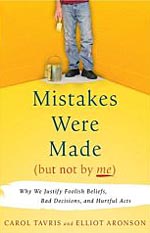 This book about cognitive dissonance is a good read, and an interesting account of both the theory of why our decisions and opinions can be so much at odds with reality sometimes and a number of examples from history and daily life, where the principle can be observed in action. Yet through much of it, it felt like being a bit lost in someones attempt to make sense of the subject, and as though going to Festinger’s original work might be more illuminating. This in spite of the fact that I don’t think he ever wrote something comprehensive like this on top of his individual studies.
 When the Apocalypse caused by Germany came back to engulf it in its fire and destruction, there must have been immeasurable suffering and trauma, yet, as Sebald points out, almost none of it made it into the story of life as set down by the writers. Sebalds exploration of the reasons for this omission, are both deeply touching for his compassion even with those who caused the very desasters that struck them, and illuminating for their original and provocative view on the narrative of Germany.
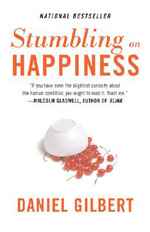 Why are we so notoriously bad at predicting what will make us happy, and why are we so often mistaken when we remember how we felt in the past? Gilbert’s hypothesis is that the nature of the neural system that allows us to imagine is to blame/ This system, which allows us both the filling in of the details of memories and the fleshing out of the nature of the future, draws on the same circuitry we use to feel the present, which is why both the past and the future are contaminated by how we feel right now. While the style of the book is maybe a tad forced in terms of wittyness, it is a delightful read, and the wealth of experiments Gilbert draws on to make his case was fascinating to read. At least that’s how I remember it.