Search

English


Friday, December 23rd, 2005

Johhny Cash (with Patrick Carr) – Cash (3)
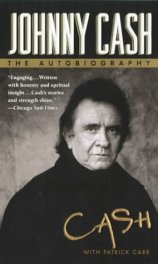
Johnny Cash was an amazing artist, and his recent death has been a great loss. I love the recent American Recordings series of records as well as his older stuff. Sadly, he is not quite as amazing an author, and Carr’s co-authoring didn’t fix the shortcomings. There are cool stories in this book, but they are often told in a laundry-list fashion, where people, events and facts roll by without much coherence or reflection. Biggest eye-rubber: Cash’s admission that he and June avoided shopping in towns that had no Wal-Marts and even graded them by the number of evil moneysucking behemoths (“tomorrow is a two Wal-Marter”). Biggest chuckle: to get out of a contract with a record company in the early nineties, Cash wrote a whole abysmal album, including a song called “Chicken in Black“. It worked.
Friday, December 23rd, 2005

For All Mankind (1)

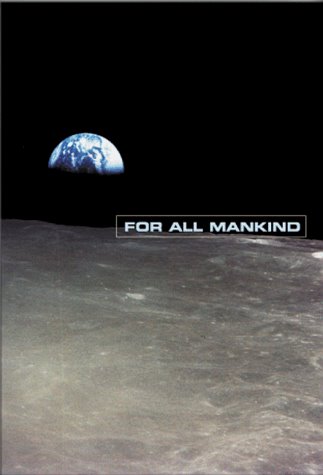
The story of lunar exploration, from Apollo 11 in July 1969 to Apollo 17 in Dezember 1972, in a beautiful collage, narrated from the original recordings and additional comments from the people who have been up there. Amazing footage gives you a glimpse of what it might be like to go where now man has gone before. It’s a bit unfortunate that they emphasized a seamless narrative over historic accuracy, blending the 7 missions into one long trip to Luna, but in the end, it doesn’t matter.Earth, floating in blackness, yet struck by the intense light from the sun, made me realize for the first time the intuitive oddness of space close to a star: dark and empty, not for lack of light, but for lack of illuminable things. That’s got to be an analogy for something.

Friday, December 23rd, 2005

Robots (5)

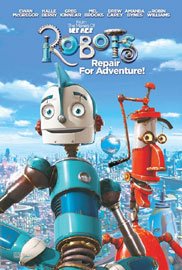
If there’s anything meaningful that’s not sickeningly cute and mindlessly inspirational in this movie after the first fifteen minutes, feel free to knock up the rating to a solid “4/avoid”. We switched off when pabot told sonbot to follow his life’s dream, cause pabot never did and now sorely regrets it. Sniff. To think of all the cool gadgets that could have been made from the robot parts if the moviemakers (Two directors! Two writers! Ack!) would have done as father did, not as he says.

Thursday, December 22nd, 2005

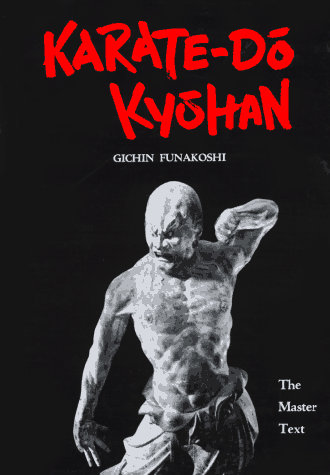
Gichin Funakoshi – Karate-do Kyohan (1)

This is a wonderful and concise introduction to all mayor aspects of karate, from the basics and kata to free sparring. What I found most fascinating – besides the insightfully detailed kata descriptions – was how meaningful those detailed notes become when you don’t read them as descriptions or recipes, but as commentaries on something you already know – or, even more interesting, know in a similar shape. Since I’ve been studying all the Kata’s in their Wado form, Funakoshi’s reasoning is most intriguing where he describes the rationale for doing something different from how we do it. The dialectics of form become apparent, the fact that one needs to be restricted, to see the unfoundedness of that restriction, and thus overcome it. Which makes me realize that Hegel was a very eastern kind of Swabe.

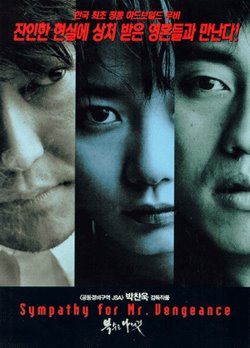
A nice coincidence that this movie would be the next on our Netflix-list after Dirty Harry – this is the movie Dirty Harry should have been (of course that’s somewhat unfair, considering the time gap, but would Harry want me to be fair? There). Where Eastwoods cop sets out to right wrongs in a very private moral (or lack-of-moral) code, this movie unfolds as a giant tragedy, where we can have empathy with everybody, even as they do things that are wrong to begin with, and turn out even worse. “I know you’re a good guy” says the vengeful industrialist in the climactic scene, “so you’ll understand why I have to kill you”. So do we, caught in the same violent logic, and as unable to escape it as any of the characters. Terrific and terrifying.

Wednesday, December 21st, 2005

Frank Herbert – The Green Brain (3)

Probably one of the first science fiction novels to have the ecological threat posed by modern humanity at the core of its plot, this 1966 action drama puts all its effort into getting the message through, with very little meaningful plot. It’s an unfortunate choice, as the central premise – being under extinction pressure from an Orwellianly named International Ecological Agency, insects adapt by cooperating to form complex and conscious societies, capable of concerted action and motion – would have been fascinating to explore in depth. Instead, the book spends most of its time following a subplot of international politics and intrigue, and its protagonists down a jungle river, and ends when things would become interesting, with what feels like a compromise between a happy ending and gloomy doomsaying. The book leaves the distinct feeling that Herbert wasn’t quite happy with his setup, and didn’t want to put too much effort into working it through. Maybe that’s why he revisited the hive mind a few years later in The Hive.

Tuesday, December 20th, 2005

Don Siegel – Dirty Harry (4)

It’s a classic among vigilante movies, the best of the series it spawned, and it has Clint Eastwood in it, playing a socially disconnected moralizing force of one, dealing revenge and retribution without restraint. That setup works in Leone’s Man With No Name series, probably in part because of the cool, detached direction and abstraction of the old west setting, but also because we are never supposed to take Eastwood’s side in those. I wanted to rewatch Dirty Harry because it’s set in San Francisco, quickly realized I had never seen it before, and found myself distracted from the sweeping views of bay and bridge by the manipulative moralizing message that weaves through the film. Mores are crumbling, and with a weak justice system unable to keep the depravity in check, men like Harry have to clean up, and get dirty in the process, a dark avenger, protecting us all. Feel reactionary today, punk?

Tuesday, December 20th, 2005

Abe’s Exoddus (1)

I just revisited the second installment in the Oddworld series of games, and the last I played – the third and fourth, sadly, are only available for the Xbox. If you like platform games at all, this quirky mix of ironic oddness, fascinating story and character design, tough puzzles and fast paced jump and run episodes will entertain your for many, many hours. And even if you don’t, you’ll have to appreciate some of the lovely, innocative ideas in game design.

Also pretty cool is the list of influences the game designers list on their website.

Monday, December 19th, 2005

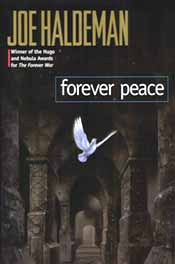
Joe Haldeman – Forever Peace (2)

This is a story of many plots, ranging from the destruction of the universe, or a substantial fraction thereof, by nanotechnology, to modern warfare and social philosophy to moral conundrums of modern life – interracial dating, for example – and it tries to both set up these varying fields as enormous problem zones, and then present realistic solutions. Most of the central ideas and technologies, and the problems caused by them – the social impact of full automation both on the society controlling it and the societies controlled by it, or the psychological and military implications of remotely controlled superwarriors, to name two – are daring and impressive, and the extrapolation of US foreign policy into the year 2048 seems frighteningly believable. But against the tapestry of these towering problems, Haldemans solution falls somewhat short, both within the universe of his novel and our own. Still, with its very gripping, thoughtful and empathic plot, Forever Peace fully deserves the Hugo and Nebula awards it won.

Monday, December 19th, 2005

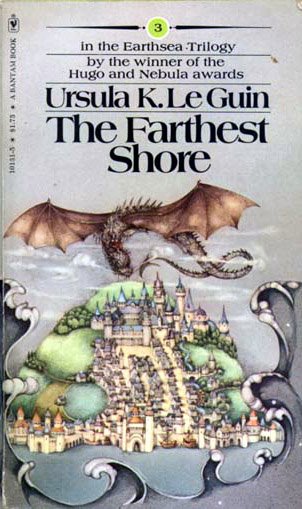
Ursula K. Le Guin – The Farthest Shore (2)

The final volume of the Earthsea Trilogy, and, to me, the strongest of the three. It’s main theme, the struggle caused by the realization that life and death are intricately linked (a thought which is part of the dualist/taoist thinking that weaves like a thread through the whole trilogy, and indeed much of Le Guin’s other writing) and one is impossible without the other, unfolds against a backdrop of exciting encounters, and the overall athmosphere of impending doom caused by the widespread refusal to accept mortality still has a very realistic tone today, more than 30 years after it was originally written.