Search

English


Thursday, March 30th, 2006

Battlestar Galactica (2)

While parts of the second season of the new Galactica drag just as badly as the first – in particular the plot elements concerned with the Cylon masterplan and the impending birth of the child of doom are stretched so thin as to be practically impreceptible. Also, the density of journalists and the political and social structure of the fleet still don’t make much sense other than as commentary on the US today. On the plus side, the acting, set design and the general military mood are great, and the writing, which is generally quite good, of the last few episodes of the second season in particular was excellent. Partly because the main plotline, stalled by the arrival of the Pegasus and its semifascist admiral, finally started moving, but also because the usual seriousness was spiced up with some nice humorous elements. A welcome relief from the heavy handedness which some of the political and moral issues were presented with. The explanation for how the humans were detected (the atomic blast was picked up a year later and a light year away) is a nice nod to physics (though you have to wonder where this nebula clad planet is located for there to be something of interest just a lightyear away. Ah, well). I’m looking forward to the next season, which is slated for airing starting October.

Saturday, March 25th, 2006

John Wyndham – The Kraken Wakes (1)

How refreshing, after reading a lot of idea driven, gimmicky SF, to discover this. I found it in the bookstore run by the Friends of the Berkeley public library, among pulp paperbacks, and though I’d never heard of Wyndham, was intrigued by the cover art and the fact it had come out on Penguin. The story is a crossover between Capeks wonderful War with the Newts and Well’s War of the Worlds, with an extraterrestrial menace, quite possbily flying in from Jupiter, settling in the deeps of earths oceans, and proceeding to exterminate the bothersome land mammals. The story is gripping – though the solutions’s alomost perfect parallel to Wells’ is a bit disappointing – but the true strength of the book lies in the two main characters, a married couple of radio documentary writers, who witness most of the events from close up, but have hardly any active part in the matters at all. This viewpoint lends the story enormous credibility, based on the one hand in the strong execution of characterization and background, but also in the familiarity of events unfolding on a large scale that one is powerless to stop or alter, yet keeps reflecting upon and discussing as though one did. Finally, the acerbic depiction of cold war diplomacy at the height of madness is the crowning piece on a very nice cake.

Saturday, March 25th, 2006

Robert Altman – McCabe and Mrs Miller (1)

The meticulous recreation of buildings and social networks of the little digger town somewhere in the cold American Northwest is enough to make this gem worth watching, but the story of McCabe and Mrs Miller that Altman set against this backdrop is in itself touching and rewarding. A very unusual Western, if you want to call it that, with an uncompromising ending. Very interesting to watch the special features, too. Some documentary on the making of the movie, and a movie trailer, both not badly done, but horribly, horribly dated, to the point of being hilarious, while the movie itself is timeless. must be the difference between art and craft.

Friday, March 24th, 2006

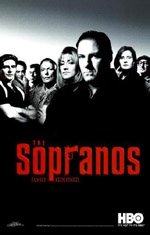
The Sopranos – Season 6 (2)

My favorite family of criminals is back, but so far I’m none too sure about how happy I should be about it. The first episode caused mostly consfusion, for its lack of continuity – for instance how come Tony and Carmela are as harmonious again as we see them, was there any fallout from the horrible murder of Adriana that made last seasons second to last episode so intensely hard to watch – and for its lack of direction. Nothing is happening we haven’t seen many times before, no plot is advanced, right up until the moment Tony gets shot by Junior, who seems to be truly demented by now, but also might be scheming again. The second episode then has us all watch Tony linger in limbo, while his spiritual and bodily fate are being decided. The metaphorical, dreamlike sequences are nice to watch, but once again the episode doesn’t advance much. Except maybe for AJ’s promise of a revenge killing.

Wednesday, March 22nd, 2006

Myst IV: Revelation (2)

The Myst game series has an odd quality about it. Some of the puzzles are frustratingly complex, and hardly make any sense within the stories, which in addition tend to abound with psychological cliches. But of course the strength of Myst lies in the design of the worlds, called Ages, in which it is set, and Revelation is no exception to these rules. The cliched story is accompanied here by some pretty horrific acting efforts, and the difficulty of at least one of the puzzles verges on the ridiculous, with another one being bad enough for a character within the game to suggest that if you get too frustrated, you should go away and try again later. But, oh, the Ages. Tomahna is a cluster of buildings in a sheltered cove that I wouldn’t hesitate to move into in an instant, Spire a marvellously desolate and forbidding hovering crystal tower, Haven a lush jungle full of strange creatures, and Serenia a cool looking mix of several stone masonry cultures. Just walking around in these environments would be a pleasure, and the occasional riddle adds to that a nice sense of involvement.

Wednesday, March 22nd, 2006

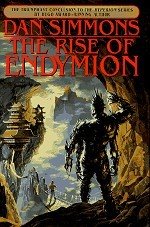
Dan Simmons – The Rise of Endymion (3)

While certainly better than it’s two predecessors, this final installment in the Hyperion story still subtracts from the original book. Why do sequels always fall so badly short of truly adding to a work, and why do creators still have the urge too do them? The Shrike was a mythical force, the future a mysterious place, the present hardly comprehensible when Hyperion ended. Now all that is dissolved in an action feast full of explosions, a quaint patchwork of worlds the size of small villages and populated by caricatures of foreign cultures and a badly contrived plot. While it is challenging for an action driven plot to have a practically omniscient character, his solution of “I know but I won’t tell you yet” is infuriating. The fall of the Pax at the end is a complete Deus-ex-machina, and the twist ending makes no sense whatsoever. But the biggest failure of all three sequels lies in the delivery of what Hyperion wisely withheld – answers to the philosophical and ethical questions. Simmons goes on at great length about how utterly and fantastically otherworldly the Ousters are, yet their behavior, thinking, language and mores are indistinguishable from today’s middle class America. I also find the revelling in violence, torture and death on an enormous scale slightly disturbing. For someone proposing a culture of empathy and universal love, Simmons shows an odd fascination with intense cruelty and suffering.

Friday, March 17th, 2006

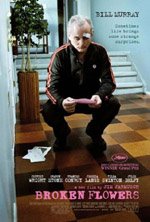
Jim Jarmusch – Broken Flowers (3)

Amazingly, having a wrinkled and depressed Bill Murray in a jumpsuit drive around coloring tress does not a good movie make. Who would have thought? In fairness, I was probably having my expectations too high, since I’m an admirer of both Jarmusch’s (Dead Man!) and Murray’s previous work. But even after correcting for that, I did not feel a connection with either Murray (who played essentially the same character, only much better, in Lost in Translation) or any of his former girlfriends, and the neighbour gone detective, as a grotesque caricature, doesn’t even qualify. Watch About Schmidt instead, it’s a much better movie.

Wednesday, March 15th, 2006

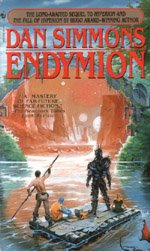
Dan Simmons – Endymion (3)

When I reviewed Fall of Hyperion in this space, I said that I wanted to wait a substantial time before continuing on. Unfortunately I succumbed to the temptation. While I don’t really regret having read Endymion, it is yet another step down from Hyperion’s brilliance of vision and design. While Simmons world continues to amaze with its complex design and rich tapestry of culture and science – which, once again, becomes thinnest in the attempts of creating a cultural history of the future by combining ficticious future classics with actual ones – his characterization, plot and dialogue are bordering on the horrid. He often falls into the trap of having to tell us justifications and motivations instead of showing them, and the whole book has the wearisome feeling of being but a prequel to the final volume. The adventures of Aenea, Endymion and Bettik on their way to Old Earth seem arbitrary and unconnected, and while the multiple death ordeal of the Pax crew charged with tracking them down is chilling, their near success in the face of incredible odds is silly, and can in the end only be explained by the near omniscience of the dei-ex-machina in the TechnoCore. I’ll hold off final judgment until I’ve read Ride of Endymion, but so far I strongly feel Simmons should have stopped after Hyperion.

Wednesday, March 15th, 2006

Michelangelo Antonioni – L’Avventura (3)

This was praised and much discussed when it came out in the late sixties for its refreshingly novel cinematic way of storytelling – or so the Netflix cover blurb tells us. The story is that of a bunch of rich people, bored to glassy stares byu their eventless lives, vacationing among the Aeolic Islands. One of the women vanishes, and her best friend and her lover embark on a quest to solve the mystery and find her, and get close in the process. Or the equivalent of closeness in artsy cinema overcharged with undertones and cranked up to a maximum of meaning with a minimum of substance. That might seem unfair, but I find it unfair to have to watch beautiful women and great cinematography without plot or point, so I guess we’re even, Mr. Antonioni.

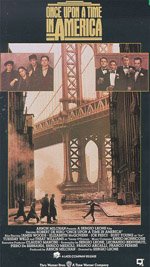
This is not to say that there is anything wrong with the story of Noodles, the way it’s woven together with prohibition history, and the final plot resolution. But this movie is just way too long. I don’t really recall much from seeing the original version, but even that might have been a bit on the tedious side, but this reedit is excruciatingly slow. In addition, the way past and present are intercut doesn’t really work all that way in several places. But the biggest problem is that this ultimately fairly simple tale of betrayed friendship doesn’t justify taking up almost four hours of my time. I’d much rather watch Once Upon a Time in the West twice.