Thursday, June 29th, 2006
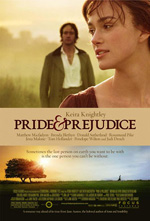 I am exactly a fan of the romantic movie genre, often citing its lack of explosions as a reason. More accurately stated, the romantic comedy and drama in general lack an element that allows me to overlook faults in plot or character exposition, or overall execution. This is because I am unwilling to let myself become emotionally involved with people whose existence has clearly been disproven by shoddy filmmaking. I harbor no such objections against unrealistic explosive devices, and I blame my genes for said unfounded bias.
Having said that, I did enjoy this newest version of Austen’s book a lot. Both for the believable historic background of lower class struggle and upper class overfed ennui, and for the entirely likable main characters, whose eventual pairing up I did look forward to. Donald Sutherland as the father was an added bonus that made it possible to ignore the somewhat annoying rest of the family. I found it interesting that the actors all agreed on the likability of the characters, when half the family were self-absorbed, hysterical and irresponsible, but given that I can see historic reasons for why this would have been so, it’s interesting more than really bothersome.
Drama, English, Europe, Good, History, Movies | No Comments »
 I recently remembered that a Leningrad Cowboys album was lying abondoned in some basement in Germany, and was happy to find that the songs I remembered so fondly still sound great. I was even happier when I learned that the Cowboys had just released a new album, but subsequently disappointed to find it badly cliched and uninspired. Where the earlier stuff is tightroping the quirk above a sea of ethnic cliche, this collection is right down in the deepest, darkest abyss of hardrock hubris. Why, oh why?
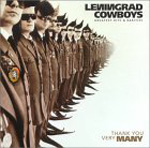 I fondly remember the songs from my first Cowboys record, We Cum From Brooklyn, such wonderful playful sounds and humour. I was happy to find that much of this best of collection is taken off that older album. Together with the new album this unfortunately also confirms my suspicion that the Cowboys have lost their mojo.
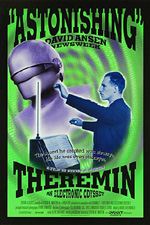 The staggering story of a Russian who invented one of the weirdest musical instruments of all time, single handedly launching electronic music, then got abducted by the KGB, for whom he then invented the electornic spy bug, and after decades got reunited with his friends, who didn’t know where he was, or whether he was still alive, should have made an awesome movie. Unfortunately, this is not that movie. The reliance of interview material that is less than thrilling and talking head shots instead of interactions draws out the plot, and it is only at the very end, when Theremin meets a woman he knew as a 18 year old singer before his abduction, when the tragedy of the story gets some stage – and five minutes later the movie is over. Still worth watching, but more for factual content than for its artistry.
 I am not sure how this album will go over for somebody who does not understand the lyrics, as to me much of the appeal of Licht’s music rests in the relationship between the clash of childish naivete and intellectualism in his words and the innocent music he chooses to sing them to. I am also not sure how the lyrics would work on their own, I suspect they’d be shallow novelty poetry, but the combination is just delicious. If you know German, or intend to learn it, give this a spin.
 For years I had suspected that the historic truth is being stretched and bended, possibly even mutilated, in order to make Dresden into the innocent symbol of allied war atrocities dominating the German discourse of the bombings. Now, having read Schubert’s book on the subject, I am better equipped to dispel the myths, and predictably find my inferences confirmed. No liquid phosphor rained down, the city was not full of fugitives or innocents any more than any of the other cities inhabited by Nazis was, and the local industry was neither insignificant nor unimportant for the war. Dresden has turned into a monumental tool for relativists, for whom the outcome – the destruction of human life and property – is the only determinant of the morality of an action, and for whom dead Nazis and their dead victims form one soppy canvas to paint a kitschy portrait of their nationalism disguised as benevolent peacefulness upon.
 I came across this book on one of the shelving carts in the main UC Berkeley library while searching for a completely different one that had gone missing (and sadly hasn’t been located since). Its author, briefness and subject matter immediately commanded my attention, and after having read it, I’m happy I stumbled upon it. This brief treatment of Hegel’s work is a small miracle, capturing his theory of history, dialectics and the master/slave dichotomy rising from his theory of Selbstbewusstsein, and in turn giving rise later to Marx’ alienated labor. A wonderful introduction, and a solid argument for libraries where books are accessible rather than being ordered from closed stacks through a catalogue.
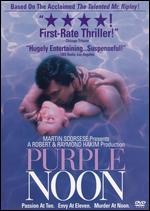 Better than its modern incarnation, this thriller might not capture Highsmith’s story completely, but it works fairly nicely as a movie standing on its own. The moral ending is disappointing in principle, but also because it’s unconvincing, it being such a stupid oversight for Ripley not to have gotten rid of the anchor, and it seeming unlikely that people would drag a yacht out of the water with its anchor still lowered.
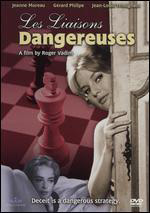 I have seen Frears version of de Laclos’ awesome book multiple times, and wasn’t surprised that a movie from the 1950s fails to stand up to Malkovich, Close and Pfeiffer. I was surprised, however, to see the plot transplanted to the present, and Valmont and Merteuil made into a married couple, odd decisions both, and while interesting, not helping the movie. But the real weakness is Vadims failure to convey any of the intricate psychology of de Laclos’ plot and the beautyfully crafted letters it consists of. Having seen this certainly makes me appreciate Frears quite a bit more. And as a final note, I’m not sure I’d want to see another movie with eternally sulky femme banale Jeanne Moreau any time soon.
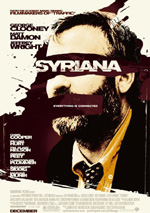 The puzzle, it seems to me, is not how to find out about the multiple ways the current setup of commerce and power is defective, producing forces that can not help but be evil. Rather, it’s how to turn this realization into smething that has practical consequences, and not being forced into quiet resignation, because the mechanisms are too far removed from our daily life for them to be able to lie within our sphere of influence. The great thing, then, about movies like this one, is that in all it’s complexity and intricateness – and I didn’t find it remotely as hard to follow the plot as all the reviewers were whining, by the way. Sure, you miss some details, but the main pieces are in plain view – it creates the feeling that everything is connected, providing the unlikely hope that stems from the fact that even what we lowly watchers of movies do in our lives will make a difference, shifting the distribution of power.