Tuesday, August 22nd, 2006
Michael Steele/John Koprowski – North American Tree Squirrels (2)
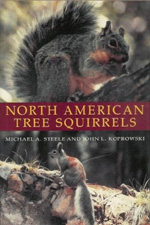 While this book has plenty of interesting information on mainly fox and gray squirrels, it could have been written more with the lay reader in mind. That’s not to say that it is too hard or complex, for it is surprising how little complexities seem worth relating, but rather that it reads in places like a badly written scientific paper. If all of this book had the wit and pace of the chapter on squirrel reproduction, it would have been a delight to read. As it stands, it’s interesting, but rather dull. Except for that chapter. Hilarious.
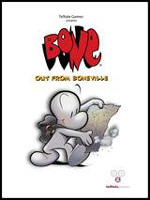 The comic series created by Jeff Smith started off as a quirky lighthearted adventure story and ventured into more complex territory, creating a comic hybrid of Tolkien and Lucas, including a creation myth, an evil archvillain and the restoration of balance to a force, here called the dreaming. While the background plotline may be derivative, the storytelling and character design wasn’t, and Bone was a delight to read. Now Telltale Games, consisting of game designers who left Lucasarts after the announced Sam and Max sequel was canned after a decade of development, has started to make the comic epic into a series of adventure games with a SCUMM like interface. Smith’s design and dialogue are completely preserved, so much so that one might object that the result is an animated comic strip rather than a true game. This is less true of the second installment (The Great Cow Race) however, and isn’t a big criticism anyway. Unfortunately, the third installment will be a while in the making, with a brand new Sam and Max game (yes) scheduled for release later this fall.
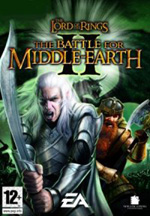 I readily confess that I am a sucker for real time simulation. I loved playing Warcraft and Starcraft, and I enjoyed this game, too, though it seemed to me that the gameplay in the campaigns is slightly unbalanced, with little freedom for strategy. In one mission in the evil campaign in particular, any straying from a predescribed path of action would lead to disaster, which is not very enjoyable. But since the main action presumably is supposed to lie in online gaming, I guess that’s quite all right.
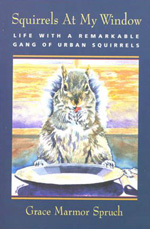 The different stances of people from varying strata and cultural backgrounds take toward animal life in general, and those animals that have become closely associated in one way or another to human life, is fascinating on one hand, and fairly predictable on the other. City dwellers, who suffer property damage and the risk of diseases from rats, abhor and vilify them, while at the same time adoring squirrels, who in many respects resemble their shady cousings. While in the countryside squirrels are hunted for food, and face extinction in many places because of habitat loss, the city dwelling species enjoy much attention and feeding by their primate hosts. And needless to say, each faction considers their way the natural state of affairs.
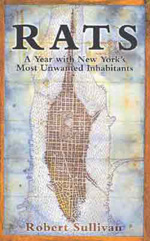 This is a disappointing book. That’s not to say it’s not entertaining in parts, and that the rat related historic stories Sullivan has dug up aren’t worth your time. But as this book is modeled on Walden, and attempts to be a natural history of the urban rat, these are marginal issues. The problem of the book is that its author despises its subject. Sullivan freely confesses not to like rats, and he goes out of his way to go out of their way. An odd premise for any study, and not at all a good starting point for observations. Consequently, Sullivans contribution to his subject is collecting stuff from libraries, and the observations in the alley, that his study supposedly started from and centers around, are all but nonexistent. Rats keep close to walls and eat garbage, he tells us, as though anybody needed to spend a night out with a notebook to know that. Ultimately, the book celebrates the cunning and resourcefulness of New Yorkers, with the rats providing a despised tapestry against which to compare human history – adding to the myths Sullivan himself has fallen prey to. Too bad.
 This book evokes memories of the seventies, when I was a little boy in school, and many textbooks had illustrations in a style similar to Sasek’s. These are lovely and slightly odd renderings of everyday life in Munich several decades ago, and the slight mismatch between the english and german versions of the text, and the terseness in general, only add to this piece of nostalgia. And I don’t even like Munich all that much.
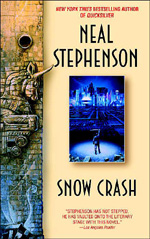 A very inventive story and cool story, with the same weakness Stephenson’s other books have in my opinion, a forced ending. Creating complexity, just to then shoehorn it into some resolution so readers can feel better is not something I approve of. Otherwise it’s quite flawless, though. It’s also quite interesting to see how Stephenson obviously churned on the themes he scratched upon in this novel for the later Diamond Age, and then took them into more realistic contemporary fiction with the Cryptonomicon.
 If you need to be told that Familiy Guy is funny, you shouldn’t be surfing the web, you should watch TV and fill the gaping hole in your life. Go. Now.
 This movie exudes an almost physical sense of emptyness and ennui. Oddly, while not entirely successful, that is actually a good thing, as Nicholsons character has lost all interest and drifts along mindlessly, trying without success to find meaning in taking over other another person’s life. The opening sequence, unfolding in mysterious wordlessness in a gorgeous desert landscape, are particularly effective at recreating the existential despair of Nicholsons character in the viewer, but all of the movie actually does a terrific job. Which unfortunately is also something of a bad thing.