Search

Engine


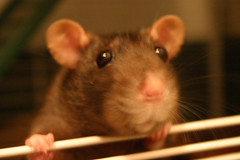
A while ago, at an SfN meeting, I attended a ethics panel, where one of the questions discussed was the growing of human neurons in animal brain. Other than being vaguely creeped out by the concept in spite of my better knowledge, I only remember one of the researchers talking about how very, very much they discuss this in the ethics panel at Stanford. I guess he sorta knew that people would be vaguely creeped out.

Now the Frankenmice have made Yahoo News, and no doubt the religious nuts are already collecting their wits for an assault against the perversity of science! So let me be quick to point out that this mousebrained thing is a great idea, for it brings us one step closer to creating Franky and Benjy, the two mouse overlords from The Hitchhikers Guide to the Galaxy.

Read more at news.yahoo.com/s/ap/200…

Thursday, December 15th, 2005

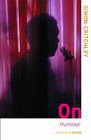
On Humour – Simon Critchley (3)

It is a very common notion that the study of humour is a dry and boring thing to attempt. While that is true, it is not necessarily a bad thing. We wouldn’t expect hydrodynamics to be wet, or neuroscience to be clever, so why should humour theory have to be funny, or even just entertaining? It should, however, have substance, and here most attempts are lacking, this book being no exception. It is little more than a collection of quotes and tidbits from humour theorists over the centuries, with a lot of the name dropping which is so oddly popular in the humanities. “This is what X means, when he says Y” seems to take on the force and role of a stringent logical argument, and rather than being a mepotistic anecdote, it’s supposed to illustrate something deep. But I digress.

The main theses the reader is left with in the end are that the highest moral value o slaughter is achieved when it’s reflective; when we laugh at ourselves, and that humour is the uniquely human ability to counter the absurdity of physical existence with a psychological distancing movement, and a mocking finger pointed at the physical from afar. Which, of course, is just reactionary balderdash.

Wednesday, December 14th, 2005

Children and Chimps

Children Learn by Monkey See, Monkey Do. Chimps Don’t. – New York Times

(If you don’t have one of the NYTimes accounts annoyingly required to read the story, consider BugMeNot and its Firefox Extension)

The study quoted reports that when shown how to open a box, chimps can leave out causally unnecessary steps, while human infants tend to reproduce everything, even if they know it to be unnecessary. The researchers conclude that this imitation may enable the learning of complex new behaviours, which the child wouldn’t understand at first sight, and thus couldn’t analyse causally.

Most intriguing about this is that the other obvious explanation, that the children are trying to conform in a social situation with an adult, and are willing to give up efficiency to do so, may be the same thing. Culture and tradition, after all, are the codified learning of behaviors which do not seem to make immediate causal sense.

I should have known. While I enjoyed the charming simplicity of the plotlines in the Narnia series, and appreciated them as the children’s books they were intended to be, none of their story elements packs the mythological punch of Tolkien’s writing, and the Christian parable feels tired once you’ve spotted it. Which is hard not to.

To start with the positive, the movie is nicely done, devoid of cringe-inducing lines or badly done characters, wich is saying something for Disney. But it is also quite boring, and at least a half hour too long. To strip a story about an oppressive regime, war and an epic battle for the survival of a whole world of all the nastyness these things should involve, and leave it with decoratively frozen puppets and the frosty looks of Tilda Swinton, is to deny the book its impact. Sure, you shouldn’t frighten your underage audience into little whimpering heaps, but surely some sense of the consequence of evil would have been appropriate.

Plus, not surprisingly, seeing the crude metaphor for the New Testament, Aslan’s sacrifice for the reinforcing of the “old magic”, rather than reading about it, makes it’s crude and unsubtle symbolism so painfully apparent, that I change my initial statement above – there is a cringy moment there, but it’s all Lewis’ fault.

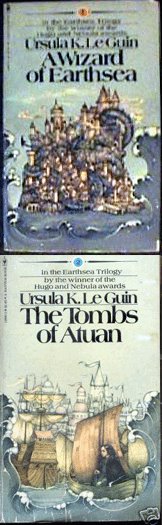
I loved Le Guins The Dispossessed and The Left Hand of Darkness, so even though I’m not very keen on people in pointy hats throwing speels (unless they’re called Gandalf, obviously) I thought I’d give Earthsea a shot, and I’m glad I did. Like with her other books, I found the most interesting element of these books their outright refusal to play by the base rules of the genre. While there are magical gadgets, spells, castles and monsters, it’s clearly not those that Le Guin is interested in. Where a Wizard of Earthsea was about one boy’s journey to discover and master the evil in himself, the Tombs is about a clash of worldviews and belief systems, one religiously closed and involved in power struggle, the other, though based in magic, rational and open, and striving to find balance. In a nutshell, these stories are driven by psychological archetypes (the dark of the tombs, the faceless evil) than by plot, in fact, so much so that I wondered why there needed to be any magic in them at all – the fantasy elements are, so far at least, quite superficial.

Monday, December 12th, 2005

The buzz of bees

Bees can recognize human faces, study finds

More pseudo-news about animal superpowers. Like the ability of pigeons to distinguish painter’s styles, this is interesting for entirely different reasons than the general audience will think reading the article – rather than showing some uncanny humanness in bees, it shows the algorithmic generalityof some problems, and misleads one into thinking they are simple to solve computationally, because supposedly simple animals can solve them. I would be surprised, however, if these bees were doing better than face recognition software, in which case the point becomes moot.

Particularly interesting is the researcher’s quote “the bees probably don’t understand what a human face is” (my emphasis), indicating that it’s not just the journalists that are playing that angle for the publicity. Although on the other hand, maybe that does mean that killer bees can be trained to be truly deadly now. Winged assassins! Hold the presses!

Monday, December 12th, 2005

Beklommene Stille

Vielleicht würde es, wenn man mehr davon wüsste, beklommen still werden um dieses Hauptwort “Geist” (Robert Musil, Der Mann ohne Eigenschaften)

Vielleicht aber auch nicht. Ohnehin fragwürdig, ob ausgerechnet der Autor dieses geschwätzigen Ziegelsteins sich über beklommene Stille verbreiten sollte.

Friday, December 9th, 2005
Sapir, Whorf and History

food

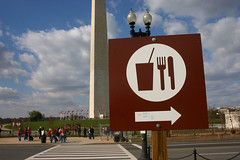
When we toured all the big monuments on our recent visit to DC, I got gut feelings about them, I was left cold by the World War II memorial, touched by the Vietnam Memorial’s somber simplicity, avoided what looked like a bad kitschy joke, but was in fact the Korean War Memorial, looked up with a sarcastic smile at Lincoln’s face covered in scaffolding for renovation, and stood with an even more sarcastic smile in the midst of the great words of Jefferson and, again, rubble and scaffolding. Jefferson’s statue, a park ranger had explained, looked north toward the White House, because Jefferson was highly suspicious of authority. This statue, apparently, keeps the administration honest.

It is an interesting experience to then revisit this only a short while later when Slate’s Witold Rybczynski walks the same walk. The substance of his article is interesting, but I’m most intrigued by my reception: some of the things he says I have the impression of having felt while visiting – like the inappropriateness of the fountains and the cold oddness of the columns in the WW2 memorial, but I could never have said them. Now the fact that I can think that this man says what I think, while at the same time I would not have been able to say it myself, pretty much refutes the Sapir-Whorf hypothesis. If you’ll accept that jump.

On a related note, I bought Roth’s The Plot Against America for the flight back, and was delighted by it’s thoroughly constructed plot and the clever way it turned it’s counterfactual premise back into the real flow of events at the end. I felt pretty stupid when I read what feels now like pretty obvious criticism on Salon, saying that a book that talks about how close American society was to prosecution of minorities while hardly mentioning the situation of the black, seems counterfactual indeed. Sadly, I didn’t notice that at all, explicitly or implicitly, but don’t think that’s an argument for Sapir-Whorf. Least I don’t feel it is.

Edit: It’s a bit misleading to talk about Sapir-Whorf in this context, since the thesis has a hard and a softer formulation. While the hard formulation says that there is no thinking but what is mediated by language, hardly anybody adheres to that any more. The softer variant is that language influences what we can think, and there some cool evidence to that end has just come out. I’ve added an entry on that further up.

Thursday, December 8th, 2005

Warmgefönt

don't do that

Nature berichtet in seiner aktuellen Ausgabe, dass man einen britischen Tierversuchs-Lobbyisten für eine Fernsehsendung den Alltag eines Versuchsnagetiers nacherleben liess. Unter anderem musste er dabei teuflisch warme Fussböden und brutal trockengefönte Haare erdulden. Wir Nagerfreunde begrüssen dergleichen Kaspereien natürlich, nicht nur als soliden Beitrag zu einer komplexen Diskussion, sondern auch als ersten Schritt in eine bessere Welt; denn erst wenn alle Menschen leben wie die Ratten ist unser Auftrag erfüllt. Oder Karnickel. Oder eben Vizcachas, wir sind da flexibel.

Vielleicht darf man sogar hoffen, bei der Ausstrahlung der Sendung am 14. Dezember auch eins der berüchtigtsten Rattenexperimente am Lobbyisten nachgestellt zu sehen; das nämlich, bei dem ermittelt wurde, um wieviel länger Ratten sich durch Strampeln vorm Ertrinken retten, wenn man ihnen zuvor den Eindruck verschafft hat, man würde sie schon beizeiten da rausholen. Zugegeben, das Originalexperiment ist recht alt, wurde schon in den 50er Jahren durchgeführt und würde heutzutage von keiner Ethikkomission mehr genehmigt. Aber ein kleines bisschen Unsachlichkeit ist ein geringer Preis für eine unterhaltsame Sendung, und zudem sind Lobbyisten ja in der Regel auch nicht mehr die Jüngsten.

(Dieser Beitrag erscheint parallel bei der Riesenmaschine).

Monday, December 5th, 2005

Jigsaw Pieces

passport design

5

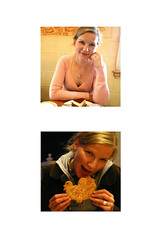
When three of our local drugstores, two Walgreens and a Longs, failed for different reasons to produce acceptable passport photos, we decided to take matters in our own hands, and save a few bucks in the process. I took a picture of Caroline against our kitchen wall, cropped and scaled them in photoshop to 2×2 format, arranged two on a 4×6 sheet and went to Longs to print the thing for 20 cents instead of $7. Yay!

Only when we came back an hour later to pick up the order, it clocked in at $7.71. For a total of four prints. After I contested the sum, the clerk called in the photo assistant, who said, “I’ll show you”, opened the folder and triumphantly pulled out the passport photo print. “These are seven dollars” she said.

Incredulously, I asked whether Longs charges for prints depending on what’s on them, which just made her repeat that those were passport prints. It took five surreal minutes of discussion with the manager to convince him to give us that print for 20 cents, and even then he left us without a word of apology or goodbye, to his sourly suspicious clerk to ring up our corrected bill.