Herbert P. Bix – Hirohito (2)
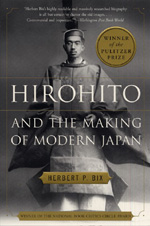 I’m not sure whether entering a field of knowledge through a basic introduction, or from the middle of an ongoing controversial debate is preferable. Bix’s book represents both aspects, being aimed at those familiar with Japanese history, arguing the case for a change in the perception of wartime emperor Hirohito, from benevolent onlooker and powerless figurehead to bearing full responsibility for Japanese war atroctities and aggression both before and during the second world war. At the same time, it adresses the general reader, using the Sh?wa emperor’s biography as the focal point for depicting the making of modern Japan. The balance between these two different books is worked out fairly well, with some passages dragging on a bit too long, due partly to an overabundance of detail and a flurry of Japanese names and concepts that are sometimes not introduced well enough to properly keep track of for the non-initiated reader.
The controversial main aim of the book, the recasting of Hirohito’s image that had been so carefully constructed by restorative forces in postwar Japan, convinces completely, and the detailed description of the political and social processes that had MacArthur and Hirohito discover their joint purposes during the crucial time of occupation and war crime trials, is especially fascinating when compared with postwar policy in occupied Germany at the same time. In both countries Roosevelts aim of completely uprooting the barbaric aggressive forces that caused the wars, and the chance for an honest assessment of guilt and morality was sacrificed by the Truman administration for practical political strategems in fighting the cold war and the rising communist menace.

 If some of the battling nerds on the movie’s IMDB page are to be believed, Miyazaki’s adaptation of this beloved children’s classic was a disgrace. I read the book (the existence of neither it nor its author I suspected until I checked said IMDB page) with that criticism in mind, and have to say: balderdash. While it is true that the two stories diverge in minute details, and that Miyazaki added elements typical for his work, and created visuals not prescribed in Jones’ book, the two are remarkably congruent. The story does make a bit more sense in the book, but then I’m not sure that’s necessarily a good thing in a book about demons falling from the sky and stealing hearts. I was smitten with the strangeness of Miyazaki’s take, and the straightforward resolution left me a bit underenchanted. On the other hand, the character’s behaviour makes more sense in the book, making them both more likeable and more interesting than the somewhat randomly bouncing anime folk.