Wednesday, May 31st, 2006
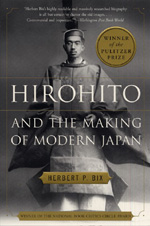 I’m not sure whether entering a field of knowledge through a basic introduction, or from the middle of an ongoing controversial debate is preferable. Bix’s book represents both aspects, being aimed at those familiar with Japanese history, arguing the case for a change in the perception of wartime emperor Hirohito, from benevolent onlooker and powerless figurehead to bearing full responsibility for Japanese war atroctities and aggression both before and during the second world war. At the same time, it adresses the general reader, using the Sh?wa emperor’s biography as the focal point for depicting the making of modern Japan. The balance between these two different books is worked out fairly well, with some passages dragging on a bit too long, due partly to an overabundance of detail and a flurry of Japanese names and concepts that are sometimes not introduced well enough to properly keep track of for the non-initiated reader.
The controversial main aim of the book, the recasting of Hirohito’s image that had been so carefully constructed by restorative forces in postwar Japan, convinces completely, and the detailed description of the political and social processes that had MacArthur and Hirohito discover their joint purposes during the crucial time of occupation and war crime trials, is especially fascinating when compared with postwar policy in occupied Germany at the same time. In both countries Roosevelts aim of completely uprooting the barbaric aggressive forces that caused the wars, and the chance for an honest assessment of guilt and morality was sacrificed by the Truman administration for practical political strategems in fighting the cold war and the rising communist menace.
Find this at Amazon
Books, English, Good, History, Japan, Nonfiction, Politics, Western/Eastern | No Comments »
 Oh boy, where do I start? It was sombering to see that the concept that so beautifully worked in In the Mood for Love could fall so flat. While this loose sequel explores similar themes, none of the characters got me the least bit interested, the plot was see-through-thin both in terms of what happened and the emotional content, and the pretentiousness of it all just unbearable. Had I seen this in a theater, it would have been one of the rare occasions for me to walk out (though the cinematography, admittedly lost on a TV, might possibly have kept me). At home I sat through it, and I’m glad I did, for the last half hour picked up a bit. But not remotely enough to make this worthwhile. Stay clear.
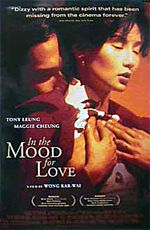 The romantic mood and intimate, at times claustrophobic, cinematography, of this compelling masterpiece pull you in closely, and make you experience the melancholy mood and longing of the main characters first hand, for an almost dizzyingly intense experience. The end left me scratching my head a bit, with especially the disconnected footage of De Gaulle suggesting that I maybe missed a whole level of allegory to the plot, but then again, maybe not. It matters little either way.