Search

Politics


Monday, February 13th, 2006

Paola Cavalieri – The Animal Question (2)

The caveat first: this is not exactly a book written for a general audience. It is a treatise of ethical philosophy, and the reasoning and phrasing is, I felt, even denses in some places than reverence to the esteemed traditions of academic discourse, let alone the subject matter, should have had it be (Though not having tried to set a thorough study of the intricacies of a system of moral acting in popular prose, I of course might be entirely mistaken and this book the closest anyone can get to simplicity in what is without a doubt an discomfortingly complex matter).

Cavalieri sets out to evaluate what entities are moral entities, in the sense that they figure into moral considerations of the actions of moral agents. A thorough review of opinions of the past reveals that none of them can be made consistent. Cavalieri then suggests that the best possible solution for our current state of knowledge of the cognitive life of other species is to extend the notion of human rights to all mammals and birds. Unfortunately, her case is solid, so this is the rare case of a book that has the potential to change my life. No more burgers. Poor me.

Most of what this movie reveals about the criminal mastermind Kissinger was already known to me, and while the detached way the material was presented made the movie seem much more objective and unassailable as any movie ever could be, it also produced a feeling of heavy handed redundancy. I think if my choices are polemic hilarity, as in Moore’s borderline scenes in Bowling for Columbine, and serene factuality, I’ll take the raving fat man any time. The most interesting suggestion came at the very end, when either the author of the book this movie is based on, or the films director, suggested that the reason the US hadn’t joined the international court yet was that they were very afraid of public scrutiny of Kissinger’s files. It almost makes too much sense.

Monday, February 6th, 2006

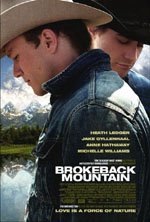
Ang Lee – Brokeback Mountain (2)

I have to admit to being reluctant to go see this, mainly because I thought it would, beyond the taboo breaking gimmick which seemed to have catapulted the two cowboys into the center of the cultural universe, be an inconsequential and boring love story. Now I feel reluctant to point out how wrong I was, because I’m sure you must’ve heard by now that this is a touchingly real story about failed lifes, magnificently filmed in a beautiful setting.

Monday, January 23rd, 2006

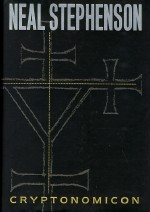
Neal Stephenson – Cryptonomicon (2)

This book has it all, geeky and cool facts about cryptology, military, social and technological history, a fairly believable conspiracy plot, insights into high-tech investment politics and an epic breadth and richness of materials that stunds. So why did reading it feel so tedious, and why was I glad when it finally was over? Maybe it’s because of the odd feeling of detached interest that perfuses the work. Stephenson describes the human dimension of his adventure with the emotions of a boy watching ants through a magnifying glass on a sunny day, just before he decides to see what happens when he burns them. It’s a terrific story, but it felt like someone else was reading it.

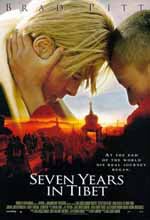
Expecting a filmed version of Harrer’s memoir, lending visuals and speed to the somewhat sluggish pace and skeletal outlines of the book, I was annoyed to see many changes in plot and a focus on the superficial events rather than their meaning. I also didn’t like the fact that in a movie about foreign places and experiences of strange cultures, everybody speaks english wich an accent to indicate the language used, except for a few places with correct language chunks thrown in. The latter double the problem, because now there’s not only an annoying accent, it’s also inconsisten. Harrer’s trek across the alien planes and up the bureaucracy of an unknown and bewildering country here comes down to lack of food, injured feet and a little brush with robbers; the fascination with the double nature of the wise leader/child is overshadowed by a dubious plotline of paternal guilt, and the overdramatized development of Harrer from cliched asshole to understanding wise man is in itself a chliche that could have done with some development. The chinese invasion in the end adds nothing but an uneasy feeling of activism, and the closeing scene in Austria is confusing. The cinematography is great though, even if it was shot in the Andes, because the Chinese wouldn’t allow filming in the Himalaya. I found myself oddly touched to find that Harrer died not a week ago, as though my having watched this movie so close to his death made it more meaningful. Mysteries of the human mind.

Sunday, January 8th, 2006

Yamamoto Tsunetomo – Hagakure (2)

The more I learn about Japanese history, the more I wonder how it is possible that the European captains found anybody alive there at all when they arrived. They should have disembarked, a fearful expression on their faces, and waded in blood, among the guts and remains of the honorable dead, who slashed themselves open to maybe make amends for an ill chosen colour of off-white for the master’s new lampshade, or some such. This makes for very fascinating reading, but it is indeed hard to understand how a society, in which disrespect leads to fights to the death, which in turn means seppuku for those who started them, could have functioned, Maybe, then, Yamamoto exaggerates wildly. This is somewhat more plausible for modern readers when they realize that some of his short texts read like they are the direct inspirations for Monty Python’s suicide squad lead by Otto in The Life of Brian, and the Black Knight in the Holy Grail – now of course available as a plush doll, which probably would have horrified old Tsunetomo right into killing himself.

Sunday, January 8th, 2006

Briski/Kauffman – Born into Brothels (2)

I guess I first have to say how touching this film is, nor how necessary it is to provide an, albeit small, window into a hidden world of hopelessness and despair, and the inspiring quality not only of the movie, but also of the photographers heartfelt need to do something to help save the futures, and indeed probably lives, of the children she taught in Calcutta’s red light district. Now that’s out of the way – I was actually wondering at several points during the movie, if the portrayal of these kids as very talented artists, while certainly true, does not mislead the audience into separating the victims of social injustice into those whose ruin will be a loss to us connoisseurs of the arts, and those who won’t be so sorely missed. Surely, if we could save the precious ones, things would already be much better.
Nobody should have to live in those conditions, whatever the quality of their drawings or their grades at school, and there remains a bitter taste of defeat in the end, when out of the nine kids all but three seem to be falling back into their doom. But in another sense, a single saved child is already a triumph, so maybe I’m quite wrong. It’s a great movie either way.

Bei manchen dokumentarischen Büchern fragt man sich unweigerlich, warum man sich die deprimierende Abfolge unheilvoller Tatsachen ins Denkgebäude schraubt. Nun ist es andererseits natürlich Unsinn auf dem Niveau der Erstmal-besser-machen Kritikverneiner, Unschönes nur deshalb abzulehnen, weil es keine konstruktiven Schlüsse anzubieten hat, aber erbaulich hätte ich es doch gefunden, nach der Durchsicht all der Naziwiderlichkeiten rund um Vertriebene und ihre Zentren, Kriegsgeschichte und Schuldausgleich ein paar Vorschläge zu finden, wie man das Pack zum Schweigen und die Geschichte auf einen guten Weg brächte. So ganz ohne das ist das Buch jedenfalls nicht der Diskussionsbeitrag, der es sein möchte, sondern eher die Grundlage für einen. Muss dann eben jemand anders schreiben.

Die für mich interessanteste Detailinformation betrifft das Verbot der Todesstrafe im Deutschen Grundgesetz, das mir angesichts der sonstigen Kontinuitäten von Mordbubenwirtschaft und Gewaltapparat immer ein wenig inkonsistent vorkam. Später schildert, wie ein Vertriebenenfunktionär sich für die Abschaffung verwendet, um seine alten Nazikumpane vor den Galgen der Alliierten zu retten. Das ging schief, weil die Alliierten sich bei den Hinrichtungen ums Grundgesetz der Besiegten nicht recht scheren mochten, und der Plan, die Todesstrafe für gemeine Mörder flugs wieder einzuführen, scheiterte dann ebenfalls. Sie kennen doch unser heiteres Suchspiel? In der Geschichte hat der Weltgeist Sepp Arnemann eine konstruktive Lehre über den Umgang mit repressiven gesellschaftlichen Kräften versteckt. Suchen Sie sie selbst, mir gefällt sie nicht.

Nachtrag: konkret dokumentiert in der aktuellen Ausgabe die Reaktionen Vertriebener auf Späters Buch, und ich nehme einen Teil des oben gesagten zurück. Wer derart die Hunde zum Bellen bringt, hat allerhand richtig gemacht.

Friday, December 16th, 2005

Jigsaw Pieces

digest this

4a

This ploy is quite popular among marketing fucks, it seems. This is the second one in two weeks I received. Send magazine advertisements that look like an invoice, and some percentage of recipients will be suckered into actually paying and thus subscribing to your quality rag. Why, it’s pure evil genius!

Update for this.

A while ago, at an SfN meeting, I attended a ethics panel, where one of the questions discussed was the growing of human neurons in animal brain. Other than being vaguely creeped out by the concept in spite of my better knowledge, I only remember one of the researchers talking about how very, very much they discuss this in the ethics panel at Stanford. I guess he sorta knew that people would be vaguely creeped out.

Now the Frankenmice have made Yahoo News, and no doubt the religious nuts are already collecting their wits for an assault against the perversity of science! So let me be quick to point out that this mousebrained thing is a great idea, for it brings us one step closer to creating Franky and Benjy, the two mouse overlords from The Hitchhikers Guide to the Galaxy.

Read more at news.yahoo.com/s/ap/200…