Die Grauhaarige kommt nach ein paar Minuten wieder, entschuldigt sich bei mir und dem dicken Mann, einem Xerox-Wartetechniker, für ihre mangelnde Organisation, und überlässt mir dann Stuhl und Telefon. Erstes Etappenziel.
Nun habe ich aber keinerlei Telefonnummer zur Hand. Die einzige Verbindung zu einer Welt, in der ich keine bluttropfende Schmutzschleuder sondern ein leidender Freund bin, sind die Verwalter des Ferienhauses, in denen das Berkeleykonferenzkontingent quartiert. Erster Anruf also: 411, Auskunft. Man gebe mir Florida Vacation Connection, sage ich. Versteh ich nicht, sagt der Computer am anderen Ende. Hinter mir regt sich eine dicke Frau in Kinko-Uniform. Immerhin keine kinky Uniform, nachträglich bedacht. Florida Vacation Connection sage ich etwas lauter, und etwas mehr rührt sich die dicke Frau. Ich verbinde mit dem Menschen, schnarrt der Computer. Die Leitung verstummt. Die dicke Frau geht woanders hin, Papier sortieren. Der Mensch findet die Firma und schaltet mich durch. Zweites Etappenziel.
Ich hatte einen Unfall, erkläre ich der Angestellten der Hausverwalter, und muss Freunde erreichen, die in einem ihrer Häuser wohnen, 244 North Adams Drive, ob sie wohl die Telefonnummer des Hauses rausrücken könne. Sie kann nicht, wer ich sei, wo ich wohne, was das solle. Kurz wallt Panik, dann aber fällt mir ein, dass Carmel das Haus buchte, und ihr Name wirkt Wunder. Zack, hab ich die Nummer. Drittes Etappenziel.
Hinter mir nun wieder rührt sich die dicke Frau. Sie brauche, mault sie grob, das Telefon. Ich würde gerne glauben, mich verhört zu haben, aber tatsächlich sind ihr zwei Minuten Telefonblockade durch einen praktisch Halbtoten schon zuviel des guten Willens. Ich staune und grimme ein wenig, aber mehr nach Innen, für nach Aussen fehlt mir die Energie. Ich rufe das Haus an, es ist auch tatsächlich jemand da, aber kein Auto. Ja, sagt Ahna, sie rufe dann Chris an, wo sie mich denn erreichen könne, um den Erfolg durchzusagen. Es scharrt der Kinkodrachen. Nirgendwo, sage ich niedergeschlagen, man will mich hier nicht haben. Sie wisse, sagt Ahna, natürlich nicht, ob sie überhaupt jemanden erreiche. Ja, sage ich. Lege, und stehe auf. Nieder setzt sich instantan der Drache. Grusslos gehe ich nach draussen. Viertes Etappenziel.
Nun also stehe ich in der Betonwüste, mein treues Fahrzeug zerschmettert an meiner wunden Seite. Oder vielmehr: mein treulos niederträchtiges Radluder, die schon allzu dumme Sau. Ein Münztelefon gibt es hier, natürlich, keins. Man trägt Händi. Es brennt infam die Sonne, und trocknet in den Wunden Blut, Gestein und Mikroben zur unschönen Kruste. So gehts nun aber nicht, denke ich bei mir, und fasse einen Entschluss.
Deutsch, Gesundheit, Jigsaw Pieces, Miniaturen, Politics | No Comments »
 For years I had suspected that the historic truth is being stretched and bended, possibly even mutilated, in order to make Dresden into the innocent symbol of allied war atrocities dominating the German discourse of the bombings. Now, having read Schubert’s book on the subject, I am better equipped to dispel the myths, and predictably find my inferences confirmed. No liquid phosphor rained down, the city was not full of fugitives or innocents any more than any of the other cities inhabited by Nazis was, and the local industry was neither insignificant nor unimportant for the war. Dresden has turned into a monumental tool for relativists, for whom the outcome – the destruction of human life and property – is the only determinant of the morality of an action, and for whom dead Nazis and their dead victims form one soppy canvas to paint a kitschy portrait of their nationalism disguised as benevolent peacefulness upon.
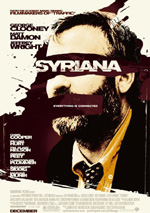 The puzzle, it seems to me, is not how to find out about the multiple ways the current setup of commerce and power is defective, producing forces that can not help but be evil. Rather, it’s how to turn this realization into smething that has practical consequences, and not being forced into quiet resignation, because the mechanisms are too far removed from our daily life for them to be able to lie within our sphere of influence. The great thing, then, about movies like this one, is that in all it’s complexity and intricateness – and I didn’t find it remotely as hard to follow the plot as all the reviewers were whining, by the way. Sure, you miss some details, but the main pieces are in plain view – it creates the feeling that everything is connected, providing the unlikely hope that stems from the fact that even what we lowly watchers of movies do in our lives will make a difference, shifting the distribution of power.
 This could have been another movie using a feel-good story to enahnce understanding an accepance for a minority by depicting some of its members as struggling, but good humans-like-us. That is an approach that is both commendable for its beneficial impact on society mores and slightly suspicious for its tendency to avoid the more troubling aspects or consequences of the problem under study. On an abstract level this movie falls into this category, as the storyline feels improbably constructed from the standard ingredients of such fare, but the detail, and the performance of its leads, catapult it onto a different level. It’s too bad Huffman was up against Witherspoon’s more broadly appealing performance in Walk the Line at the Academy Awards.
 I’m not sure whether entering a field of knowledge through a basic introduction, or from the middle of an ongoing controversial debate is preferable. Bix’s book represents both aspects, being aimed at those familiar with Japanese history, arguing the case for a change in the perception of wartime emperor Hirohito, from benevolent onlooker and powerless figurehead to bearing full responsibility for Japanese war atroctities and aggression both before and during the second world war. At the same time, it adresses the general reader, using the Sh?wa emperor’s biography as the focal point for depicting the making of modern Japan. The balance between these two different books is worked out fairly well, with some passages dragging on a bit too long, due partly to an overabundance of detail and a flurry of Japanese names and concepts that are sometimes not introduced well enough to properly keep track of for the non-initiated reader.
 Sometimes one opens a book, or reads a first line, and immediately it’s clear that the thoughts and concepts that went into the work were sorely missing from the world, yet nobody had realized it before. Such is the case with this gem of philosophical reasoning. An essay on the essence of bullshit, and an attempt to explain its apparently increasing dominance of today’s communication, this work should be the basis for a much more thorough study of the phenomenon. The exhilarating delight and sheer fun of reading a serious deliberation on the issue must not distract from the fact that this is not satire, nor is it humorous, except insofar as it is a surprising and complex study of a phenomenon commonly thought to be not worthy of such study. To be sure, this combination of surprise and incongruency of means and perceived complexity of the subject are what makes the first reading such a pleasure, and look superficially like a satire of moral philosophy. But to stop at that level would be to mistake the work for its subject, and to miss the chance to develop the tools to attack the toxic prevalence of bullshit in all the public spheres of communication.
 There is mythological evidence from the middle ages, suggesting the Swabians were a jolly, lively people then, full of vigour and joy. You wouldn’t think it today, and the introductory section of this book, meant to show Swabians in the best possible light and endowed with a preface by Cleverle Späth, is a case in point. The most salient features of the Swabian mind, his thriftyness, his shrewdness, his xenophobia, take some stretching to be made into qualities, and with some, most notably the Kehrwoche, even Larson’s well meaning prose fails to create any appeal or sense. The anecdote of Larson interacting with Willy Reichert, Arnulf Klett and the likes are positively painful, but admittedly that might be just to me, and just because they hit too close to home.

