Wednesday, December 14th, 2005
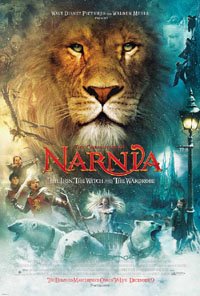 I should have known. While I enjoyed the charming simplicity of the plotlines in the Narnia series, and appreciated them as the children’s books they were intended to be, none of their story elements packs the mythological punch of Tolkien’s writing, and the Christian parable feels tired once you’ve spotted it. Which is hard not to.
To start with the positive, the movie is nicely done, devoid of cringe-inducing lines or badly done characters, wich is saying something for Disney. But it is also quite boring, and at least a half hour too long. To strip a story about an oppressive regime, war and an epic battle for the survival of a whole world of all the nastyness these things should involve, and leave it with decoratively frozen puppets and the frosty looks of Tilda Swinton, is to deny the book its impact. Sure, you shouldn’t frighten your underage audience into little whimpering heaps, but surely some sense of the consequence of evil would have been appropriate.
Plus, not surprisingly, seeing the crude metaphor for the New Testament, Aslan’s sacrifice for the reinforcing of the “old magic”, rather than reading about it, makes it’s crude and unsubtle symbolism so painfully apparent, that I change my initial statement above – there is a cringy moment there, but it’s all Lewis’ fault.
All Right, Animals, English, Fantasy, Geekstuffs, Movies, Philosophy, Politics | No Comments »
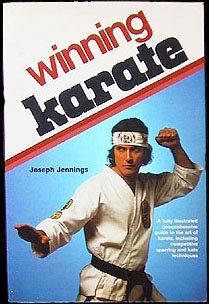 With martial arts training, it’s mre about the form, the spirit and the attitude of the student than it is about the actual specific movement or skill that’s trained. So a physical description of the basic techniques provides technical rather than spiritual insight – at least when it’s read rather than physically studied. On the other hand, the illustrations in this book demonstrating how to deal with an attacker armed with a gun, knife or rifle, are extremely spiritual. And by spiritual I mean funny.