Search

All Right


This is a profoundly silly book, about magic symbols and masonic references on the US 1$ bill. Some of them are surprising and interesting (like the etymology of Dollar, the significance of the pyramid, or the source for the $ symbol), but most of the letter and word counting and geometric analysis of what appears where seems more like an unhealthy obsession than an informative analysis. I know Gematria is very honorable quackery, but it obviously is possible to overdo it. Who would have thunk?
Friday, February 3rd, 2006

Takeshi Kitano – Zatoichi (3)

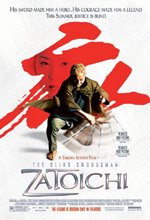
This could have been a marvelous homage to martial arts movies in general and the Zatoichi series in particular, full of references to details of Japanese culture, and funny little scenes. But unfortunately the plot, which should have been a simple story of evil oppression and the lone swordsman who breaks it, is told in such a fragmented and oblique style, that it gets into the way, rather than providing the frame upon which all the fine details are hung. It’s too bad, there is so much to love in here, but it all just doesn’t come together.

Sunday, January 29th, 2006

Vincenzo Natali – Nothing (3)

What a strange movie. Reminiscent of the director’s earlier “Cube”, this has less of the grim deadliness, and more levity, but also a bit too much jumpy goofiness for the sake of its central metaphor. It’s the story of two underdog friends living in a derelict house between two freeways in Toronto, who one fateful day wish the world away and find themselves stranded in a white, bouncy Nirvana – in a typical silly twist, the first thing one of the characters throws into the whiteness to see if it can be walked upon is a statue of Buddha. Subsequent fights between the friends lead them to them wish away more and more of what little they have, and it is a surprise that the movie doesn’t end with pure whiteness, like Cube did, but with… ah, well, you’ll just have to watch it, because I’m not going to tell you.

Tuesday, January 24th, 2006

Everyone’s Waiting (2/3)

I lost interest in this overblown, thickly layered soap opera somewhere in season two, but when I heard that the final episode was exceptionally well done, and the bothersome Nate would finally die, I thought it might be nice closure to watch it. Unfortunately, the, err, video supply store, accidentally delivered the final episode of season three, and not until the final minutes of that tedious, overdramatized convolution of plots did that fact dawn on me. What a waste of an hour.

The true final episode then wasn’t quite as bad, but somewhat disappointing. Until the moment when Claire drives away from LA, Nate’s ghost jogs down in her rear view mirror, and the future of all the characters is revealed, up to their deaths. That this touched me, even though I didn’t care for any one of the characters, speaks to the quality of the sequence. But if you’re like me, and want to see it, skip the first 40 minutes of the episode. They’re just business as usual.

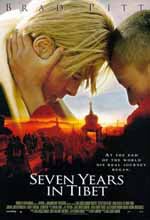
Expecting a filmed version of Harrer’s memoir, lending visuals and speed to the somewhat sluggish pace and skeletal outlines of the book, I was annoyed to see many changes in plot and a focus on the superficial events rather than their meaning. I also didn’t like the fact that in a movie about foreign places and experiences of strange cultures, everybody speaks english wich an accent to indicate the language used, except for a few places with correct language chunks thrown in. The latter double the problem, because now there’s not only an annoying accent, it’s also inconsisten. Harrer’s trek across the alien planes and up the bureaucracy of an unknown and bewildering country here comes down to lack of food, injured feet and a little brush with robbers; the fascination with the double nature of the wise leader/child is overshadowed by a dubious plotline of paternal guilt, and the overdramatized development of Harrer from cliched asshole to understanding wise man is in itself a chliche that could have done with some development. The chinese invasion in the end adds nothing but an uneasy feeling of activism, and the closeing scene in Austria is confusing. The cinematography is great though, even if it was shot in the Andes, because the Chinese wouldn’t allow filming in the Himalaya. I found myself oddly touched to find that Harrer died not a week ago, as though my having watched this movie so close to his death made it more meaningful. Mysteries of the human mind.

Wednesday, January 11th, 2006

Allan Mindel – Milwaukee, Minnesota (3)

This was supposed to be the heartwarming, quirky and funny, yet profound story of a mentally handicapped prodigy icefisher, who has the fish themselves tell him from under the ice how to catch them, but somehow it didn’t come together. Neither the characters nor the acting can convince, and the plot is so thoroughly overconstructed it doesn’t interest me for one second. While the final scene of Albert walking off into the white, trailed by his disciple icefishermen, who rather than laugh about him – as his overbearing mother would have him believe – submit to his superior authority, is very poetic, the rest of what this movie wanted to be stays under the ice. Someone should have listened more closely to capture it.

This is a nice enough movie, I suppose, but it left me with a feeling of emptyness where meaning should have been. It can’t possibly want to tell me something about human relations, or the male character’s faults wouldn’t be so blatant and unsubtle, and it can’t be entertainment either, for though there is quite a few funny bits, the overall mood is that of oppression. It must have been liberating for Baumbach, who’s personal history this is rumored to reflect, but doesn’t do much for me.

Monday, December 26th, 2005

Sun Tzu – The Art of War (3)

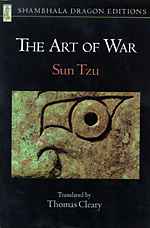
When a dog pees on a mountain, does the mountain care? Depends on the size of the dog, you might answer, but in general it won’t. General – what better segway than that to lead into my two cents on Sun Tzu’s Art of War, commonly hailed as the essential read for business strategists, soldiers, garbage collectors, and, really, everybody, for war is a metaphor for life, and we all have one of these, after all. In spite of that Master Sun’s strategic nuggets of wisdom were a bit lost on me. I don’t object to anything said, and the style of the translation, and, I presume, the original, is very concise and poetic in it’s condension, but what in this book I find applicable is obvious, and what isn’t obvious doesn’t seem applicable. On top of that this edition has been translated an edited by Thomas Cleary. Cleary follow every few sentences of Sun’s text with serveral different commentaries, and the sequence of Sun’s dense, poetic writing, and the commentators clumsy, wordy rephrasing makes this an odd comedic experience.

Friday, December 23rd, 2005

Johhny Cash (with Patrick Carr) – Cash (3)

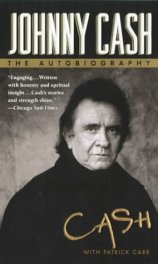
Johnny Cash was an amazing artist, and his recent death has been a great loss. I love the recent American Recordings series of records as well as his older stuff. Sadly, he is not quite as amazing an author, and Carr’s co-authoring didn’t fix the shortcomings. There are cool stories in this book, but they are often told in a laundry-list fashion, where people, events and facts roll by without much coherence or reflection. Biggest eye-rubber: Cash’s admission that he and June avoided shopping in towns that had no Wal-Marts and even graded them by the number of evil moneysucking behemoths (“tomorrow is a two Wal-Marter”). Biggest chuckle: to get out of a contract with a record company in the early nineties, Cash wrote a whole abysmal album, including a song called “Chicken in Black“. It worked.

Wednesday, December 21st, 2005

Frank Herbert – The Green Brain (3)

Probably one of the first science fiction novels to have the ecological threat posed by modern humanity at the core of its plot, this 1966 action drama puts all its effort into getting the message through, with very little meaningful plot. It’s an unfortunate choice, as the central premise – being under extinction pressure from an Orwellianly named International Ecological Agency, insects adapt by cooperating to form complex and conscious societies, capable of concerted action and motion – would have been fascinating to explore in depth. Instead, the book spends most of its time following a subplot of international politics and intrigue, and its protagonists down a jungle river, and ends when things would become interesting, with what feels like a compromise between a happy ending and gloomy doomsaying. The book leaves the distinct feeling that Herbert wasn’t quite happy with his setup, and didn’t want to put too much effort into working it through. Maybe that’s why he revisited the hive mind a few years later in The Hive.