Search

Good


Monday, February 6th, 2006

Michael Gazzaniga – The Social Brain (2)

I was unable to find any image of the cover of this book online – which tells you something about it’s age. The Social Brain came out in the 80s, and it proposed, based in Gazzaniga’s own groundbreaking research on split brain patients, that the brain was a combined structure of separate and somewhat independent modules, and that the unfied mental life we seem to have is a constructed illusion rather than a controlling entity. The descriptions of the experiments are as amazing today as they must have been when they were first done, the speculative general part seems to vague to be either true or false, and the final chapter, in which Gazzaniga reverently interviews himself, instead of just saying what he wants to say, for no good reason, is slightly embarrasing.
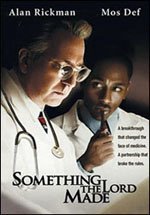
I have wanted to see this ever since I saw the trailers on HBO when it first came out, firstly because the subject seemed interesting (the invention of heart surgery combined with the story of racial discrimination in the medical establishment), and because Alan Rickman plays one of the main characters. Those were good enough reasons, but as it turns out, Mos Def almost steals the show playing the other lead. The whole way of story delivery is a smidge on the sentimental side, but not enough to spoil a touching historical tale.

Monday, February 6th, 2006

Ang Lee – Brokeback Mountain (2)

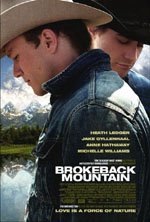
I have to admit to being reluctant to go see this, mainly because I thought it would, beyond the taboo breaking gimmick which seemed to have catapulted the two cowboys into the center of the cultural universe, be an inconsequential and boring love story. Now I feel reluctant to point out how wrong I was, because I’m sure you must’ve heard by now that this is a touchingly real story about failed lifes, magnificently filmed in a beautiful setting.

Saturday, February 4th, 2006

Dan Simmons – The Fall of Hyperion (2)

In this sequel to Hyperion, we learn a lot more about what the Shrike is, who built the Time Tombs and why, and what the enigmatic events in the first book meant. In a way, these revelations destroy the sense of mystery that surrounded the time tombs and the Shrike. The necessity to keep a plotline that goes back and forth in time from folding unto itself and creating a know makes this book hard to follow in places, and gives a feeling of contrivance to what seemed a monumentally powerful force. The explanations, on the other hand, work well enough, and the overarching theme of death, suffering and how organic life can keep its dignity in the face of them and strive to be free of them without destroying everything in the process is fascinating to follow. The combination with Keats’ romantic poetry, while adding a very unusual touch to this space opera, doesn’t work all that well for me, but that might mainly be because I’m not too smitten with romantic literature and find the hyperbole and godlyness of subject matter and language tiring.

I am sufficiently interested in Simmons vision to someday go on to read Endymion and Rise of Endymion, the next two installments in the Hyperion saga, but not very soon. I’m too afraid to find religious mayhem similar to what happened in Herbert’s progressively less accessible Dune series.

Thursday, February 2nd, 2006

Tony Scott – True Romance (2)

With a script by Tarantino, and being directed by the guy responsible for blockbuster mainstream crap like Top Gun, this could have turned out an self referential exercise in explosion and meanness. Instead, this is a gritty and funny roller coaster ride of a movie, with an awesome cast and a wonderfully reckless storyline. Funny how this one went entirely by me when it came out.

Interestingly, this script already raises the issues Tarantino’s Kill Bill got criticized for: if violence is an aesthetic component of storytelling, am abstract dance with blood as a costume, rather than a realistic deptiction of its physical and psychological consequences, does that make the movie itself an act of violence? I don’t personally think so, but it might be a hard case to make.

Saturday, January 28th, 2006

Rome (2)

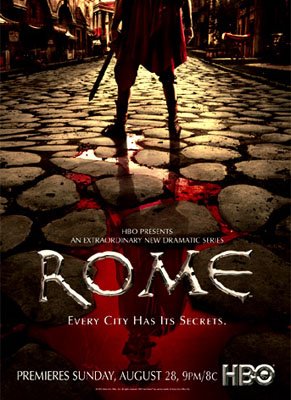
I don’t know a whole lot about Roman history, nor about the small details of everyday life in the days when the republic turned empire, but this series does quite a good job of creating a believable backdrop for Caesar’s conquests and the adventures of the two soldier goons who carry the show through wit and humor, an echo maybe of the concept behind Asterix and Obelix. The frequent focus on sex as the driving force behind the political upheavals looks suspiciously like an excuse for eyecandy, but the same could probably be said for the whole show. Nothing wrong with that, anyway.

Tuesday, January 24th, 2006

Everyone’s Waiting (2/3)

I lost interest in this overblown, thickly layered soap opera somewhere in season two, but when I heard that the final episode was exceptionally well done, and the bothersome Nate would finally die, I thought it might be nice closure to watch it. Unfortunately, the, err, video supply store, accidentally delivered the final episode of season three, and not until the final minutes of that tedious, overdramatized convolution of plots did that fact dawn on me. What a waste of an hour.

The true final episode then wasn’t quite as bad, but somewhat disappointing. Until the moment when Claire drives away from LA, Nate’s ghost jogs down in her rear view mirror, and the future of all the characters is revealed, up to their deaths. That this touched me, even though I didn’t care for any one of the characters, speaks to the quality of the sequence. But if you’re like me, and want to see it, skip the first 40 minutes of the episode. They’re just business as usual.

Monday, January 23rd, 2006

Neal Stephenson – Cryptonomicon (2)

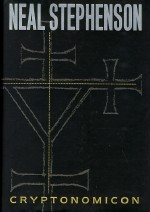
This book has it all, geeky and cool facts about cryptology, military, social and technological history, a fairly believable conspiracy plot, insights into high-tech investment politics and an epic breadth and richness of materials that stunds. So why did reading it feel so tedious, and why was I glad when it finally was over? Maybe it’s because of the odd feeling of detached interest that perfuses the work. Stephenson describes the human dimension of his adventure with the emotions of a boy watching ants through a magnifying glass on a sunny day, just before he decides to see what happens when he burns them. It’s a terrific story, but it felt like someone else was reading it.

Monday, January 23rd, 2006

Richard Brooks – In Cold Blood (2)

This is an almost literal translation of Capotes book to the screen, and it compares very favorably both with his writing, and the recent movie “Capote”, about his own role in the trial of Hickock and Smith and the role of the book in his life. Some odd choices aside (why did the script change Capote’s name?), this is a gripping true murder story, intense, yet never sensational. The central ambiguity of the title, which refers both to the act and the punishment, is made too explicit for my taste in some of the lines toward the end, but the subject is just important enough, that a bit of preaching is forgivable.

Monday, January 23rd, 2006

Martin Scorsese – Kundun (2)

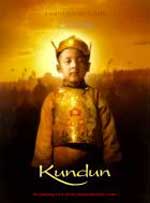
This biopic of the Dalai Lama would impress me much more, and be a much more valuable contribution to understanding and solving the plight of Tibet, if it didn’t look like Cirque de Soleil on dope. While I can’t blame the traditional garments and designs of Tibet for having been appropriated to an updated version of the myth of the noble savage western progressives seem to love so much, I can blame Scorsese for presenting the struggle between what clearly is a feudal society where extreme poverty and lavish palaces stand side by side and the upheavals of the modern age, namely the invasion of technology and the Chinese cultural revolution, in a way so heavily slanted as to lose its trustworthyness. It’s too bad, because I suspect even a fully realistic depiction of the Tibetan aristorcracy would make the communist Chinese look quite bad. But cinematography, scope and acting compensate handsomely for these ideological squabbles.