Tuesday, August 22nd, 2006
Michael Steele/John Koprowski – North American Tree Squirrels (2)
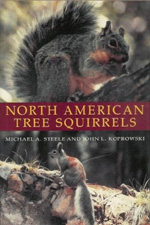 While this book has plenty of interesting information on mainly fox and gray squirrels, it could have been written more with the lay reader in mind. That’s not to say that it is too hard or complex, for it is surprising how little complexities seem worth relating, but rather that it reads in places like a badly written scientific paper. If all of this book had the wit and pace of the chapter on squirrel reproduction, it would have been a delight to read. As it stands, it’s interesting, but rather dull. Except for that chapter. Hilarious.
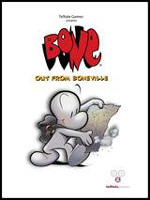 The comic series created by Jeff Smith started off as a quirky lighthearted adventure story and ventured into more complex territory, creating a comic hybrid of Tolkien and Lucas, including a creation myth, an evil archvillain and the restoration of balance to a force, here called the dreaming. While the background plotline may be derivative, the storytelling and character design wasn’t, and Bone was a delight to read. Now Telltale Games, consisting of game designers who left Lucasarts after the announced Sam and Max sequel was canned after a decade of development, has started to make the comic epic into a series of adventure games with a SCUMM like interface. Smith’s design and dialogue are completely preserved, so much so that one might object that the result is an animated comic strip rather than a true game. This is less true of the second installment (The Great Cow Race) however, and isn’t a big criticism anyway. Unfortunately, the third installment will be a while in the making, with a brand new Sam and Max game (yes) scheduled for release later this fall.
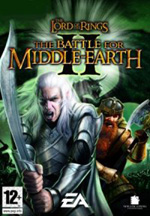 I readily confess that I am a sucker for real time simulation. I loved playing Warcraft and Starcraft, and I enjoyed this game, too, though it seemed to me that the gameplay in the campaigns is slightly unbalanced, with little freedom for strategy. In one mission in the evil campaign in particular, any straying from a predescribed path of action would lead to disaster, which is not very enjoyable. But since the main action presumably is supposed to lie in online gaming, I guess that’s quite all right.
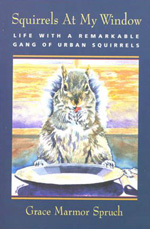 The different stances of people from varying strata and cultural backgrounds take toward animal life in general, and those animals that have become closely associated in one way or another to human life, is fascinating on one hand, and fairly predictable on the other. City dwellers, who suffer property damage and the risk of diseases from rats, abhor and vilify them, while at the same time adoring squirrels, who in many respects resemble their shady cousings. While in the countryside squirrels are hunted for food, and face extinction in many places because of habitat loss, the city dwelling species enjoy much attention and feeding by their primate hosts. And needless to say, each faction considers their way the natural state of affairs.
 This book evokes memories of the seventies, when I was a little boy in school, and many textbooks had illustrations in a style similar to Sasek’s. These are lovely and slightly odd renderings of everyday life in Munich several decades ago, and the slight mismatch between the english and german versions of the text, and the terseness in general, only add to this piece of nostalgia. And I don’t even like Munich all that much.
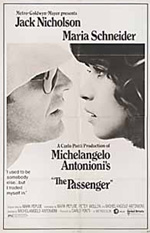 This movie exudes an almost physical sense of emptyness and ennui. Oddly, while not entirely successful, that is actually a good thing, as Nicholsons character has lost all interest and drifts along mindlessly, trying without success to find meaning in taking over other another person’s life. The opening sequence, unfolding in mysterious wordlessness in a gorgeous desert landscape, are particularly effective at recreating the existential despair of Nicholsons character in the viewer, but all of the movie actually does a terrific job. Which unfortunately is also something of a bad thing.
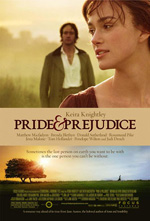 I am exactly a fan of the romantic movie genre, often citing its lack of explosions as a reason. More accurately stated, the romantic comedy and drama in general lack an element that allows me to overlook faults in plot or character exposition, or overall execution. This is because I am unwilling to let myself become emotionally involved with people whose existence has clearly been disproven by shoddy filmmaking. I harbor no such objections against unrealistic explosive devices, and I blame my genes for said unfounded bias.
 For years I had suspected that the historic truth is being stretched and bended, possibly even mutilated, in order to make Dresden into the innocent symbol of allied war atrocities dominating the German discourse of the bombings. Now, having read Schubert’s book on the subject, I am better equipped to dispel the myths, and predictably find my inferences confirmed. No liquid phosphor rained down, the city was not full of fugitives or innocents any more than any of the other cities inhabited by Nazis was, and the local industry was neither insignificant nor unimportant for the war. Dresden has turned into a monumental tool for relativists, for whom the outcome – the destruction of human life and property – is the only determinant of the morality of an action, and for whom dead Nazis and their dead victims form one soppy canvas to paint a kitschy portrait of their nationalism disguised as benevolent peacefulness upon.
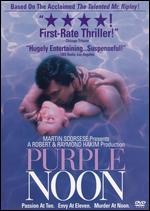 Better than its modern incarnation, this thriller might not capture Highsmith’s story completely, but it works fairly nicely as a movie standing on its own. The moral ending is disappointing in principle, but also because it’s unconvincing, it being such a stupid oversight for Ripley not to have gotten rid of the anchor, and it seeming unlikely that people would drag a yacht out of the water with its anchor still lowered.