Search

Must See


Saturday, February 25th, 2006

John Muir – My First Summer in the Sierra (1)
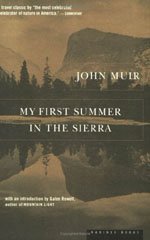
A young man goes into the mountains to herd sheep and falls deeply in love, changing the rest of his life? Sound familiar? It took me until I was almost done with this exuberant diary to notice the funny parallels to this years Oscar winner. Since Proulx’ story and Lee’s movie are a commentary on the myth of rugged wilderness and the lone, heroic men populating it, it’s interesting to compare the two on that level. Muir in this trip and the path it set him on for his life, shaped another pervasive myth – that of unspoiled nature being more than a resource waiting to be used, but of value in itself. While the overpowering enthusiasm of his prose (written long after the trip), and his referring to plants and animals alike as “people” sound very quirky, and certainly his habit to talk to the flower people does, they are also part and parcel to his view of nature as a vast society, of which man is but a small part. His awe in the face of everything nature throws his way is a great inspiration, and Dan Simmons’ suggestion in the Hyperion novels, that with time Muir he might turn into the patron saint of his own religion seems very convincing. He certainly was crazy enough for the job.
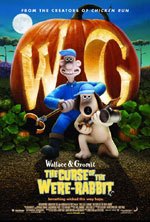
This movie is sheer genius, and an impressive feat of diligence and design to boot. The humorous plot devices are incredibly inventive, the rabitt armada is a force of cuteness that has no peer, and the combination of horror movie and vegetable gardening is just delicious. Even the special features on this DVD kick ass, with an awesome bonus short from Aardman studios, and the precious piece of information that Wensleydale, the watery cheese Wallace loves so much, was in deep financial trouble until the films came along and saved the company. Reminds me of the insane effect the movie Sideways and it’ main character’s criticism of Merlot and praise of Pinot Noir had on the sales of these wines. People are sheep, which is not only bad in itself, but also about ten years behind the vogue. It’s rabbits, now, folks, so you better start thinking for yourself. About nice, juicy carrots.

Sunday, January 29th, 2006

Dan Simmons – Hyperion (1)

An excellent crossover between literary history, theological treatise and captivating worldbuilding science fiction, the only shortcoming of this book is that it ends just when things start to become interesting. Not until the last few pages did I realize that the confrontation with the frightening entity called the Shrike, the opening of the Time Tombs and the outcome of the big conflict between human and AI madness would be subject of the sequel. Still, this collection of the life stories of six people, bound together by a pilgrimage (Hello, Chaucer), weaves a picture of a future, where technology and metaphysics blend into a web of awe.

It’s interesting to see Simmons trying to deal with a technical detail problem facing every attempt at Science Fiction with some cultural and historical background: either every reference has to be composed and explained in detail, or all the references come from 19th and 20th century culture, which becomes increasingly improbable the further in the future the plot is set. The fact that his plot contains people from many different epochs makes up for some of that asymmetry. That device almost justifies the pilgrims singing “We’re off to see the Wizard” when they go to face the Shrike, and the difference is made up by the creepiness of that very image. But overall, it still doesn’t quite come together, the lists of artists that are mentioned in a few places always separate nicely into the ones the reader knows and those unkonown names just plugged in to indicate the passing of time. But if the past is any indication for the future, hardly anybody from our time will still be known 600 years hence. Maybe Simmons is as close as one can get to solving that particular problem here.

Thursday, January 5th, 2006

Neil Diamond – 12 Songs (1)

Hell Yeah, he’s done it again. Though that might refer to Neil Diamond himself, whose work I’ve always liked a lot, and who has outdone himself on this new collection, the person I’m referring to is Rick Rubin, whose list of productions reads like a good part of my most favorite list. Johnny Cash, Slayer, System of a Down, now Neil Diamond. It’s humbling. What great piece of music did I produce recently? On the other hand, I’m wouldn’t even know how, so maybe I’m doing all right.

Tuesday, January 3rd, 2006

Rough Guide to Okinawan Music (1)

Okinawa is located on an strategic spot of ocean real estate, and has been occupied by numerous foreig powers throughout its history. This stormy military past has forged the island’s strong martial arts tradition, but a side effect of a multitude of traders and soldiers passing through is a multilayered cultural richness. This compilation collects a broad variety of styles, themes and artists, from the amazing traditional sanshin tune Koko Kuduchi to the joyous modern surf pop of The Surf Champlers. While the variety of material makes sure that there have to be a few songs for everyone they could have done without, overall this is a shining jewel and wonderful to explore.

Monday, January 2nd, 2006

Peter Jackson – Lord of the Rings (1)

Ever since the first of the Lord of the Rings trilogy came out, Middle Earth has been a holiday* staple for me. I liked the original theatrical versions well enough, but it’s only in the extended cuts that the story’s pacing works and the rich undertones of Tolkiens mythology get a chance to resonate through the plot. Aragorn’s singing of the Lay of Luthien is one specific example among many, and not by accident is it in the Fellowship of the Ring, which after this year’s repeat watching of the whole trilogy (split over quite a few days – I’m a geek, not a nerd) is still my favorite. It’s also the one part that doesn’t have cringe inducing dialog in it (“A red sun rises. Blood has been spilled this night” – Yeah, that would be my brain hemorrhaging, you Elf twat), but they’re all precious, of course. Go, looks at them.

Friday, December 23rd, 2005

For All Mankind (1)

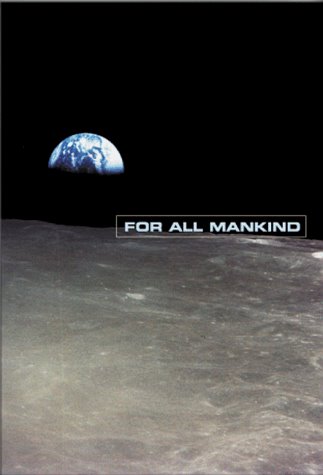
The story of lunar exploration, from Apollo 11 in July 1969 to Apollo 17 in Dezember 1972, in a beautiful collage, narrated from the original recordings and additional comments from the people who have been up there. Amazing footage gives you a glimpse of what it might be like to go where now man has gone before. It’s a bit unfortunate that they emphasized a seamless narrative over historic accuracy, blending the 7 missions into one long trip to Luna, but in the end, it doesn’t matter.Earth, floating in blackness, yet struck by the intense light from the sun, made me realize for the first time the intuitive oddness of space close to a star: dark and empty, not for lack of light, but for lack of illuminable things. That’s got to be an analogy for something.

Thursday, December 22nd, 2005

Gichin Funakoshi – Karate-do Kyohan (1)

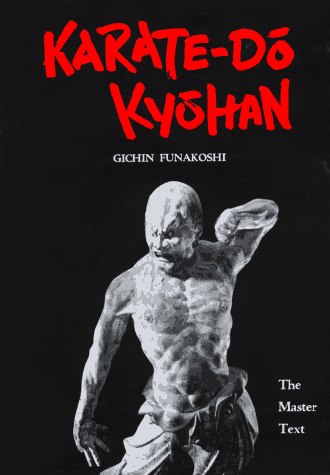
This is a wonderful and concise introduction to all mayor aspects of karate, from the basics and kata to free sparring. What I found most fascinating – besides the insightfully detailed kata descriptions – was how meaningful those detailed notes become when you don’t read them as descriptions or recipes, but as commentaries on something you already know – or, even more interesting, know in a similar shape. Since I’ve been studying all the Kata’s in their Wado form, Funakoshi’s reasoning is most intriguing where he describes the rationale for doing something different from how we do it. The dialectics of form become apparent, the fact that one needs to be restricted, to see the unfoundedness of that restriction, and thus overcome it. Which makes me realize that Hegel was a very eastern kind of Swabe.

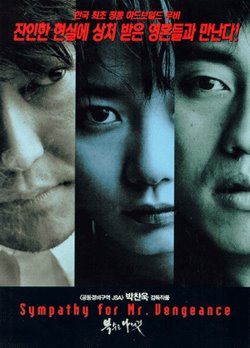
A nice coincidence that this movie would be the next on our Netflix-list after Dirty Harry – this is the movie Dirty Harry should have been (of course that’s somewhat unfair, considering the time gap, but would Harry want me to be fair? There). Where Eastwoods cop sets out to right wrongs in a very private moral (or lack-of-moral) code, this movie unfolds as a giant tragedy, where we can have empathy with everybody, even as they do things that are wrong to begin with, and turn out even worse. “I know you’re a good guy” says the vengeful industrialist in the climactic scene, “so you’ll understand why I have to kill you”. So do we, caught in the same violent logic, and as unable to escape it as any of the characters. Terrific and terrifying.

Tuesday, December 20th, 2005

Abe’s Exoddus (1)

I just revisited the second installment in the Oddworld series of games, and the last I played – the third and fourth, sadly, are only available for the Xbox. If you like platform games at all, this quirky mix of ironic oddness, fascinating story and character design, tough puzzles and fast paced jump and run episodes will entertain your for many, many hours. And even if you don’t, you’ll have to appreciate some of the lovely, innocative ideas in game design.

Also pretty cool is the list of influences the game designers list on their website.