Arthur C. Clarke – The Songs of Distant Earth (4)
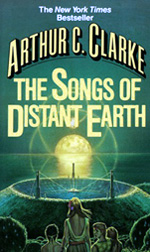 This is horrible. Not because it is just obviously bad, for it isn’t. The science is as solidly done as you’d expect of Clarke, and the outline of the story sort of makes sense, if you buy that we can predict novae from looking at neutrinos. But the details all are oh, so wrong. All the mistakes that give science fiction a bad name are here, in a thickly layered mistake cake, with an extra topping of whipped mistake cream. Things that we should understand from what we witness we are told in the abstract, dialogue stilts around just to get information to us, instead of of its own merit, characters psychology makes no sense whatsoever, the underlying wordview is deeply technocratic and single minded – he creates a utopian society of love and respect that sounds like a hippie teenager’s wet dream by having past artistic output censored and culture start from a carefully prepared blank slate. That notion alone already has so many things wrong with it, I won’t count. Bah.
 Finally, the non-sucking sequel to the Matrix. While V is still wordy and rich in pseudophilobabble, it is mostly stylish and ironic enough to get away with it. Weaving and Portman both are excellent, him being all the more impressive for doing it all from under a cheesy mask. A comic book version of political discourse still, at least this impromptu is enjoyable to watch and visually pleasing.
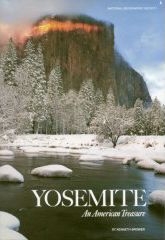 I almost didn’t buy this when I saw it at the local Salvation Army store. Who needs another book on Yosemite, sporting pretty pictures of waterfalls and sunsets? But as it turns out, Brower not only knows many of the key players of Yosemite’s recent cultural and natural history firsthand, he also writes engagingly and knowledgeably about this intriguing stretch of land. The discussion of a supposed dichotomy of artistic concepts battling over the park could have been spared, but the rest of the book is a joy, and the picture really are gorgeous. Makes me want to go up there again.
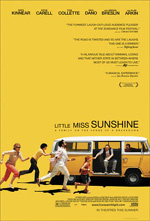 The beginning of this movie is excrutiating. We observe the inner workings of a dysfunctional family, partly through the perspective of the suicidal academic uncle, and the acting and writing is excellent enough to make the pain of what is going on palpable. There also are funny jokes, made more poignant by the underlying darkness, and a developing plot of the little daughter embarking upon a beauty queen endeavor that is obviously doomed. A dark comedy is well on its way, but then the author and the directors couple take a wrong exit, and turn the whole thing into one more suada on how the importance of being oneself and the overarching formative power of familial love. That weary propaganda piece is hard to bear from a mainstream outlet, but to see a supposedly indie movie pander this, and betray all it was trying to show us in a feelgood finale pitting the family unit against the shallow and vain outside world, is hard to bear. The movie still has its nice moments, but overall is a disappointment.
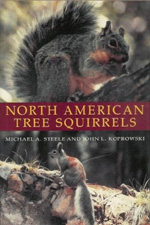 While this book has plenty of interesting information on mainly fox and gray squirrels, it could have been written more with the lay reader in mind. That’s not to say that it is too hard or complex, for it is surprising how little complexities seem worth relating, but rather that it reads in places like a badly written scientific paper. If all of this book had the wit and pace of the chapter on squirrel reproduction, it would have been a delight to read. As it stands, it’s interesting, but rather dull. Except for that chapter. Hilarious.
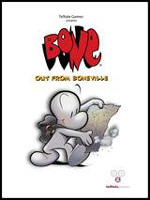 The comic series created by Jeff Smith started off as a quirky lighthearted adventure story and ventured into more complex territory, creating a comic hybrid of Tolkien and Lucas, including a creation myth, an evil archvillain and the restoration of balance to a force, here called the dreaming. While the background plotline may be derivative, the storytelling and character design wasn’t, and Bone was a delight to read. Now Telltale Games, consisting of game designers who left Lucasarts after the announced Sam and Max sequel was canned after a decade of development, has started to make the comic epic into a series of adventure games with a SCUMM like interface. Smith’s design and dialogue are completely preserved, so much so that one might object that the result is an animated comic strip rather than a true game. This is less true of the second installment (The Great Cow Race) however, and isn’t a big criticism anyway. Unfortunately, the third installment will be a while in the making, with a brand new Sam and Max game (yes) scheduled for release later this fall.
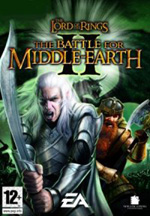 I readily confess that I am a sucker for real time simulation. I loved playing Warcraft and Starcraft, and I enjoyed this game, too, though it seemed to me that the gameplay in the campaigns is slightly unbalanced, with little freedom for strategy. In one mission in the evil campaign in particular, any straying from a predescribed path of action would lead to disaster, which is not very enjoyable. But since the main action presumably is supposed to lie in online gaming, I guess that’s quite all right.
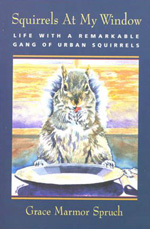 The different stances of people from varying strata and cultural backgrounds take toward animal life in general, and those animals that have become closely associated in one way or another to human life, is fascinating on one hand, and fairly predictable on the other. City dwellers, who suffer property damage and the risk of diseases from rats, abhor and vilify them, while at the same time adoring squirrels, who in many respects resemble their shady cousings. While in the countryside squirrels are hunted for food, and face extinction in many places because of habitat loss, the city dwelling species enjoy much attention and feeding by their primate hosts. And needless to say, each faction considers their way the natural state of affairs.
 This book evokes memories of the seventies, when I was a little boy in school, and many textbooks had illustrations in a style similar to Sasek’s. These are lovely and slightly odd renderings of everyday life in Munich several decades ago, and the slight mismatch between the english and german versions of the text, and the terseness in general, only add to this piece of nostalgia. And I don’t even like Munich all that much.