Friday, January 4th, 2008
Herbert Asbury – All Around the Town (2)
 Curious and strange, most of the stories in this book make for delightful reading and provide a colourful historical backdrop for the current New York to be viewed against. Unfortunately, though, the author is not all that trustworthy (an easy to check example is his assertion that cops are called that because New York’s police wore copper stars, which is false), and never provides sources for any of his claims, not even the more outlandish ones. It might be suspected that the stories actually tell us more about how people in the 1920s pictured the history of New York than about the actual history itself, but that itself has become historical now, and it certainly is entertaining.
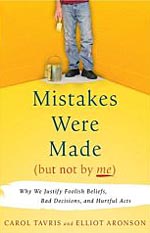 This book about cognitive dissonance is a good read, and an interesting account of both the theory of why our decisions and opinions can be so much at odds with reality sometimes and a number of examples from history and daily life, where the principle can be observed in action. Yet through much of it, it felt like being a bit lost in someones attempt to make sense of the subject, and as though going to Festinger’s original work might be more illuminating. This in spite of the fact that I don’t think he ever wrote something comprehensive like this on top of his individual studies.
 When the Apocalypse caused by Germany came back to engulf it in its fire and destruction, there must have been immeasurable suffering and trauma, yet, as Sebald points out, almost none of it made it into the story of life as set down by the writers. Sebalds exploration of the reasons for this omission, are both deeply touching for his compassion even with those who caused the very desasters that struck them, and illuminating for their original and provocative view on the narrative of Germany.
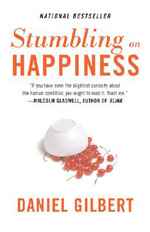 Why are we so notoriously bad at predicting what will make us happy, and why are we so often mistaken when we remember how we felt in the past? Gilbert’s hypothesis is that the nature of the neural system that allows us to imagine is to blame/ This system, which allows us both the filling in of the details of memories and the fleshing out of the nature of the future, draws on the same circuitry we use to feel the present, which is why both the past and the future are contaminated by how we feel right now. While the style of the book is maybe a tad forced in terms of wittyness, it is a delightful read, and the wealth of experiments Gilbert draws on to make his case was fascinating to read. At least that’s how I remember it.
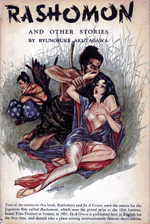 This collection of short pieces did not leave me quite as astounded and fascinated as did his longer story
 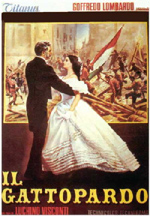 There might be a gripping historical tale in this movie, of the change Italy underwent when the univifcation movement succeeded, of the social turmoil, and of the mixed feelings of an educated upper class, about to lose it’s power and influence for a good cause, but I didn’t stick around to see whether there was. After the first forty minutes dragged on, with a nonexistent plot and a badly choreographed, endless public fighting scene, I stopped. Sorry, Visconti.
 What a weird trip. I have to admit, the power of script and acting impress me, but from todays perspective, the sentiments and behaviour just seem strangely affected. Seeing this today suggests not artistic abandon and an emotional rollercoaster, but a dated body language and strangely stale clichees of reckless abandon. The horrible porn soundtrack doesn’t help any.
 A fascinating look at animals and researchers surrounding the Great White Shark Project at the Farallone Islands off the coast of San Francisco. On a clean day you can just see these islands beyond the Golden Gate, and I am going to look out there with much more respect and curiosity now I’ve read the book. On the downside, Casey comes across as a somewhat irresponsible girl, whose obsession with untamed wildness and rugged men ultimately leads to severe consequences for everybody involved.
 Awesome graphic design, wonderful cinematic visuals, both of which are more to Miller’s credit, of course, than the filmmakers’. The story lacked subtlety or characterization, and the dialogue was horribly cliched in places, which may also be Miller’s fault – need to pick up the book to check. A sad waste of talent and material overall.
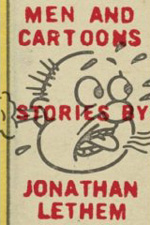 After having read much of Lethem’s work, I think I love his stuff more for the abundance of ideas than for the actual execution. There is often something oddly fragmented about his storytelling, creating a disaffected air, but many of his characters and situations are very acute and touchingly observed conundrums of human existence, cast into odd narratives. Oh god, would you listen to me. Or rather, don’t. Read Lethem instead.