Search

Reviews


Tuesday, January 3rd, 2006

Rough Guide to Okinawan Music (1)

Okinawa is located on an strategic spot of ocean real estate, and has been occupied by numerous foreig powers throughout its history. This stormy military past has forged the island’s strong martial arts tradition, but a side effect of a multitude of traders and soldiers passing through is a multilayered cultural richness. This compilation collects a broad variety of styles, themes and artists, from the amazing traditional sanshin tune Koko Kuduchi to the joyous modern surf pop of The Surf Champlers. While the variety of material makes sure that there have to be a few songs for everyone they could have done without, overall this is a shining jewel and wonderful to explore.

Tuesday, January 3rd, 2006

Sidney Lumet – Serpico (2)

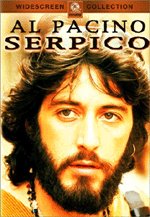
A gripping real life story of an honest cop in the late 60s in New York, and the breakthrough for Al Pacino as a big movie star (though I was a bit surprised to hear both the producer and director Lumet talk about how the Godfather was truly Brando’s movie. While old tissuecheek certainly is a very strong presence in that flick, I’ve always felt Pacino and Brando as equally strong. But je digresse). The story, and Pacino’s character based playing, are very intense, and the fascinating fact from today’s point of view is that the movie moves at a quiet pace, yet doesn’t seem slow – a bit too long, maybe, but that’s probably due to an original script that was double the length and needed to be heavily cut. Other cool piece of trivia: the real Serpico came to rehearsals, and was studied by Al Pacino, then shown the door by Lumet once shooting started, and was – or so Lumet reminisces – crushed, because he felt he become friends with them, while to them he was a object of professional interest. He also once told the producer Martin Bregman, in a movie theater empty except for the two of them, that he couldn’t smoke, because it was against the law. Go, Serpico!

Bei manchen dokumentarischen Büchern fragt man sich unweigerlich, warum man sich die deprimierende Abfolge unheilvoller Tatsachen ins Denkgebäude schraubt. Nun ist es andererseits natürlich Unsinn auf dem Niveau der Erstmal-besser-machen Kritikverneiner, Unschönes nur deshalb abzulehnen, weil es keine konstruktiven Schlüsse anzubieten hat, aber erbaulich hätte ich es doch gefunden, nach der Durchsicht all der Naziwiderlichkeiten rund um Vertriebene und ihre Zentren, Kriegsgeschichte und Schuldausgleich ein paar Vorschläge zu finden, wie man das Pack zum Schweigen und die Geschichte auf einen guten Weg brächte. So ganz ohne das ist das Buch jedenfalls nicht der Diskussionsbeitrag, der es sein möchte, sondern eher die Grundlage für einen. Muss dann eben jemand anders schreiben.

Die für mich interessanteste Detailinformation betrifft das Verbot der Todesstrafe im Deutschen Grundgesetz, das mir angesichts der sonstigen Kontinuitäten von Mordbubenwirtschaft und Gewaltapparat immer ein wenig inkonsistent vorkam. Später schildert, wie ein Vertriebenenfunktionär sich für die Abschaffung verwendet, um seine alten Nazikumpane vor den Galgen der Alliierten zu retten. Das ging schief, weil die Alliierten sich bei den Hinrichtungen ums Grundgesetz der Besiegten nicht recht scheren mochten, und der Plan, die Todesstrafe für gemeine Mörder flugs wieder einzuführen, scheiterte dann ebenfalls. Sie kennen doch unser heiteres Suchspiel? In der Geschichte hat der Weltgeist Sepp Arnemann eine konstruktive Lehre über den Umgang mit repressiven gesellschaftlichen Kräften versteckt. Suchen Sie sie selbst, mir gefällt sie nicht.

Nachtrag: konkret dokumentiert in der aktuellen Ausgabe die Reaktionen Vertriebener auf Späters Buch, und ich nehme einen Teil des oben gesagten zurück. Wer derart die Hunde zum Bellen bringt, hat allerhand richtig gemacht.

This is a nice enough movie, I suppose, but it left me with a feeling of emptyness where meaning should have been. It can’t possibly want to tell me something about human relations, or the male character’s faults wouldn’t be so blatant and unsubtle, and it can’t be entertainment either, for though there is quite a few funny bits, the overall mood is that of oppression. It must have been liberating for Baumbach, who’s personal history this is rumored to reflect, but doesn’t do much for me.

Monday, January 2nd, 2006

Peter Jackson – Lord of the Rings (1)

Ever since the first of the Lord of the Rings trilogy came out, Middle Earth has been a holiday* staple for me. I liked the original theatrical versions well enough, but it’s only in the extended cuts that the story’s pacing works and the rich undertones of Tolkiens mythology get a chance to resonate through the plot. Aragorn’s singing of the Lay of Luthien is one specific example among many, and not by accident is it in the Fellowship of the Ring, which after this year’s repeat watching of the whole trilogy (split over quite a few days – I’m a geek, not a nerd) is still my favorite. It’s also the one part that doesn’t have cringe inducing dialog in it (“A red sun rises. Blood has been spilled this night” – Yeah, that would be my brain hemorrhaging, you Elf twat), but they’re all precious, of course. Go, looks at them.

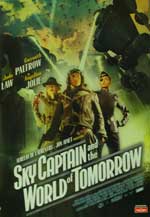
Though the lack of meaning and its pulpy plot development are part of the concept of this highly stylish science fiction comic come alive, it drags a bit toward the end, when even the vestiges of development devolve into a series of ever fancier military gadgetry being deployed. The design is quite nice, but with a bit more reflection on the history and significance of the original artwork it could have also had significance. Ah, well.

Friday, December 30th, 2005

Jeffrey Eugenides – Middlesex (2)

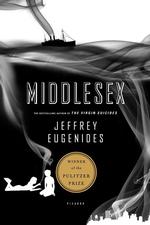
A fiction so convincing that I needed to remind myself several times that I was not reading an autobiographical account. The story of a hermaphrodite growing up in Detroit, and his/her family’s history stretching back into Turkey are told in epic breadth, and with a lot of fascinating historic detail. The narrative holding it all together, that of the girl Callie turning into the man Cal, seems to dissolve to little significance against that background, making me wonder if more focus on the story and main character itself wouldn’t have served the overall experience better.

Wednesday, December 28th, 2005

Frederik Pohl – Gateway (2)

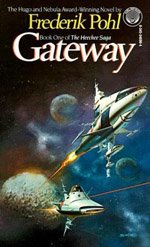
I’ve been busy checking out the Hugo and Nebula award winners, and this one was a particular delight. An unknown alien species, the Heechee, disappeared a long time ago, but left some artifacts, most notable a space station equipped with hundreds of interstellar ships attached. The ships are mostly operational, but nobody knows how the course setting machine works, what the destinations are, and how long the trip will be. Mortality on these trips is high, with most coming back emptyhanded, so the exploration of the Heechee legacy is run as a kind of lottery, where explorers might die or disappear, but might also come back with incredible new artifacts or knowledge, making them rich for life. This is the background to the story of one man, who struck it rich on one of these trips, but can’t cope with what happened, and what he had to do to survive. We witness his therapy sixteen years later, and the original events unfolding in parallel, with documentary material, like classifieds from the station’s newspaper, ingeniously strewn in.

Monday, December 26th, 2005

Sun Tzu – The Art of War (3)

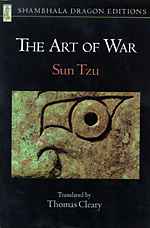
When a dog pees on a mountain, does the mountain care? Depends on the size of the dog, you might answer, but in general it won’t. General – what better segway than that to lead into my two cents on Sun Tzu’s Art of War, commonly hailed as the essential read for business strategists, soldiers, garbage collectors, and, really, everybody, for war is a metaphor for life, and we all have one of these, after all. In spite of that Master Sun’s strategic nuggets of wisdom were a bit lost on me. I don’t object to anything said, and the style of the translation, and, I presume, the original, is very concise and poetic in it’s condension, but what in this book I find applicable is obvious, and what isn’t obvious doesn’t seem applicable. On top of that this edition has been translated an edited by Thomas Cleary. Cleary follow every few sentences of Sun’s text with serveral different commentaries, and the sequence of Sun’s dense, poetic writing, and the commentators clumsy, wordy rephrasing makes this an odd comedic experience.

Friday, December 23rd, 2005

Johhny Cash (with Patrick Carr) – Cash (3)

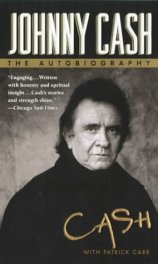
Johnny Cash was an amazing artist, and his recent death has been a great loss. I love the recent American Recordings series of records as well as his older stuff. Sadly, he is not quite as amazing an author, and Carr’s co-authoring didn’t fix the shortcomings. There are cool stories in this book, but they are often told in a laundry-list fashion, where people, events and facts roll by without much coherence or reflection. Biggest eye-rubber: Cash’s admission that he and June avoided shopping in towns that had no Wal-Marts and even graded them by the number of evil moneysucking behemoths (“tomorrow is a two Wal-Marter”). Biggest chuckle: to get out of a contract with a record company in the early nineties, Cash wrote a whole abysmal album, including a song called “Chicken in Black“. It worked.