Search

History


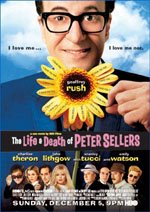
Peter Sellers was a very funny person, but he was also deeply disturbed and, this movie suggests, refused to become a responsible adult all through his life. This movie is often hilarious, incredibly well acted, especially on the part of Geoffrey Rush, who is as amazing and chameleonlike as Sellers himself used to be, but unfortunately lacks coherence. More a collection of individual snippets than a single story arc, the plot leaves out a lot, and the frequent breaks in the narrative, with Rush taking on the roles of people important in his life, walking literally off the stage of the scenes, while an ingenious device, add confusion to an already meandering tale. Still, very impressive and entertaining.
Most of what this movie reveals about the criminal mastermind Kissinger was already known to me, and while the detached way the material was presented made the movie seem much more objective and unassailable as any movie ever could be, it also produced a feeling of heavy handed redundancy. I think if my choices are polemic hilarity, as in Moore’s borderline scenes in Bowling for Columbine, and serene factuality, I’ll take the raving fat man any time. The most interesting suggestion came at the very end, when either the author of the book this movie is based on, or the films director, suggested that the reason the US hadn’t joined the international court yet was that they were very afraid of public scrutiny of Kissinger’s files. It almost makes too much sense.

I have wanted to see this ever since I saw the trailers on HBO when it first came out, firstly because the subject seemed interesting (the invention of heart surgery combined with the story of racial discrimination in the medical establishment), and because Alan Rickman plays one of the main characters. Those were good enough reasons, but as it turns out, Mos Def almost steals the show playing the other lead. The whole way of story delivery is a smidge on the sentimental side, but not enough to spoil a touching historical tale.

This is a profoundly silly book, about magic symbols and masonic references on the US 1$ bill. Some of them are surprising and interesting (like the etymology of Dollar, the significance of the pyramid, or the source for the $ symbol), but most of the letter and word counting and geometric analysis of what appears where seems more like an unhealthy obsession than an informative analysis. I know Gematria is very honorable quackery, but it obviously is possible to overdo it. Who would have thunk?

Saturday, January 28th, 2006

Rome (2)

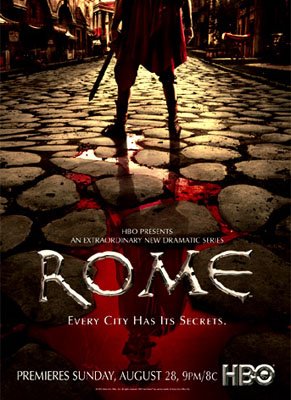
I don’t know a whole lot about Roman history, nor about the small details of everyday life in the days when the republic turned empire, but this series does quite a good job of creating a believable backdrop for Caesar’s conquests and the adventures of the two soldier goons who carry the show through wit and humor, an echo maybe of the concept behind Asterix and Obelix. The frequent focus on sex as the driving force behind the political upheavals looks suspiciously like an excuse for eyecandy, but the same could probably be said for the whole show. Nothing wrong with that, anyway.

Monday, January 23rd, 2006

Neal Stephenson – Cryptonomicon (2)

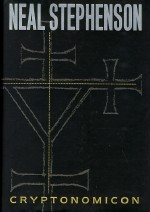
This book has it all, geeky and cool facts about cryptology, military, social and technological history, a fairly believable conspiracy plot, insights into high-tech investment politics and an epic breadth and richness of materials that stunds. So why did reading it feel so tedious, and why was I glad when it finally was over? Maybe it’s because of the odd feeling of detached interest that perfuses the work. Stephenson describes the human dimension of his adventure with the emotions of a boy watching ants through a magnifying glass on a sunny day, just before he decides to see what happens when he burns them. It’s a terrific story, but it felt like someone else was reading it.

Monday, January 23rd, 2006

Richard Brooks – In Cold Blood (2)

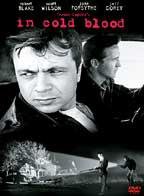
This is an almost literal translation of Capotes book to the screen, and it compares very favorably both with his writing, and the recent movie “Capote”, about his own role in the trial of Hickock and Smith and the role of the book in his life. Some odd choices aside (why did the script change Capote’s name?), this is a gripping true murder story, intense, yet never sensational. The central ambiguity of the title, which refers both to the act and the punishment, is made too explicit for my taste in some of the lines toward the end, but the subject is just important enough, that a bit of preaching is forgivable.

Monday, January 23rd, 2006

Martin Scorsese – Kundun (2)

This biopic of the Dalai Lama would impress me much more, and be a much more valuable contribution to understanding and solving the plight of Tibet, if it didn’t look like Cirque de Soleil on dope. While I can’t blame the traditional garments and designs of Tibet for having been appropriated to an updated version of the myth of the noble savage western progressives seem to love so much, I can blame Scorsese for presenting the struggle between what clearly is a feudal society where extreme poverty and lavish palaces stand side by side and the upheavals of the modern age, namely the invasion of technology and the Chinese cultural revolution, in a way so heavily slanted as to lose its trustworthyness. It’s too bad, because I suspect even a fully realistic depiction of the Tibetan aristorcracy would make the communist Chinese look quite bad. But cinematography, scope and acting compensate handsomely for these ideological squabbles.

Sunday, January 8th, 2006

Yamamoto Tsunetomo – Hagakure (2)

The more I learn about Japanese history, the more I wonder how it is possible that the European captains found anybody alive there at all when they arrived. They should have disembarked, a fearful expression on their faces, and waded in blood, among the guts and remains of the honorable dead, who slashed themselves open to maybe make amends for an ill chosen colour of off-white for the master’s new lampshade, or some such. This makes for very fascinating reading, but it is indeed hard to understand how a society, in which disrespect leads to fights to the death, which in turn means seppuku for those who started them, could have functioned, Maybe, then, Yamamoto exaggerates wildly. This is somewhat more plausible for modern readers when they realize that some of his short texts read like they are the direct inspirations for Monty Python’s suicide squad lead by Otto in The Life of Brian, and the Black Knight in the Holy Grail – now of course available as a plush doll, which probably would have horrified old Tsunetomo right into killing himself.

Bei manchen dokumentarischen Büchern fragt man sich unweigerlich, warum man sich die deprimierende Abfolge unheilvoller Tatsachen ins Denkgebäude schraubt. Nun ist es andererseits natürlich Unsinn auf dem Niveau der Erstmal-besser-machen Kritikverneiner, Unschönes nur deshalb abzulehnen, weil es keine konstruktiven Schlüsse anzubieten hat, aber erbaulich hätte ich es doch gefunden, nach der Durchsicht all der Naziwiderlichkeiten rund um Vertriebene und ihre Zentren, Kriegsgeschichte und Schuldausgleich ein paar Vorschläge zu finden, wie man das Pack zum Schweigen und die Geschichte auf einen guten Weg brächte. So ganz ohne das ist das Buch jedenfalls nicht der Diskussionsbeitrag, der es sein möchte, sondern eher die Grundlage für einen. Muss dann eben jemand anders schreiben.

Die für mich interessanteste Detailinformation betrifft das Verbot der Todesstrafe im Deutschen Grundgesetz, das mir angesichts der sonstigen Kontinuitäten von Mordbubenwirtschaft und Gewaltapparat immer ein wenig inkonsistent vorkam. Später schildert, wie ein Vertriebenenfunktionär sich für die Abschaffung verwendet, um seine alten Nazikumpane vor den Galgen der Alliierten zu retten. Das ging schief, weil die Alliierten sich bei den Hinrichtungen ums Grundgesetz der Besiegten nicht recht scheren mochten, und der Plan, die Todesstrafe für gemeine Mörder flugs wieder einzuführen, scheiterte dann ebenfalls. Sie kennen doch unser heiteres Suchspiel? In der Geschichte hat der Weltgeist Sepp Arnemann eine konstruktive Lehre über den Umgang mit repressiven gesellschaftlichen Kräften versteckt. Suchen Sie sie selbst, mir gefällt sie nicht.

Nachtrag: konkret dokumentiert in der aktuellen Ausgabe die Reaktionen Vertriebener auf Späters Buch, und ich nehme einen Teil des oben gesagten zurück. Wer derart die Hunde zum Bellen bringt, hat allerhand richtig gemacht.