Tuesday, June 20th, 2006
James Moll – The Last Days (1)
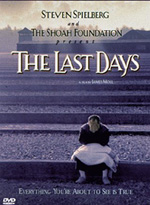 Watching movies about the holocaust, even – or especially – ones that are as well made as this one, is exhausting and disturbing, and I’m not entirely sure why I keep doing it again and again. Partly it’s the general feeling that an evil forgotten is one likely to be repeated, but there also is the irrational, yet very compelling obligation to understand the monstrosity which seems to stem from my being a member of the culture that committed this singular crime. These matters aside, this particular documentary, drawn from material collected for Spielberg’s Visual History Foundation, is masterfully composed and edited, and should be seen by many, including you.

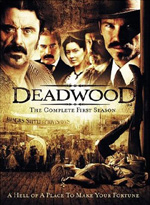 Everyone’s favorite drama of swear and cuss is entering its third season, and judging from the opening episode, it’s going to be great. I have a hard time nailing down just exactly how they do it, but every moment of Deadwood’s reenacted history seems to be a goddam fucking delight. Partly, I think, this is due to the subtlety of plot and dialogue, that often lets you understand something said or done only much later, without making a fuss about such a resolution, as minor scripts might. And to a large part it’s the miraculous cast, Ian McShane’s Al Swearengen above all that lift this onto a plane all its own. Too bad the cokesnorting cocksuckers over at HBO cancelled the concluding fourth season and replaced it with a compromise. It’s a fucking disgrace. But for the time being, let’s enjoy season three, shall we?
 A powerful meditation on innocence lost and the mixed blessings of civilization and progress, this is essential Malick. Of course that also means a healthy dose of pathos and a certain slowness of plot, but when so beautifully shot and arranged, who would want to bicker. I have not seen the story of Pocahontas told any other way before, and I don’t think I shall.
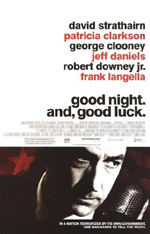 While Clooney did seem a bit too proud of the things he’s been doing lately at the Oscar’s, the things he does are indeed pretty great, and he wasn’t quite deserving of the scorn heaped upon him by pop reactionaries Parker and Stone in a recent South Park episode (that puts him in a league with recently mocked Al Gore. Apparently poop jokes aren’t controversial enough any more. But I digress). This movie depicts, in rather beautiful black and white cinematography, the courageous act of a few TV journalists at CBS defying overpowering senator Joe McCarthy, and contributing significantly to his eventual downfall. An inspiring and encouraging story at any time, the present context makes this indispensable.
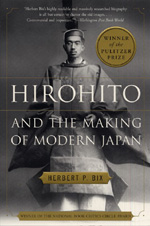 I’m not sure whether entering a field of knowledge through a basic introduction, or from the middle of an ongoing controversial debate is preferable. Bix’s book represents both aspects, being aimed at those familiar with Japanese history, arguing the case for a change in the perception of wartime emperor Hirohito, from benevolent onlooker and powerless figurehead to bearing full responsibility for Japanese war atroctities and aggression both before and during the second world war. At the same time, it adresses the general reader, using the Sh?wa emperor’s biography as the focal point for depicting the making of modern Japan. The balance between these two different books is worked out fairly well, with some passages dragging on a bit too long, due partly to an overabundance of detail and a flurry of Japanese names and concepts that are sometimes not introduced well enough to properly keep track of for the non-initiated reader.
 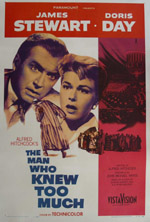 It’s fun watching the two stabs Hitchcock took at this story almost back to back, seeing the development of his style and technical proficiency, as well as the parts of storytelling that work in neither story. There is an interesting remark on the DVD of the producer of the remake being told by Hitchcock to watch the original Lorre vehicle, to see if that could be remade. The producer made some remarks about Hitchcocks development since then, which apparently hurt the man’s pride – odd, since the earlier work is so obviously flawed. When interviewed by Truffaut much later, he himself made the talented amateur / professional comparison between the two version’s directors, but in the early fifties he obviously still didn’t have the necessary distance from his earlier work. Maybe that’s why he only went half the distance in fixing the flaws, leaving the quite unconvincing spy splot of assassinating a politician in a public auditorium, and the cartoonish police.
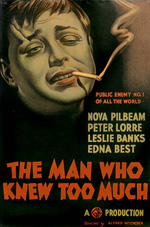 Let me start by saying that we didn’t actually deliberately rent this. Rather, we inherited a box with four VHS tapes of Hitchcock classics, three of which I had never heard of. The fourth was indeed a classic, so we watched that. I should have been suspicious at the distinct snapping sound I heard when the movie was out of its box – the marketing trap had sprung.
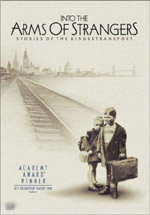 If anyone were following the reviews on this blog, a pattern of Nazi movie obsession in recent weeks would become apparent. This is partly due to an unchecked adding frenzy to our Netflix queue quite a while ago, and I’m growing a bit tired of it. So this probably explains in part why this documentary of the Kindertransporte, humanitarian efforts in the late 1930s saving tens of thousands of German Jewish children from certain death by sending them to host families in England, didn’t quite manage to grip my attention. It’s a heartwarming story, even if the host families were often struggling with the stressed out children they were receiving, but somehow the movie doesn’t manage to make it stick together. Maybe its the lack of historical commentary and an overarching message of the movie, maybe its just uninspired editing, and dragging interviews. Or maybe it’s just me – the Oscar this movie won in 2001 would suggest that, if I believed awards like the Oscars to be a genuine mark of quality.