Monday, January 7th, 2008
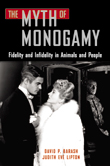 To the reader interested in love, sex and animal and human happiness, though rare a beast such a reader might be, this book holds a treasure trove of observations, deliberations and insights. Always keeping in mind the obvious question – how does all this relate to us? – the authors lead us on a walk through animal species, to look for evolutionary reasons and pressure for or against monogamy, and revealing it to be quite uncommon even among species long thought to be faithful mates for life. As it turns out, the fact that affairs need to be concealed from the adulterer’s mate implies automatic and almost perfect concealment from the researcher ape hiding in a camouflaged tent, who after all is much less adept that the animals involved in detecting suspicious behaviour.
The second half of the book then is devoted to the human animal, with the evidence seeming to indicate that our natural instincts would have us being a mildly polygynic, socially monogamous, but sexually adventurous bunch of chimps. As the authors point out in a final chapter aptly captioned “So what?”, no moral law follows directly from any of these observations. Natural impulses do not necessarily have to be acted upon – indeed the core of the idea of civilization might be perceived to be the reining in of such impulses -, yet their denial, and the forcedly naive insistence that monogamy is the mature way of channeling sexual and romantic desires that so much of the western christian tradition hold in fairly low esteem to begin with, seems unnecessarily dire and uninspired a reaction to the question that could well be said to be at the heart of human happiness and fulfillment. For, to change Dorothy Parker’s delightful punchline around on her, what earthly good does not, in fact, come from the sweet tensions of love, courtship and attraction?
General Review of the Sex Situation
Woman wants monogamy;
Man delights in novelty.
Love is woman’s moon and sun;
Man has other forms of fun.
Woman lives but in her lord;
Count to ten, and man is bored.
With this the gist and sum of it,
What earthly good can come of it?
Animals, Books, English, Good, Misc, Nature, Nonfiction, Politics, Psychology, Science | No Comments »

 From Jonathan Lethem, who recently masterfully argued the fruitfulness of apropriating someone else’s intellectual property and turning it into something original of one’s own, and Carter Scholz, whom I hadn’t heard of before, comes this set of reinventions of Kafka’s themes with the frame of American culture. Witty, dark and unexpected, these stories toy with great ideas in a very delightful way. My favorite of the bunch is easily Lethem’s and Scholz’ collaboration on the story of how Kafka and Capra collaborated to make “It’s a Wonderful Life”. Great stuff.
 It is a disturbing fact of post-war German history that plenty of active National Socialists continued on to positions of power and influence in the Bundesrepublik, partly because of a lack of skilled leadership personnel not involved with the regime, but also because the anti-communist notions of the old criminals fit well into the new political struggle emerging in Europe. Against this historical background, Riefenstahls particular story becomes all the more fascinating. Her unsettlingly effective propaganda documentaries, Triumph des Willes and Fest der Völker, on the 1935 Nuremberg rally and the 1936 Olympic Games, created a fame for her that was probably the reason for her fall after the war. She wasn’t able to make any more movies, and all her other creative efforts – most notably her photography of the people – got subjected to close scrutiny and harsh criticisms for suspicions of a fascist esthetic, and were always contextualized with her past. This movie portrays her both as the victim of scapegoating and a stubborn denier of aspects of her life, but most of all it paints the fascinating picture of a multifaceted woman, who had the misfortune to live in evil times. You might not like her after this documentary, but you won’t regret having seen it.